Soil Washing Water Treatment: Recycling Process Water in Remediation Plants
Soil washing is an effective technology for remediating contaminated soil, but a washing plant also produces large volumes of process water that must be treated before it can be reused or discharge
Soil washing is an effective technology for remediating contaminated soil, but a washing plant also produces large volumes of process water that must be treated before it can be reused or discharged. Proper soil washing water treatment keeps the remediation line running efficiently, cuts fresh water consumption and helps projects meet environmental compliance requirements.
Why Water Treatment Matters in Soil Washing
A 30 t/h soil washing line typically uses 60 to 100 cubic metres of water per hour. Without treatment, this water would carry suspended solids, heavy metals and organic pollutants such as petroleum hydrocarbons. Treating and recycling the water brings clear advantages:
- Water consumption is reduced because most of the process water is recycled.
- Operating cost falls, since fresh water supply and wastewater discharge are both minimized.
- Regulatory monitoring is easier when the treatment system is automated and transparent.
How the Water Treatment Process Works
In a Desen soil washing plant, the overflow from the deep cone thickener and the filtrate from the plate and frame filter press are collected in a sump. The water then flows through a multi-stage treatment train:
- Primary inclined-tube sedimentation to remove the largest suspended particles.
- Four reaction tanks with mixing and aeration, where PAC and PAM flocculants settle suspended solids and hydrogen peroxide oxidizes organic contaminants.
- Secondary inclined-tube sedimentation to polish the water.
- A clean water tank that supplies the washing circuit for reuse.
Sludge from the sedimentation tanks is pumped to a small filter press, and the filtrate is returned to the treatment system.
Recycling Rate and System Design
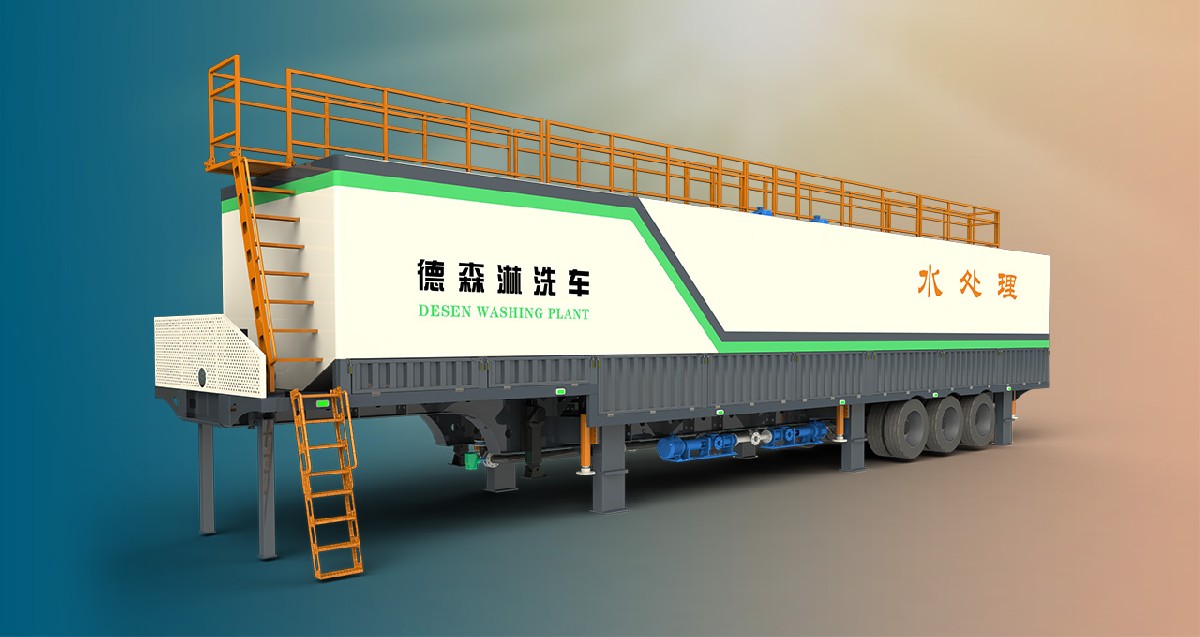
Desen's washing water treatment modules achieve a recycling rate of at least 90 percent for the whole remediation plant. The modules are compact and can be integrated with fixed, modular or mobile washing plants. For projects that need flexibility, the Mobile Water Treatment Plant combines the same treatment train in a transportable configuration, so the system can be moved between sites and commissioned quickly.
Field Experience
Water recycling has been a key part of large remediation projects delivered by Desen. In the Middle East, a soil washing project treating about 300,000 cubic metres of oil-contaminated sandy soil relies on a closed-loop water circuit. In Ningxia, China, a petroleum hydrocarbon remediation project with roughly 180,000 cubic metres of contaminated soil combines soil washing with biological treatment, with the water treatment module supporting continuous operation.
Conclusion
Soil washing water treatment is not a side process; it is essential to the economics and compliance of a remediation plant. With recycling rates above 90 percent, automated dosing and a compact modular design, Desen's water treatment systems help soil washing plants operate continuously, consume less water and meet the monitoring requirements of regulators. Contact the Desen team for a water treatment solution tailored to your remediation project.