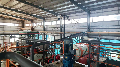
Rapid Modular Soil Washing Equipment
Modular soil washing equipment delivers fast on-site remediation. Explore design, advantages, case studies and selection with Desen Environment.
Contaminated land rarely waits for a convenient construction schedule. When regulators impose tight deadlines and sites sit inside crowded urban footprints, modular soil washing equipment has become the remediation method of choice for contractors who must treat soil fast, on-site, and without pouring millions into permanent concrete foundations. Desen Environment (郑州德森环境), headquartered in Zhengzhou, China, designs and manufactures modular soil washing equipment that ships pre-assembled, arrives road-legal, and reaches full production within weeks rather than months.
How Modular Soil Washing Equipment Works
The science behind modular soil washing equipment is identical to conventional soil washing: separate clean coarse fractions from fine contaminated particles, liberate pollutants bound to mineral surfaces, and concentrate contaminants into a small volume for safe disposal. What changes is the delivery model. Each module is built, wired and hydrotested in the factory, then bolted together on a compacted gravel pad at the site.
A complete train typically includes four integrated modules. A trommel screening module removes oversize debris and grades the feed. An attrition scrubber module generates particle-on-particle collisions that detach heavy metals, petroleum films and other pollutants. A hydraulic classification module built around hydrocyclones splits the slurry into size fractions so contaminated fines can be isolated. Finally, a water-management module recirculates more than 90 percent of process water through sedimentation and filtration, eliminating discharge risk.
Key Advantages of Modular Soil Washing Equipment
Speed and Early Project Completion
From factory release to first washed soil, modular soil washing equipment is typically commissioned in 4 to 8 weeks, versus 4 to 8 months for a purpose-built fixed plant. That compression shortens financing windows, accelerates regulatory closure, and frees the site for redevelopment sooner. By choosing modular soil washing equipment, project teams avoid the multi-month delay inherent in fixed construction.
Lower Civil Works and Smaller Footprint
Because every module carries its own steel frame and levelling feet, site preparation needs only a compacted pad rather than poured foundations. Clients cut preparatory cost by 40 to 60 percent and can deploy modular soil washing equipment on sites where fixed construction would be impractical.
Scalable Throughput and Multi-Site Reuse
Single units handle 20 t/h while combined trains reach 150 t/h. The same modular washing equipment can be demobilised and redeployed across multiple projects over its lifetime, spreading capital cost across many sites and lowering total cost of ownership.
Case Study: Lead-Contaminated Industrial Site in Hunan
A former battery-recycling facility in Hunan Province required remediation of 19,500 tonnes of soil with lead concentrations of 800 to 4,200 mg/kg. A fixed plant was ruled out by a 22-week deadline tied to a land-transfer agreement, so modular soil washing equipment was selected because it could be mobilised and producing inside the deadline. Desen Environment deployed a modular train combining screening, scrubbing and hydrocyclone classification with a citrate-based extraction circuit. After treatment, 16,900 tonnes met the GB 36600-2018 industrial standard, an 86.7 percent lead-removal rate, and the project finished in 17 weeks at 31 percent below the fixed-plant cost estimate.
Selecting the Right Modular Soil Washing Equipment
Match the system to contaminant type, soil texture and available space. Heavy metals need reagent dosing with acid, chelant or alkaline solutions; hydrocarbons respond to surfactant washing, and both fit the same modular frame. Clay-rich soils require larger scrubbers and more hydrocyclone stages. Desen Environment performs a pre-project soil characterisation to size each modular soil washing equipment configuration precisely for the site. This same modular soil washing equipment philosophy keeps capital flexible across changing project pipelines.
Why Choose Desen Environment
Desen Environment (郑州德森环境) has delivered more than 60 washing installations across Asia since 2012. Every modular soil washing equipment train ships with documented performance guarantees and the DT, DX and DY modular series span 20 to 150 t/h, all built under ISO 9001 quality management and backed by a 24-month on-site warranty with operator training. To discuss your contaminated site, contact the engineering team at materialwashing.com.
Frequently Asked Questions
How quickly can modular soil washing equipment be set up?
From module arrival on-site to first production, setup takes 10 to 21 days depending on pad readiness and piping complexity. Desen Environment supplies a pre-commissioning checklist and on-site supervision to ensure a smooth handover.
Can one modular train treat several contaminants?
Yes. The attrition scrubber and reagent system can be configured for simultaneous or sequential treatment of heavy metals, petroleum hydrocarbons and PAHs within a single modular washing equipment layout.
What removal efficiency can I expect?
Well-characterised soils typically achieve 85 to 97 percent contaminant removal. Desen Environment guarantees a performance target in the supply contract based on pre-project soil testing data.
Is the equipment road-transportable without special permits?
Standard units meet common road dimensions and axle-load limits. For larger capacities or strict jurisdictions, Desen Environment subdivides modules so they haul on standard trailers without oversize permits.