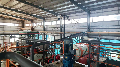
Mining Tailings Washing and Classification: Recovering Value from Mine Waste
Mining and mineral processing generate large volumes of tailings that occupy valuable land and create long-term environmental risks. Instead of simply stockpiling this material, many mine sites now
Mining and mineral processing generate large volumes of tailings that occupy valuable land and create long-term environmental risks. Instead of simply stockpiling this material, many mine sites now use wet washing and classification to recover sand and reusable aggregates, reduce the volume that must be stored, and lower the cost of site restoration. This article explains how a mining tailings washing and classification plant works, what equipment it contains, and how operators can turn mine waste into a manageable resource.
Why Mine Tailings Need Washing and Classification
Tailings from ore processing, coal washing and mine rehabilitation contain a mixture of clay, sand, fine minerals and residual water. When left untreated, they form unstable stockpiles and ponds that may leach metals into surrounding soil and groundwater. Washing and classification addresses these problems in three ways:
- Volume reduction: clay and fine solids are separated and dewatered, so the remaining material occupies far less space.
- Resource recovery: clean sand and coarse aggregates can be reused in construction, backfilling or further mineral processing.
- Environmental control: stabilized tailings are easier to manage, and process water can be treated and recycled instead of discharged.
For mine operators, the financial argument is equally important. Transporting and storing untreated tailings is expensive, and rehabilitation obligations can extend for decades. A washing and classification plant that recovers saleable sand and reduces the disposal volume pays for itself over the life of the operation.
How a Mining Tailings Washing Plant Works
A mining tailings washing and classification plant combines scrubbing, screening, classification, dewatering and water treatment modules into a single process line. The exact configuration depends on the particle size and clay content of the feed material, but the core sequence is the same across most projects.
Scrubbing
The first stage is scrubbing. Tailings are fed into a drum scrubber together with water, where the material is lifted, rubbed and dropped repeatedly. The friction between particles breaks down clay lumps and separates the fine fraction from sand and gravel. High-elasticity wear liners inside the drum increase the number of contact points and improve the cleaning effect, so clay and stones are separated thoroughly. At the discharge end, an integrated screen removes particles larger than 20 mm before the slurry moves to the next stage.
Screening and Classification
After scrubbing, the slurry passes through a series of screens and classifiers. A primary sieve removes particles larger than 2 mm, while hydrocyclones and screw classifiers separate the material by particle size. A multi-stage screw classifier recovers fine sand in the range of 0.075 to 2 mm, and a concentrating screen removes finer solids from the overflow. This staged classification makes it possible to produce several clean product fractions from a single feed stream, including coarse aggregates, medium sand and fine sand.
Dewatering and Water Recycling
The fine slurry is thickened in a deep cone thickener and then dewatered by a plate and frame filter press. The deep cone thickener uses natural pressure and an internal structure to produce clear overflow water and a high-density underflow, which improves the performance of the downstream filter press. The filter cake has a moisture content of no more than 40 percent and can be transported or stored safely. The filtrate and overflow water are collected, treated and returned to the washing circuit, so the plant operates with a high water recycling rate and minimal fresh water demand.
Key Equipment in a Tailings Washing Line
- Drum scrubber: breaks down clay lumps and washes sand by particle-to-particle friction.
- Bar screen or vibrating feeder: removes oversized material and distributes the feed evenly.
- Hydrocyclone: separates fine and coarse fractions efficiently with a low energy input.
- Screw classifier: dewaters and classifies sand in the fine size range.
- Deep cone thickener: concentrates the fine slurry and produces clear overflow water.
- Plate and frame filter press: dewaters the thickened slurry into a dry, stackable cake.
- Water treatment module: cleans process water so it can be recycled continuously.
Key Benefits of Tailings Washing and Classification
- Higher recovery: clean sand and aggregates are recovered from material that would otherwise be discarded.
- Lower disposal cost: the volume of tailings that must be stored or transported is significantly reduced.
- Smaller footprint: compact modular units can be arranged to fit the available site area.
- Fast deployment: modular systems do not require a concrete foundation and can be installed and commissioned within days.
- Water efficiency: process water is treated and recycled, reducing fresh water consumption and wastewater discharge.
- Low operating crew: automated systems can run with two to three operators per shift.
Project Experience
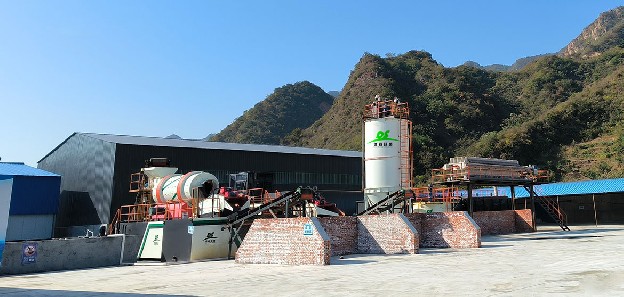
Desen Environmental has applied mining tailings washing and classification equipment in mine site rehabilitation projects across China. In Chengde, Hebei province, a mine tailings washing and classification project processes 30 tonnes per hour, recovering sand and reducing the volume of tailings for disposal. The same equipment family is used for coal gangue washing, clay cleaning and mineral aggregate classification, supporting both mine restoration and resource recovery. With more than 1,000 engineering cases delivered and equipment exported to over 100 countries, Desen has accumulated practical experience across a wide range of site conditions.
Choosing the Right Tailings Washing Equipment
Several factors determine the right configuration for a tailings project:
- Feed characteristics: particle size distribution, clay content and moisture influence the number of scrubbing and classification stages.
- Target products: whether the aim is clean sand, backfill material or a dewatered cake for disposal.
- Site conditions: available space, water supply and power affect the layout and whether mobile or fixed units are preferred.
- Throughput: processing capacity typically ranges from 8 to 200 tonnes per hour depending on the project scale.
Desen offers fixed, modular, skid-mounted and mobile configurations, so the same core technology can be adapted to a large central processing plant or a temporary operation at an active mine site.
Conclusion
Mining tailings washing and classification turns a disposal problem into a resource opportunity. By scrubbing, classifying and dewatering mine waste, operators can recover clean aggregates, reduce storage volume and lower the environmental burden of their sites. Desen Environmental provides tailings washing and classification plants with proven project experience in mine rehabilitation across China and international markets. Contact the Desen team to discuss a solution sized for your mine site.