Mobile Soil Scrubbing Plant: High-Efficiency Scrubbing Equipment for Contaminated Soil Treatment
Why Soil Scrubbing Equipment Matters in Remediation Projects. Contaminated soil rarely arrives at a treatment site in a uniform condition. Clay lumps, sticky agglomerates and oversize debri
Why Soil Scrubbing Equipment Matters in Remediation Projects
Contaminated soil rarely arrives at a treatment site in a uniform condition. Clay lumps, sticky agglomerates and oversize debris make it difficult for downstream washing, classification and dewatering stages to perform at their designed efficiency. High-efficiency scrubbing equipment solves this bottleneck by using mechanical friction to break down soil aggregates, liberate contaminated fines and prepare a homogeneous slurry for the rest of the treatment line.
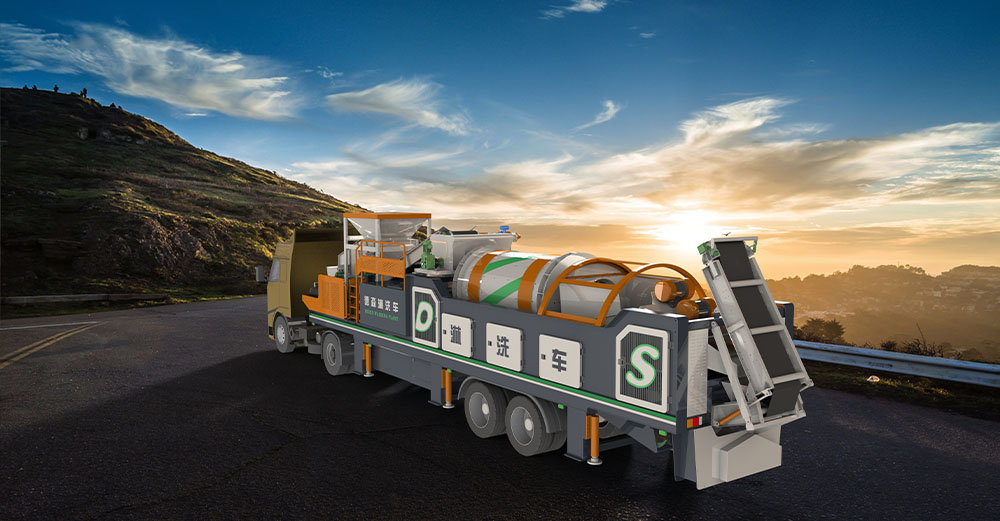
Desen Environmental's Mobile High-efficiency Scrubbing Plant integrates feeding, drum scrubbing, screening and slurry preparation into a single transportable unit. It is engineered for ex-situ soil washing projects where site conditions change frequently and rapid mobilization is essential. The plant is delivered in modular sections, can be set up on compact footprints, and is widely used for heavy metal contaminated soil, organic contaminated soil and oil-bearing soil remediation across China and overseas.
What Makes the Mobile High-Efficiency Scrubbing Plant Different
Unlike conventional washers that rely mainly on water flow, the Desen scrubbing plant is built around a rotary drum scrubber with high-elasticity liners. Material inside the drum is lifted and dropped repeatedly, so particles abrade one another until mud balls and clay lumps are completely separated from sand. The high-intensity mechanical action dramatically increases the contact surface between soil particles and washing agents, which improves the removal of pollutants that are physically bound to fine grains.
Rotary drum scrubbing with high-elasticity liners for thorough disaggregation
Integrated feeding, scrubbing, hydraulic screening and slurry discharge
Compact modular design for fast mobilization and multi-site deployment
DCS distributed electrical control with optional 5G cloud monitoring
Low energy consumption per tonne of treated soil
Easy adaptation to different soil types, from sandy loam to silty clay
How the Scrubbing Process Works
Feeding and Pre-Screening
Contaminated soil is loaded into a feed hopper and conveyed to a pre-screening stage that removes oversized debris and boulders. This protects the downstream scrubber and keeps the process running continuously even when the incoming soil contains construction waste or root material. The pre-screened oversize is stockpiled for separate handling, which keeps the main line free of blockages and reduces wear on the scrubbing unit.
Drum Scrubbing and Abrasion
The pre-screened soil enters the rotary drum scrubber together with wash water and, when required, chemical or biological washing agents. Inside the drum, lifting bars raise the material and let it fall repeatedly. Particle-to-particle friction, combined with the elastic liners, breaks down agglomerates and detaches contaminants from grain surfaces. The residence time and water-to-soil ratio are adjustable so the operator can match the scrubbing intensity to the actual soil condition observed at the site.
Hydraulic Screening and Slurry Preparation
After scrubbing, the slurry passes through a hydraulic screen where oversize particles above the target cut point are removed. The fine slurry is then ready for the next stages of the treatment line, such as classification, concentration and filter pressing. Because the plant delivers a consistent slurry quality, downstream modules operate at stable throughput and the overall recovery of clean sand is improved. Operators also benefit from lower flocculant and reagent consumption in the dewatering stage, because the scrubbed slurry is far more homogeneous than raw excavated soil.
Field Applications
The Mobile High-efficiency Scrubbing Plant has been deployed in a wide range of remediation and material processing projects:
Heavy metal contaminated soil washing projects in Wenzhou, Guangzhou and North China, processing lead and arsenic contaminated soil at capacities from 15 to 60 tonnes per hour
Arsenic contaminated soil remediation in Beijing using mobile scrubbing equipment with ex-situ chemical washing
Pre-treatment of contaminated soil before classification and dewatering at fixed and skid-mounted plants
Oil contaminated soil projects where intensive scrubbing is required to release petroleum hydrocarbons from sand surfaces before separation
In these projects, the scrubbing plant helped operators reduce downstream chemical consumption, improve fine sand recovery and cut the volume of contaminated fines sent to disposal. Because the unit can be redeployed quickly, contractors have used the same plant across multiple campaigns, which significantly improves equipment utilization compared with dedicated fixed installations.
Choosing the Right Scrubbing Equipment
Selecting a mobile soil scrubbing plant depends on soil characteristics, contaminant type, target throughput and site logistics. Key factors to evaluate include the hardness of soil agglomerates, the fines content, the required cut point, and whether the project requires the unit to move between multiple locations. Water availability and discharge rules also influence the choice of scrubbing intensity and the need for slurry handling capacity. Desen Environmental supports each project with process design, equipment configuration and on-site commissioning to ensure the scrubbing stage is matched to the full treatment line.
Operation and Maintenance Considerations
Mobile scrubbing plants are designed for rapid deployment, but their long-term reliability depends on disciplined operation. Wear components such as drum liners, screen panels and slurry pumps should be inspected on a scheduled basis, and the water circuit should be monitored to prevent solids buildup. Desen's DCS-based control system provides real-time visibility of motor loads, slurry flow and water balance, allowing operators to detect abnormal conditions early and keep the plant running at design capacity.
Conclusion
High-efficiency scrubbing is the foundation of a reliable soil washing process. A mobile scrubbing plant reduces project risk by delivering consistent slurry quality, enabling rapid redeployment and lowering operating costs. For contaminated soil remediation contractors and environmental engineering companies, the Mobile High-efficiency Scrubbing Plant from Desen Environmental provides a proven, field-tested solution that can be integrated into both mobile and fixed treatment configurations.
Mobile soil scrubbing plant for contaminated soil treatment: rotary drum scrubbing equipment that breaks down soil aggregates, liberates pollutants and prepares consistent slurry for soil washing lines of 15-60 T/H.
mobile soil scrubbing plant, soil scrubbing equipment, drum scrubber for contaminated soil, mobile soil washing equipment, contaminated soil treatment