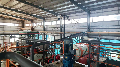
Mobile Solid-Liquid Separation Plant: Compact Dewatering for Slurry and Sludge
Why Mobile Solid-Liquid Separation Is Gaining Ground. Slurry and sludge are produced by many operations, including municipal pipeline dredging, shield tunneling, pile driving, river sedimen
Why Mobile Solid-Liquid Separation Is Gaining Ground
Slurry and sludge are produced by many operations, including municipal pipeline dredging, shield tunneling, pile driving, river sediment cleanup and soil washing. Transporting large volumes of watery slurry to a central treatment facility is expensive and slow. A mobile solid-liquid separation plant solves this problem by bringing dewatering capacity directly to the job site, cutting haulage costs, reducing disposal volumes and enabling water to be reused on the spot.
Desen Environmental's mobile solid-liquid separation plant integrates thickening and filter pressing into a compact, transportable system. Standard modular configurations handle 5 to 100 tonnes per hour, while truck-mounted units are available for capacities up to 15 tonnes per hour. The system achieves aggregate recovery above 95 percent and produces filter cakes with moisture content below 40 percent, with all process water recycled.
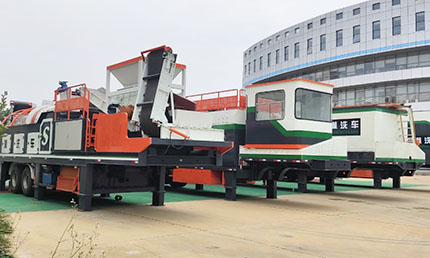
Core Components of the System
High-efficiency deep cone thickener for gravity settling and flocculation
Plate-and-frame filter press for mechanical dewatering of thickened slurry
Slurry feed and dosing pumps with flow control
DCS electrical control with remote monitoring
How the Dewatering Process Works
Thickening with Flocculants
Incoming slurry is first pumped into a deep cone thickener. Fine particles settle under gravity while flocculant such as PAM is dosed to accelerate aggregation. The clear overflow is directed to the water treatment circuit, and the concentrated underflow is stored in a buffer tank before dewatering.
Filter Press Dewatering
The concentrated slurry is fed into a plate-and-frame filter press. Pressure across the filter cloth forces most of the water through the cloth while solids are retained in the chambers as filter cakes. The cakes are discharged with low moisture content, ready for reuse or disposal, and the filtrate is returned to the water treatment module for recycling.
Water Recycling
Process water from thickening and pressing is treated through sedimentation and dosing stages, then returned to the operation. This closed-loop design minimizes fresh water consumption and prevents uncontrolled discharge at the site.
Field Applications
Desen's solid-liquid separation systems have been deployed for trench and dredged sludge disposal projects across China. A 15 T/H modular line in Jiangxi treated municipal trench sludge with a total installed power of about 225 kW and required only two operators per shift. In Guangzhou, an 8 T/H line processed urban pipeline sludge using a feeding, scrubbing and classification configuration with PLC control. The same platform is suitable for shield tunnel slurry, river sediment and soil washing fines.
Benefits at a Glance
Significant reduction in slurry transport and disposal volume
Recovery of sand and aggregate for reuse
Low filter cake moisture for easier handling
Quick mobilization and installation without permanent foundations
Automated control for stable 24-hour operation
Conclusion
For contractors and remediation operators handling slurry or sludge at remote or multiple sites, a mobile solid-liquid separation plant delivers fast payback through lower logistics costs and higher water reuse. Contact Desen Environmental to select the right capacity and configuration for your project.
Mobile solid-liquid separation plant for slurry and sludge dewatering: deep cone thickening, filter press dewatering and water recycling with 5-100 T/H capacity for trench, dredged and tunneling slurry.
mobile solid liquid separation plant, slurry treatment system, sludge dewatering equipment, filter press plant, dredged sludge disposal