Oil-Contaminated Soil Thermal Washing: Process, Equipment and Field Applications
Why Oil-Contaminated Soil Needs Thermal Washing. Oil-contaminated soil is one of the most widespread remediation challenges at oil fields, refineries, tank farms and abandoned petrol statio
Why Oil-Contaminated Soil Needs Thermal Washing
Oil-contaminated soil is one of the most widespread remediation challenges at oil fields, refineries, tank farms and abandoned petrol stations. Spilled crude, diesel and lubricants bind to soil particles, forming sticky agglomerates that are difficult to treat with simple screening. Thermal washing combines intensive mechanical scrubbing, chemical dissolution and water recycling to detach petroleum hydrocarbons from the soil matrix and reduce the volume of hazardous waste that must be sent off site.
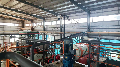
Desen Environmental offers a complete oil-contaminated soil washing line under its DSLX series. The system is designed for ex-situ treatment of sandy, loamy and silty-clay soils with total petroleum hydrocarbon (TPH) content below 50,000 mg/kg. Typical project capacities range from 15 to 100 tonnes per hour, with the standard 30 T/H line occupying about 1,200 m2 of modular equipment footprint and reaching full operation within roughly 15 days after delivery.

Key Modules of a Thermal Washing System
A complete thermal washing plant is assembled from seven integrated modules:
Bin-type feeding and pre-screening module with breaker teeth for sticky soil
Drum scrubber module for high-intensity washing and slurry preparation
Primary hydraulic screening module that removes particles larger than 2 mm
High-efficiency soaking, classification and concentration modules
Deep cone thickener and filter press modules for dewatering
Washing water recycling and treatment module
DCS-based electrical control module with remote monitoring
Step-by-Step Treatment Process
Scrubbing and Screening
Contaminated soil is fed into a rotary drum scrubber with wash water at a water-to-soil ratio of about 2.5:1. Washing agents are added to accelerate oil detachment. Inside the drum, lifting bars carry the material upward and let it fall repeatedly, so soil particles abrade each other until clay lumps and sand are fully separated. The discharge slurry then passes through a hydraulic screen, where oversize material above 2 mm is removed and sent for further treatment.
Soaking, Oil Separation and Classification
The screened slurry enters a high-efficiency soaking module where chemicals dissolve residual petroleum hydrocarbons. Undissolved oil floats to the surface and is collected in an oil separation tank as floating residue. A secondary classifier then recovers clean fine sand in the 0.15-2 mm range for direct reuse, while finer slurry continues to the thickening stage.
Dewatering and Water Recycling
Slurry below 0.15 mm is flocculated with PAM in a deep cone thickener. The thickened underflow is pumped to a plate-and-frame filter press, producing dry filter cakes with low moisture content. Press water and thickener overflow are treated in a recycling system with PAC, PAM and hydrogen peroxide, then returned to the washing circuit. The system maintains a water recycling rate above 90 percent.
Field Performance
In a Middle East oil field project, Desen's mobile washing equipment processed around 100 tonnes per hour of sandy soil with an average oil content of about 8 percent. Treated soil met the local environmental limit of 2,000 mg/kg TPH, and approximately 5,000 tonnes of crude oil were recovered over the operation period. In Ningxia, China, a 30 T/H washing line treated roughly 180,000 cubic meters of petroleum-contaminated soil in combination with bio-pile polishing.
Conclusion
Thermal washing is a proven, cost-effective solution for oil-contaminated soil, delivering high throughput, recovered oil, reusable sand and clean water in a single integrated line. For project-specific sizing and process design, contact Desen Environmental for a tailored proposal.
Learn how oil-contaminated soil thermal washing works: modular DSLX scrubbing, soaking, oil separation, dewatering and water recycling systems with 15-100 T/H capacity and field-proven results.
oil contaminated soil thermal washing, oil contaminated soil treatment machine, oil sludge treatment, contaminated soil remediation equipment, soil washing plant