Mobile Water Treatment Plant for Soil Washing Water Recycling and Discharge
Why Water Treatment Is Essential in Soil Washing. Soil washing is a water-intensive process. Washing water carries suspended solids, dissolved organic pollutants and heavy metals away from
Why Water Treatment Is Essential in Soil Washing
Soil washing is a water-intensive process. Washing water carries suspended solids, dissolved organic pollutants and heavy metals away from the treated soil, and the resulting wastewater must be treated before it can be reused or discharged. A mobile water treatment plant brings this capability directly to the project site, allowing contractors to recycle more than 90 percent of the washing water and minimize environmental risk.
Mobile Water Treatment Plant Process Design
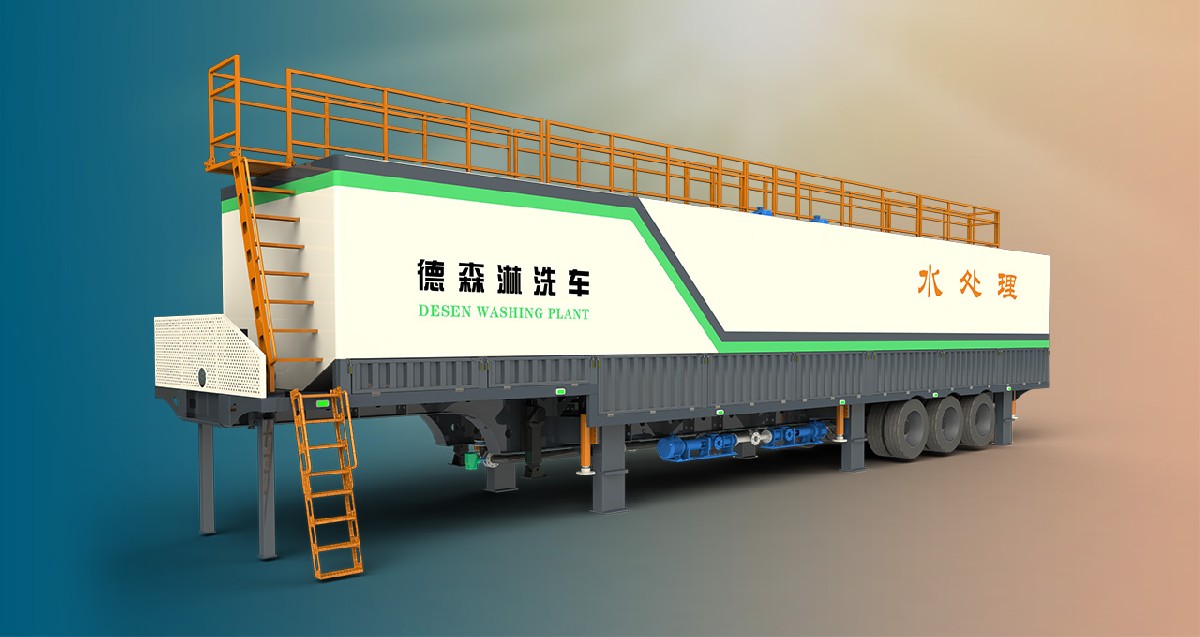
The mobile water treatment plant is designed around a compact treatment train that combines sedimentation, chemical reaction and clarification in a mobile configuration.
Primary Sedimentation
Overflow from the deep cone thickener and filtrate from the filter press are collected in a wastewater collection tank, then pass through a primary inclined-plate sedimentation tank where coarse suspended solids settle out.
Multi-stage Reaction Tanks
The wastewater then flows through four reaction tanks, where dosing systems add PAC and PAM for flocculation and hydrogen peroxide for oxidation of organic contaminants. Stirring and aeration systems ensure full mixing and reaction between the chemicals and the wastewater.
Secondary Clarification and Clean Water Storage
After the reaction stage, the wastewater enters a secondary inclined-plate sedimentation tank. The clarified overflow is collected in a clean water tank and pumped back to the washing circuit for reuse, while sludge from the settling tanks is dewatered by a small filter press.
Water Recycling Performance
In oil-contaminated soil remediation projects, the water treatment module supports a recycling rate of more than 90 percent, significantly reducing fresh water consumption and lowering operating costs. Treated water meets the requirements for continuous reuse in the scrubbing and classifying stages.
Field Applications
The mobile water treatment plant is commonly deployed together with soil washing systems. In a petroleum hydrocarbon remediation project in Ningxia, which treated approximately 180,000 cubic meters of contaminated sandy soil, the combined washing and water treatment system enabled continuous recycling of process water. In a Middle East oil-contaminated soil project treating about 300,000 cubic meters, similar water treatment equipment supported long-term washing operations in a water-scarce region.
Key Benefits
Recycles more than 90 percent of washing water
Compact mobile design with fast on-site setup
Automated dosing and control for stable water quality
Reduces fresh water demand and operating cost
Supports compliance with discharge and monitoring requirements
Conclusion
Water is both a key resource and a key cost factor in soil washing. The mobile water treatment plant from Zhengzhou Desen Environmental Technology Co., Ltd. helps remediation contractors recycle process water on site, reduce operating expenses and meet environmental requirements. Visit www.materialwashing.com or contact the Desen team for more information.