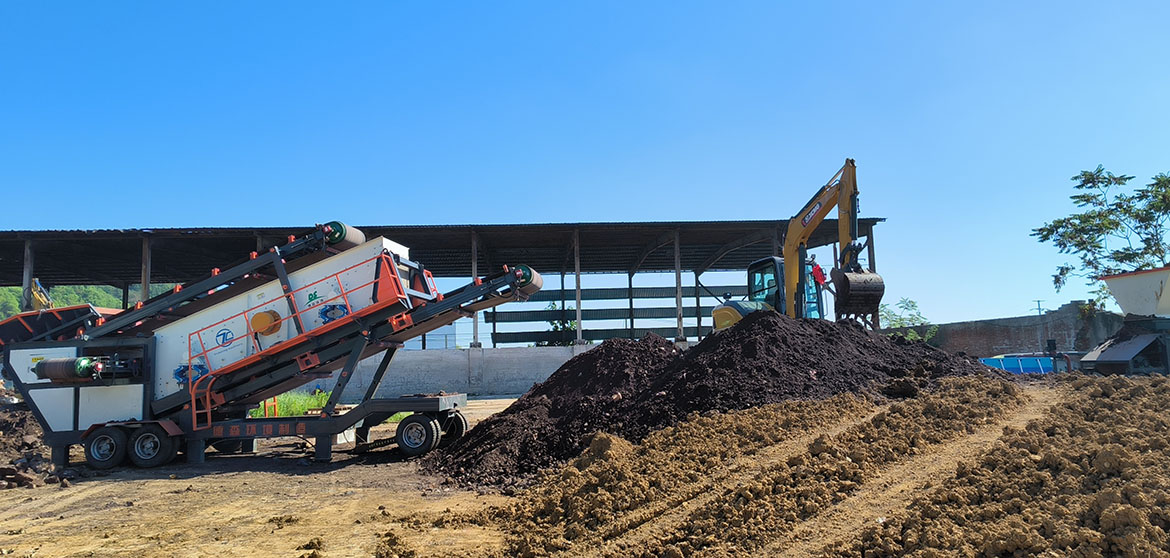
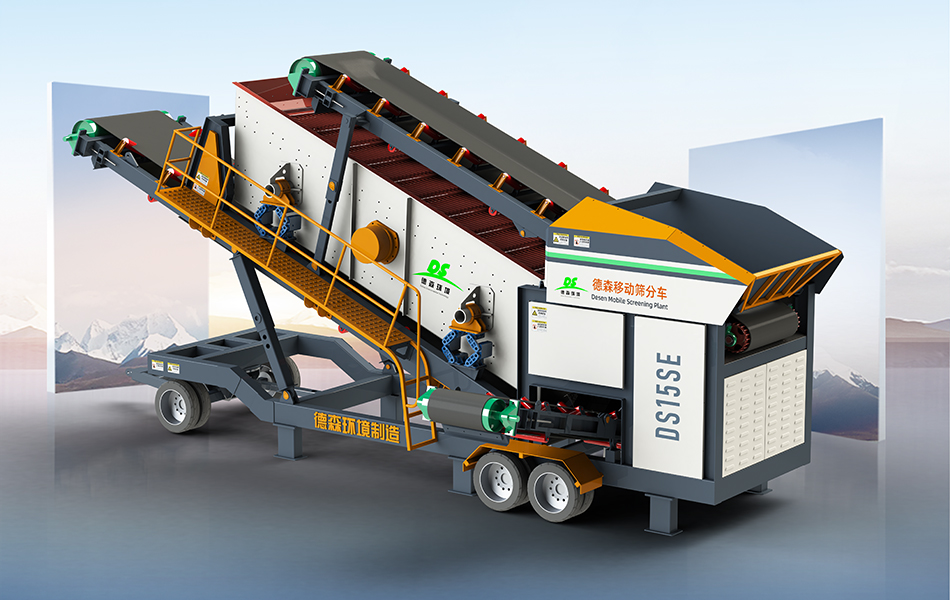
Skid-mounted vs fixed soil washing equipment compared on cost, deployment and throughput. Choose the right remediation system with Desen Environment.
# Mobile High-Efficiency Scrubbing Plant: Technical Analysis from Contamination to Remediation
## The Growing Need for Mobile Soil Remediation Solutions
Contaminated soil remediation stands at a critical intersection of environmental protection, regulatory compliance, and sustainable land reclamation. As industrial development expands globally, so does the challenge of addressing polluted sites left behind by past operations.
Mobile high-efficiency scrubbing plants represent a breakthrough in this domain, offering on-site treatment capabilities that significantly reduce transportation costs, minimize secondary pollution, and accelerate project completion timelines. This technical analysis explores how these systems transform contaminated soil challenges into sustainable remediation outcomes.

---
## Section 1: Application Background
### Industry Challenges in Soil Remediation
The global soil remediation market faces several pressing challenges:
- **Complex pollutant profiles:** Heavy metals (lead, arsenic, mercury, nickel, chromium), petroleum hydrocarbons (C6-C9/C10-C40), and organic compounds often coexist at contaminated sites
- **Stringent environmental regulations:** International standards require increasingly strict pollutant removal rates and comprehensive water management
- **Cost of traditional methods:** Excavation and off-site disposal can account for up to 70% of total remediation costs
- **Urgent processing requirements:** Land reclamation projects often have compressed timelines, requiring rapid deployment capabilities
### Target Application Scenarios
The mobile high-efficiency scrubbing system addresses these challenges through:
- **Heavy metal contaminated sites:** Mining areas, electronic manufacturing facilities, battery recycling plants, and tannery operations
- **Petroleum hydrocarbon affected soils:** Oil field operations, refineries, and storage tank sites
- **Chemical pollution remediation:** Industrial parks with historical chemical spills or processing accidents
- **Multi-site projects:** Infrastructure developments requiring sequential treatment across different locations
### Solution Value Proposition
By integrating material handling, washing classification, and sand screening into a compact platform with 30 tons/hour processing capacity, mobile scrubbing systems deliver:
- **On-site treatment:** Eliminates costly soil transportation and reduces exposure risks
- **Flexible deployment:** Rapid setup enables sequential site coverage for multi-location projects
- **Comprehensive water management:** Closed-loop recycling systems minimize discharge requirements
- **Scalable operations:** Modular configurations adapt to varying project demands

---
## Section 2: Technical Solution
### Equipment Architecture
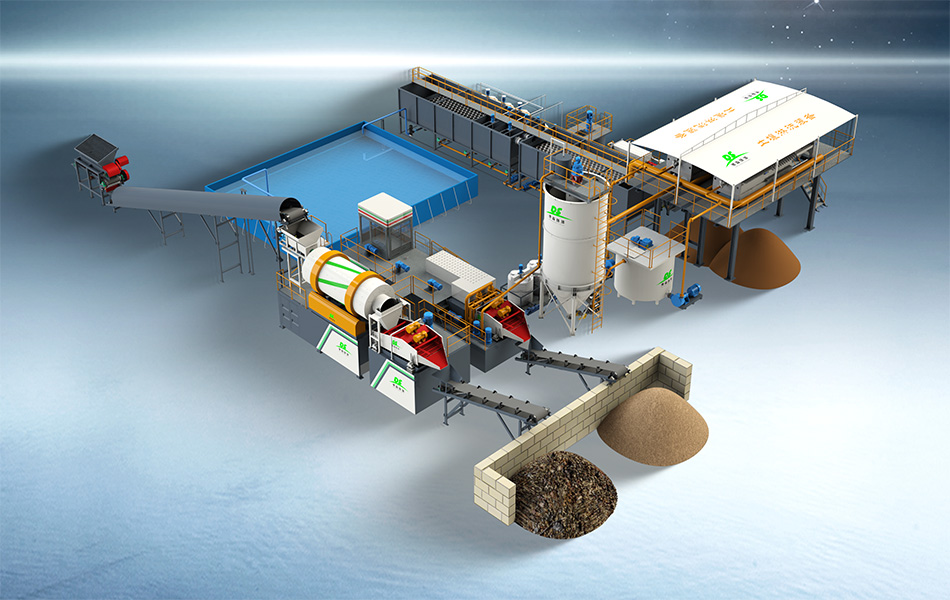
The mobile high-efficiency scrubbing plant comprises several integrated modules working in concert:
#### Core Processing Modules
1. **Tumbling Scrubber Unit**
- High-elasticity liner plates maximize scrubbing cycles through inter-particle friction
- Self-grinding mechanism separates mud clumps and sand aggregates efficiently
- Optimized for pollutant desorption from soil particle surfaces
2. **High-Efficiency Classification and Leaching Module**
- Combines physical separation with chemical/biological solvent enhancement
- Promotes pollutant dissolution and migration for comprehensive removal
- Compatible with both organic contaminants and heavy metal remediation
3. **Leaching Selection Module**
- Dehydration, dewatering, and desliming of slurry materials
- Effective recovery of fine sand resources
- Significant reduction in mud volume for economical disposal
4. **Mud Filtration System**
- Handles high-volume dewatering operations
- Low power consumption with 24-hour automated continuous operation
- Produces filter cakes with low moisture content suitable for further treatment
- Clarified water recirculates back to process loops
5. **Water Treatment Module**
- Receives overflow from leaching segment deep-cone concentrators and filter press filtrate
- Two-stage processing: collection pool → primary inclined tube settlement → four reaction tanks
- Reaction tank configuration includes mixing, aeration, and chemical dosing capabilities
- Meets discharge standards or enables water recycling for process reuse
### Key Technical Parameters
| Parameter | Specification |
|-----------|--------------|
| Processing Capacity | 30 tons/hour |
| Applicable Particle Size | ≤2mm for classification plants |
| Solids Concentration | ≤30% for multi-stage systems |
| Equipment Platform | Mobile skid-mounted or trailer-based configurations |
| Control System | DCS distributed control with PLC automation |
### Process Route Overview
```
Feed Inlet → Pre-screening (oversize particle removal)
→ Drum Scrubbing (mechanical friction for pollutant desorption)
→ Hydraulic Cyclone Classifier (coarse/fine particle separation)
→ Coarse Fraction: Screw Dewaterer → Clean Sand Recycling
→ Fine Fraction: Concentrator → Filter Press → Filter Cake Disposal
→ Process Wastewater: Inclined Tube Settlement → Reaction Tanks
(Chemical dosing + Mixing + Aeration) → Compliant Discharge or Water Recycling
```
### Advanced Control Features
- **DCS Distributed Control System:** Real-time monitoring and parameter adjustment
- **PLC Automation:** Programmed sequences enable 24/7 unattended operation
- **5G Cloud Connectivity (optional):** Remote diagnostics and performance optimization
- **Hydraulic Scissor Platform:** Low-positioned transport safety with elevated operational monitoring
**Operational Advantages**
The integrated architecture delivers:
- Small footprint suitable for constrained site conditions
- Rapid deployment enabling quick response to project needs
- Easy installation reducing commissioning time
- High energy efficiency through optimized process flow design
---
## Section 3: Project Application Instances
### Case Study 1: Ningxia Oil Hydrocarbon Contaminated Soil Remediation
**Project Overview**
- **Volume:** Approximately 180,000 cubic meters of contaminated soil
- **Pollutant Profile:** Petroleum hydrocarbons (C6-C9/C10-C40), benzene, ethylbenzene, benzo(a)pyrene, chloroform
- **Soil Type:** Sandy soil formations facilitating rapid water permeability
- **Processing Capacity:** 30 tons/hour continuously throughout project duration
- **Deployment Period:** Extended operation over multiple months
**Implementation Approach**
Combined washing and biological composting remediation technology was employed:
1. Initial mobile scrubbing plant treatment for bulk pollutant removal
2. Biological treatment units for residual hydrocarbon degradation
3. Sequential processing across large-scale excavation operations
**Results and Outcomes**
- Total volume processed exceeded 180,000 m³
- Petroleum hydrocarbon content reduced to compliant levels
- Efficient water recycling minimized discharge requirements
- Sandy soil characteristics facilitated rapid processing cycles
### Case Study 2: Nanjing Heavy Metal Contaminated Soil Leaching Project
**Project Overview**
- **Volume:** Multiple batches processed over six-month timeline
- **Pollutant Profile:** Primarily heavy metals including lead and arsenic
- **Processing Capacity:** 30 tons/hour sustained throughput
- **Site Type:** Former industrial facility with historical mining operations
**Implementation Approach**
Mobile leaching system deployment for comprehensive heavy metal removal:
1. Chemical agents optimized for specific metal chelation
2. Classification modules separating contaminated fractions from clean sand
3. Concentrated filter cakes prepared for hazardous waste disposal
4. Process water continuously treated and recirculated
**Results and Outcomes**
- Achieved stringent pollutant removal rates meeting regulatory thresholds
- Clean sand recovered and classified for potential reuse applications
- Filter cake volumes reduced through efficient dewatering operations
- Continuous monitoring ensured compliance throughout project execution
### Case Study 3: Beijing Mobile Soil Leaching Remediation Project
**Project Overview**
- **Volume:** Industrial contaminated site remediation efforts
- **Pollutant Profile:** Primarily arsenic contamination from historical industrial operations
- **Equipment Configuration:** Mobile scrubbing vehicle deployment
- **Technology Approach:** In-situ chemical leaching and soil washing
**Implementation Approach**
Arsenic contamination remediation strategy:
1. Mobile unit positioned adjacent to excavation point
2. Chemical agents specifically targeting arsenic speciation and solubility
3. Classification modules separating arsenic-rich fractions from clean material
4. Continuous process monitoring for quality assurance
**Results and Outcomes**
- Efficient arsenic removal through optimized chemical treatment
- High recovery rates of clean sand materials
- Compact equipment footprint accommodated constrained site conditions
- Rapid deployment enabled accelerated project timeline
---
## Section 4: Technical Features and Application Recommendations
### Technical Features Summary
#### 1. Mobile and Compact Design
**Feature Description:** The equipment integrates material transport, washing classification, and fine sand screening functions into a unified platform.
**Benefits:**
- Small footprint reduces site preparation requirements
- Rapid relocation capability for multi-site construction projects
- Trailer-mounted configurations enable highway transport without disassembly
- Quick setup minimizes non-operational downtime
#### 2. High-Efficiency Processing Performance
**Feature Description:** The integrated architecture delivers low energy consumption with high output ratio through optimized process flow design.
**Benefits:**
- Consistent throughput maintains project schedules
- Optimized power consumption reduces operational costs
- Efficient pollutant removal minimizes reprocessing requirements
- Scalable operations adapt to varying processing volumes
#### 3. Wide Application Scope
**Feature Description:** The system demonstrates versatility across different contamination scenarios and site conditions.
**Benefits:**
- Suitable for heavy metal pollution remediation projects
- Effective treatment of chemical pollutant contaminated sites
- Capable of processing petroleum hydrocarbon affected soils
- Adaptable configurations respond to varying site constraints
- Compatible with diverse soil types and moisture contents
#### 4. Advanced Water Management System
**Feature Description:** The water treatment module implements a comprehensive recycling strategy:
- Receives overflow from leaching segment deep-cone concentrators and filter press filtrate
- Collection pool for initial clarification
- Primary inclined tube settlement for particle removal
- Four-stage reaction tank configuration (mixing + aeration + chemical dosing)
- Meets discharge standards or enables water recycling for process reuse
**Benefits:**
- Minimizes fresh water consumption requirements
- Reduces discharge volumes and associated costs
- Enables sustainable closed-loop operations
- Flexible treatment capacity adapts to site-specific regulatory requirements
#### 5. DCS Distributed Control System
**Feature Description:** The advanced automation platform enables 24/7 continuous operation with comprehensive monitoring capabilities.
**Benefits:**
- Real-time parameter monitoring for quality control
- Automated process sequences reduce operator intervention needs
- Remote diagnostics support proactive maintenance planning
- Performance optimization through data-driven adjustments
- Comprehensive operational records support compliance reporting
#### 6. Hydraulic Scissor Platform (Optional)
**Feature Description:** Control room mounted on hydraulic scissor platform provides:
- Low-positioned safety during transportation
- Elevated position for comprehensive site monitoring during operation
- Adjustable height accommodates uneven terrain conditions
### Application Recommendations
#### Site Selection Considerations
1. **Soil Characteristics:**
- Sand and sandy loam formations facilitate optimal processing efficiency
- High clay content may require pretreatment or adjusted process parameters
- Moisture content affects equipment performance; adjustments recommended
2. **Pollutant Profile:**
- Heavy metals: Chemical leaching optimization required based on specific metal types
- Petroleum hydrocarbons: Biological treatment integration recommended
- Mixed contamination: Comprehensive analysis determines optimal treatment approach
3. **Regulatory Requirements:**
- Review local discharge standards for wastewater management
- Confirm filter cake disposal requirements and permitted facilities
- Align process design with applicable environmental regulations
4. **Project Timeline:**
- Multi-site projects benefit from mobile configuration rapid deployment
- Large-scale operations may require parallel equipment units
- Extended projects warrant standby equipment arrangements
#### Configuration Options
**Standard Configuration:**
- Tumbling scrubber + classification module + filtration system
- Basic water treatment with recycling capability
- PLC control system with local monitoring
**Advanced Configuration:**
- All standard components plus:
- Water treatment module with full recycling
- DCS distributed control system
- Optional 5G cloud connectivity for remote support
- Hydraulic scissor platform control room
#### Selecting the Right Solution
- **Heavy Metal Contaminated Sites:** Standard or advanced configuration depending on volume requirements
- **Petroleum Hydrocarbon Affected Soils:** Advanced configuration with integrated biological treatment options
- **Chemical Pollution Remediation:** Site-specific analysis determines optimal chemical agents and process parameters
- **Mixed Contamination Projects:** Comprehensive system evaluation with potentially parallel processing lines
- **Large-Scale Operations (>100,000 m³):** Consider multiple units operating in parallel for accelerated throughput
---
## Conclusion and Contact Information
The mobile high-efficiency scrubbing plant delivers a comprehensive solution for contaminated soil remediation challenges. With its integrated architecture, advanced control systems, and wide application scope, this equipment addresses the complex needs of modern environmental protection projects.
Whether treating heavy metal contamination, petroleum hydrocarbon affected soils, or chemical pollutant impacted sites, mobile scrubbing systems enable sustainable remediation outcomes while reducing costs and accelerating project timelines.
### Contact Information
For inquiries regarding mobile soil washing solutions, please contact:
- **Website:** [www.materialwashing.com](https://www.materialwashing.com)
- **Email:** info@materialwashing.com
- **Technical Support:** Available 24/7 for project-specific consultation
---
*This technical analysis is based on Desun Environment's established experience serving over 1000+ soil remediation engineering enterprises globally, with equipment deployed in 100+ countries and regions.*