Trommel Screen vs Vibrating Screen for Sticky Soil: How to Choose the Right Mobile Screening Plant
Wet, clay-rich soil blinds screens fast. This guide compares trommel screen vs vibrating screen for sticky soil and helps you match the right mobile screening plant to your site.
Trommel Screen vs Vibrating Screen for Sticky Soil: How to Choose the Right Mobile Screening Plant
Screening is the first step in almost every soil remediation and material recycling flow sheet — and it is also where projects lose the most time. When the feed is wet, clay-rich or freshly dug, screens blind over, conveyors slip and hourly tonnage collapses. Choosing between a trommel screen and a vibrating screen for sticky soil is therefore not a minor detail: it decides whether the rest of the plant can run at its design capacity. This guide explains how each screen type behaves with moist, adhesive material and how to match the right mobile screening plant to your site.
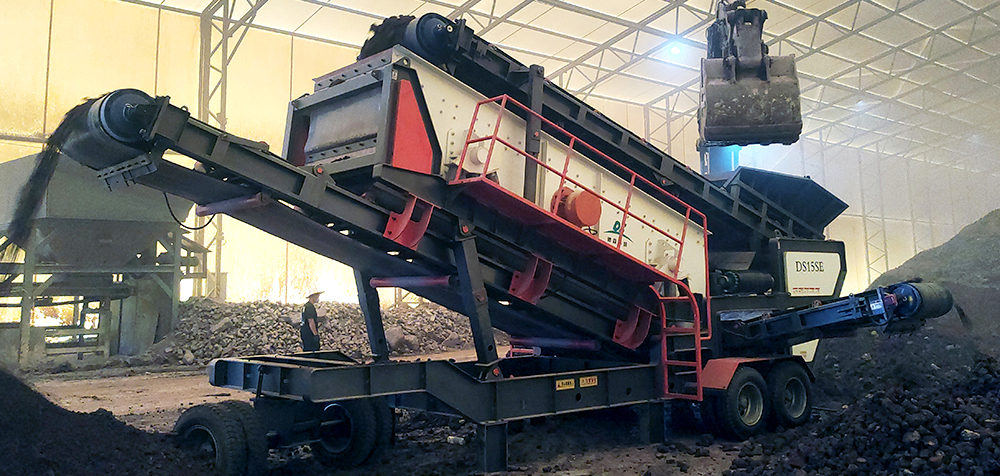
Why Sticky Soil Is Difficult to Screen
Clay and silty fines behave very differently from sand and gravel. As moisture rises, fine particles stop flowing as individuals and begin forming lumps that smear across screen surfaces. On a vibrating screen this shows up as blinding: apertures clog, the effective open area drops, and the deck starts carrying material instead of separating it. Sticky feed also builds up in hoppers, chutes and transfer points, so the whole pre-treatment stage demands more operator attention.
Three factors decide how troublesome your material will be:
Moisture content — once free moisture appears between particles, fines begin to agglomerate and cling to screen panels.
Clay fraction — the higher the share of clay and silt, the more plastic and adhesive the feed becomes, especially after rainfall or excavation below the water table.
Feed condition — large lumps of compacted soil break down slowly, occupying screen area and coating the apertures around them.
How a Trommel Screen Handles Wet and Sticky Feed
Working principle
A trommel screen — also called a rotary screen — is a slowly rotating cylindrical drum with perforated panels. Material is lifted by the drum rotation and tumbles forward; the constant rolling action continuously presents fresh surfaces to the screen panel, while larger lumps are gradually broken up by tumbling rather than by impact.
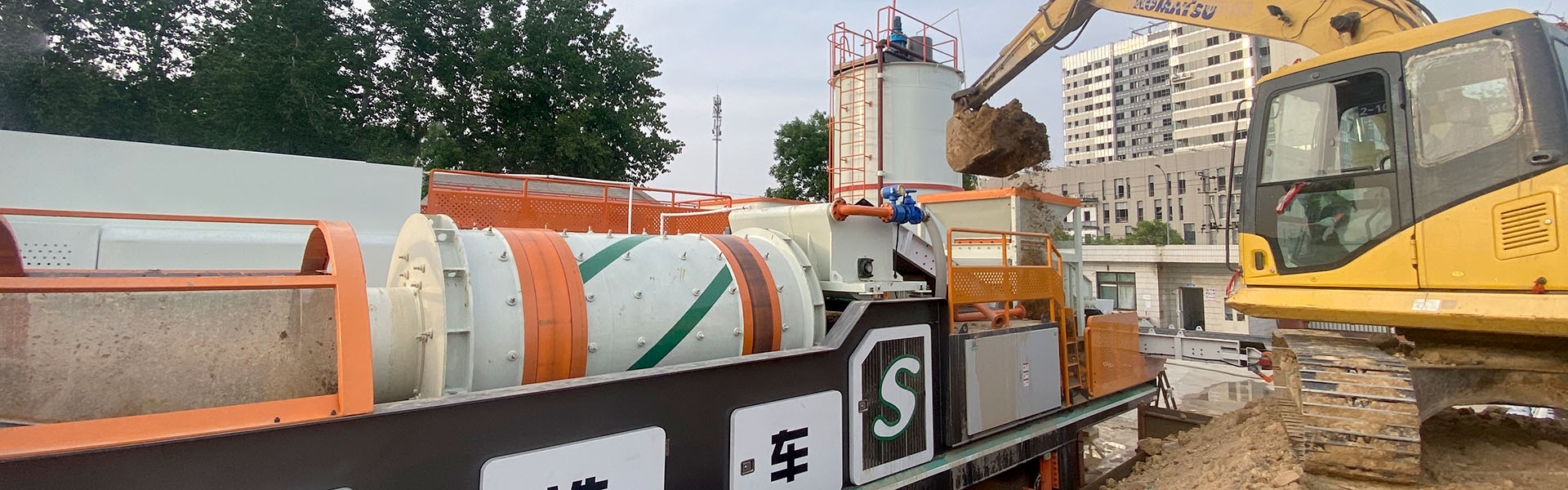
Strengths with sticky material
Anti-clogging motion — the rolling and scrubbing action inside the drum keeps apertures open far longer than a static deck, which is why trommels are widely used for wet and muddy feeds.
Stable, simple structure — low rotating speed means steady operation and low wear, important on remote sites with limited service support.
Gentle on variable feed — tramp items and oversized lumps travel out of the drum end instead of damaging the panel.
The trade-off: a trommel needs length to make a fine cut, so separation efficiency at tight apertures is lower than a multi-deck vibrating screen, and the drum takes up more footprint per tonne of capacity.
How a Vibrating Screen Performs on Sticky Soil
Working principle
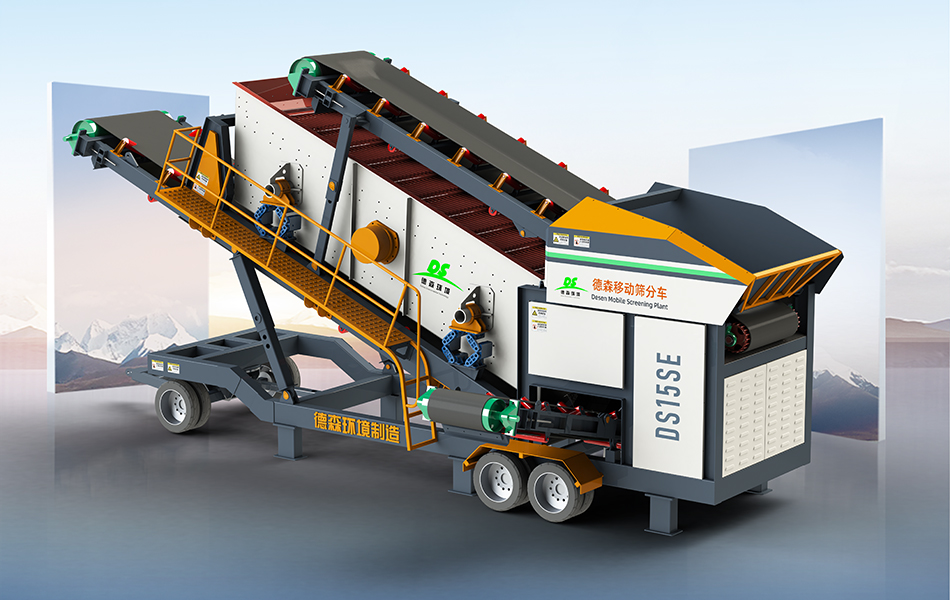
A vibrating screen uses vibrating motors or eccentric shafts to generate periodic vibration across one or more inclined decks. Material stratifies as it travels — fines sink and pass through the apertures while coarse particles discharge off the end — so a two- or multi-layer machine can produce several sized fractions in a single pass.
Where a vibrating screen wins
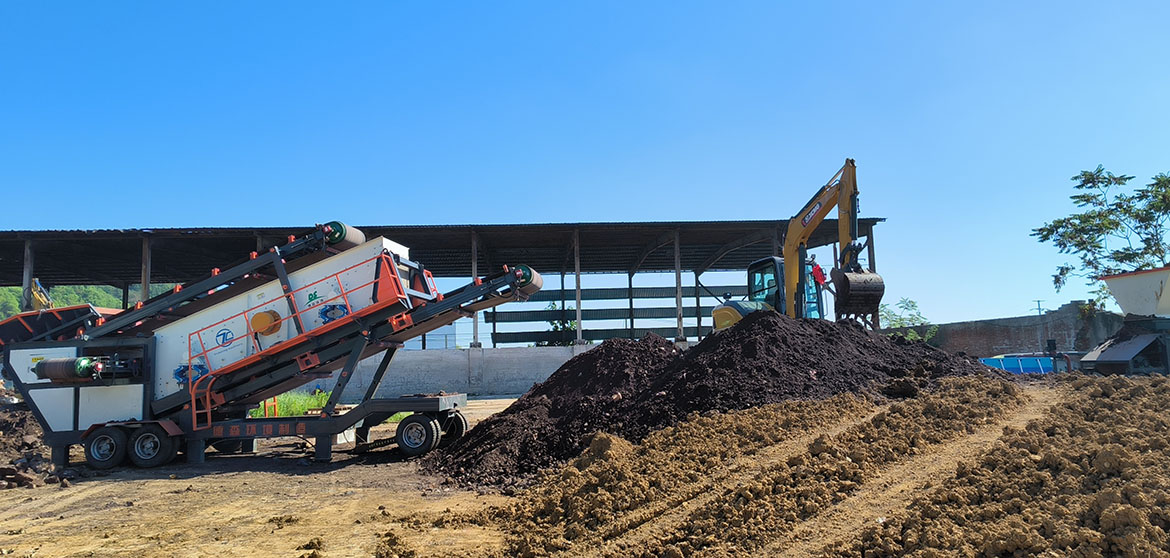
Throughput — high screening capacity per unit of deck area, with low energy consumption; Desen mobile screening models such as the DS260 and DS15SE cover 30–150 t/h.
Precise classification — multi-layer decks with adjustable screen holes deliver accurate cut sizes for aggregate recovery or washing feed preparation.
Compact mobility — feed hopper, screen and conveyors integrate onto a trailer or crawler chassis, so the plant relocates quickly between sites.
Its limitation is the mirror image of the trommel's strength: with high-moisture clay, blinding builds up quickly. That is why Desen pairs vibrating screens with a bar screen (grizzly) pre-screening stage — as used in the DSLXC/01 washing module, whose bar screen is designed specifically for adhesive materials — to remove coarse sticky lumps before fine screening.
Which Screen Should You Choose?
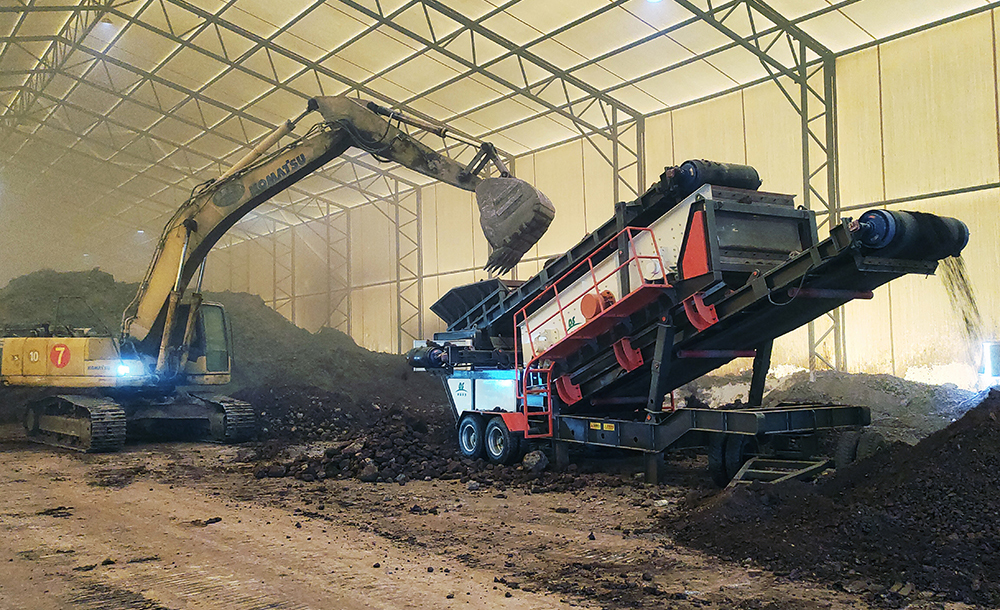
A practical selection sequence looks like this:
Wet, clay-heavy, variable feed — start with a trommel or a bar screen; clogging resistance matters more than fine-cut precision at this stage.
Pre-conditioned or drier feed, high tonnage, tight cut sizes — a multi-layer vibrating screen delivers the classification accuracy and throughput.
Mixed projects — combine them: bar screen for coarse sticky lumps, trommel or vibrating deck for sizing, then feed the prepared material to the washing line.
Site logistics — choose a crawler chassis for soft or confined ground, a trailer-mounted plant for frequent road transfer.
Desen Environmental manufactures mobile vibrating, rotary (trommel) and bar screen plants in both crawler and trailer configurations, used independently or combined with modular soil washing equipment. Screening cases for contaminated soil pretreatment — for example in Chongqing and Ningxia, China — show how the right screening setup stabilizes downstream washing capacity. Before recommending a configuration, our engineers review your material data: moisture, clay content, target cut sizes and required tonnage. Send your project details to desengroups@gmail.com and we will help you size the screening stage correctly from the start.