Modular Soil Washing Equipment for Remediation Projects in the Middle East: Scalable Cleanup for Oil-Contaminated Sites
Modular soil washing equipment helps Middle East operators remediate oil-contaminated sites with scalable capacity, fast deployment and lower logistics costs.
Across the Gulf region, decades of oil production, refining and storage have left a legacy of contaminated sites: tank farms, pipeline corridors, drilling pads and legacy pits. Remediation budgets are under pressure, timelines are short, and sites are often remote. For many operators and EPC contractors in the Middle East, modular soil washing equipment has become the most practical route to large-volume cleanup without the cost and rigidity of a fixed plant.
Why modular design fits Middle East remediation projects
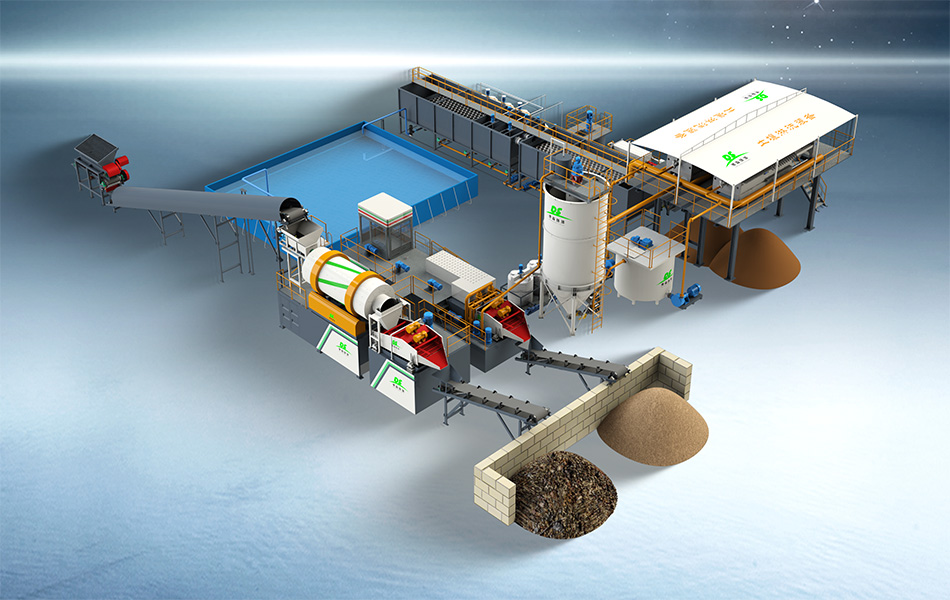
Traditional fixed soil washing plants require civil foundations, long installation periods and a high minimum throughput to be economical. Modular skid-mounted systems take a different approach: the washing process is broken into standardized units that can be combined, relocated and scaled according to the site.
Zhengzhou Desen Environmental Technology Co., Ltd. builds its modular washing and remediation plant around four basic modules - scrubbing, classifying, solid-liquid separation and water treatment. Modules are added or removed depending on the feed material and the treatment target of each project. The same platform can therefore serve a 10,000-ton legacy pit one year and a pipeline right-of-way the next.
- Fast deployment: no heavy civil works; a hardened, level surface is sufficient for installation.
- Scalable capacity: add scrubbing or classification lines as contaminated volumes grow.
- Relocation value: equipment moves between sites instead of being abandoned after one project.
- Remote monitoring: intelligent PLC and DCS control with 5G cloud IoT support multi-port monitoring and data synchronization.
Hot washing for oil-contaminated soil and sludge
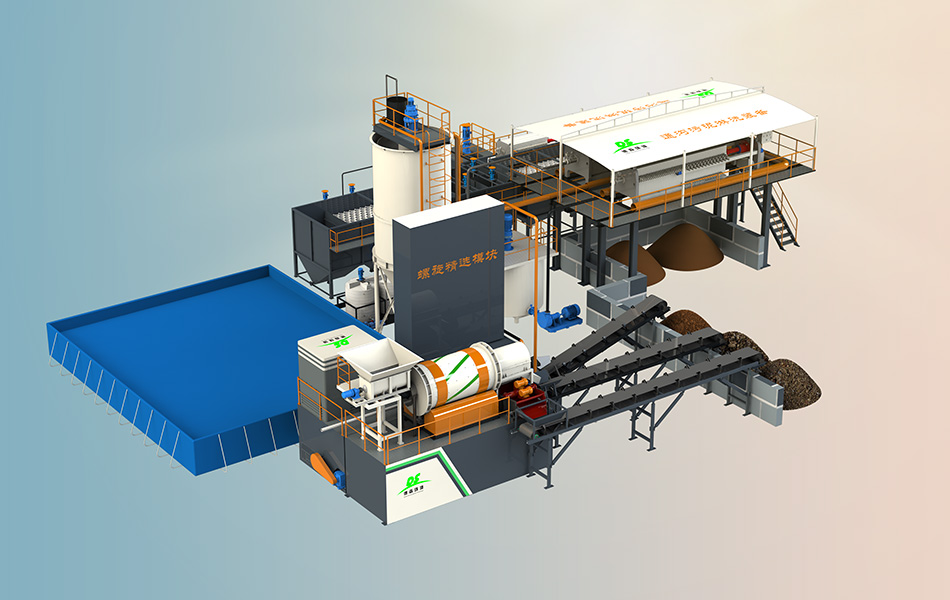
Oil contamination behaves differently from heavy metal contamination. Crude oil, tank bottom sludge and aged oily sludge form stable emulsions that plain washing cannot break. Desen's hot washing process creates the right temperature and chemical environment to destroy the emulsified structure, reduce interfacial surface tension and separate oil from soil particles.
This approach is especially suitable for the sandy oil sludge common in the Middle East and Central Asia. washed sand and aggregates can be recovered for reuse, recovered oil can be recycled, and the remaining concentrated cake leaves a much smaller disposal volume - a critical factor where landfill capacity is limited and disposal fees are high.
What a typical project achieves
Field projects with modular washing systems consistently report three outcomes that matter to project owners: a reduction rate of contaminated soil volume above 80 percent, high removal of target contaminants, and recovery of sand and gravel fractions that can be reused on site as clean backfill or construction material. Water is recycled within a closed loop, which matters enormously in arid Gulf environments where fresh water is a scarce resource.
Proven reference: the Abu Dhabi oily soil project
Desen's equipment has been deployed in the United Arab Emirates for oily soil washing, and the company now lists machine references across more than 30 countries including Saudi Arabia, Oman, Turkey and Iran. For buyers in the region, this matters: modular washing technology in the Gulf is no longer experimental, it is an operating reality with local service experience behind it.
Choosing the right configuration
Before selecting equipment, remediation teams should assess four factors: the contaminant type and concentration, the soil texture and grain size distribution, the total volume to be treated, and the project duration. Sandy soils with oil contamination typically need the hot washing line; heavy metal sites usually work with ambient washing plus classification; mixed sites may need both. A modular supplier should be able to configure the train accordingly rather than force one standard plant onto every site.
Desen led the compilation of the Chinese group standard T/CMES 07003-2022 for ex-situ soil washing with modular skid-mounted equipment - the first group standard of its kind, implemented in September 2022. For international buyers, the standard provides a transparent technical benchmark covering process requirements and assembly quality.
For operators planning remediation work in the Middle East, modular soil washing equipment offers a route to combine regulatory compliance with commercial realism: lower mobilization cost, reusable equipment across multiple sites, and a treatment chain that turns contaminated soil into measurable, reportable outcomes.