Mobile Soil Washing plant: On-Site Heavy Metal Remediation Without Secondary Pollution
Mobile soil washing vehicles bring the remediation plant to the contaminated site, cutting transport costs and avoiding secondary pollution during heavy metal cleanup.
When a contaminated site is far from a fixed treatment plant, the economics of remediation often collapse under haulage costs. Excavating tens of thousands of tons of heavy metal contaminated soil and trucking it to an off-site facility multiplies cost, extends schedules and creates its own environmental risk every kilometer the trucks run. The mobile soil washing plant reverses the logic: instead of moving soil to the plant, the plant moves to the soil.
How a mobile soil washing plant works
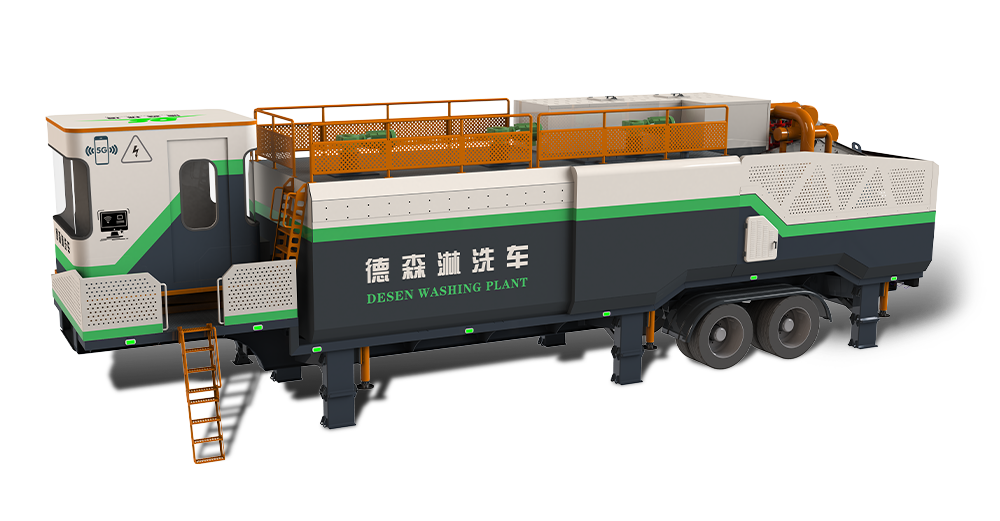
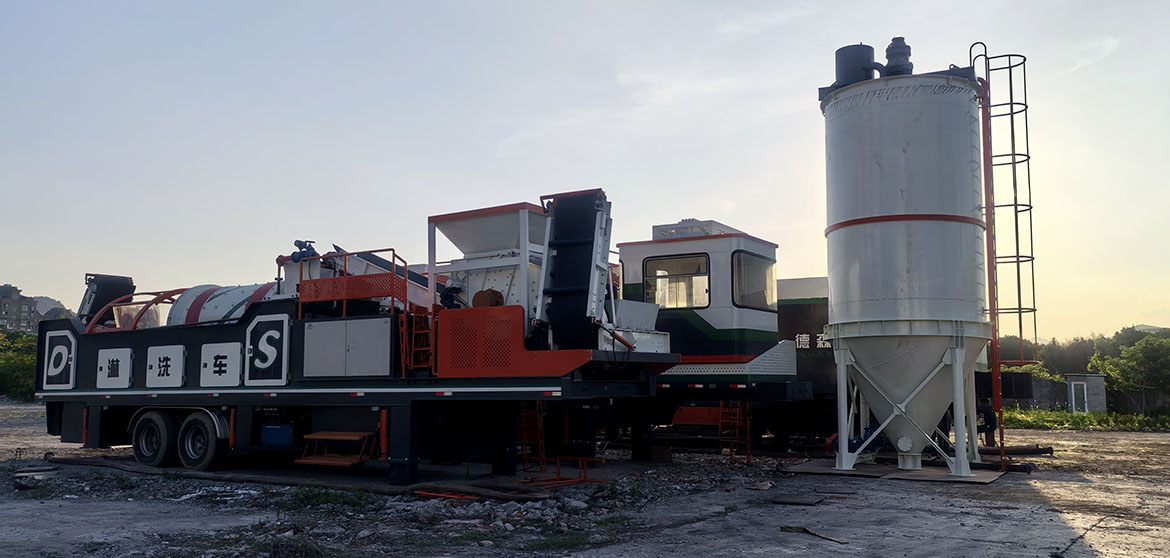
A mobile washing plant integrates the core remediation process - feeding, scrubbing and classification - on a trailer-mounted platform that travels between sites under its own axle configuration. Desen's mobile high-efficiency scrubbing plant DSLXC/01, for example, combines a feeding unit, an efficient scrubbing unit and a hydraulic screening unit in one towable module with a capacity of 15-20 tons per hour.
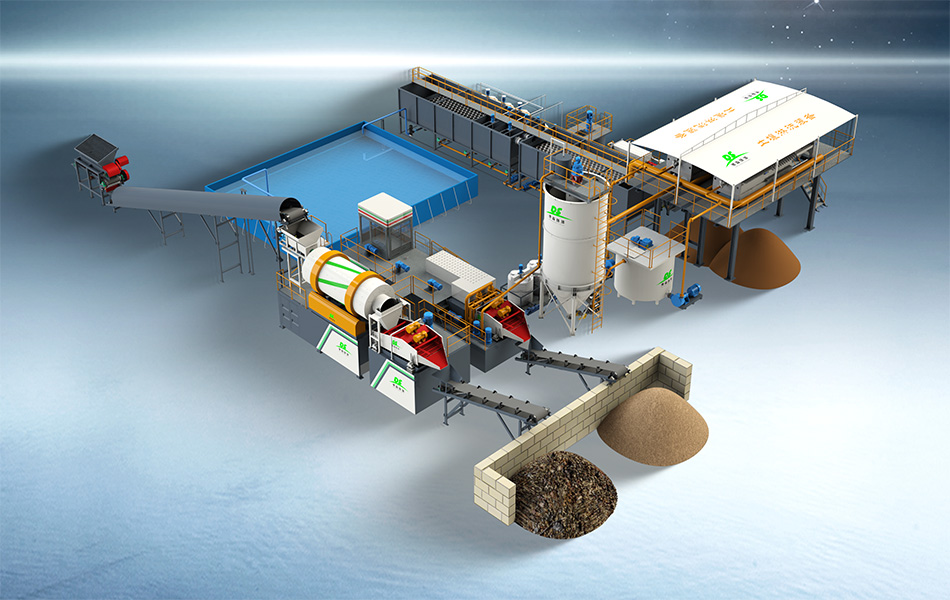
At the site, the plant is leveled on hydraulic jacks, connected to power and water, and starts processing. Contaminated soil is fed into the rotary drum scrubber where self-grinding and intensive scrubbing detach contaminants from soil particles. Coarse material is screened out, fine fractions are pumped onward for classification, and clean sand and gravel fractions can be returned to the site.
Why on-site treatment avoids secondary pollution
No long-distance haulage: contaminated material never leaves the site boundary, eliminating spill and accident risk in transit.
Closed water loop: process water is recycled through the separation and treatment stages instead of being discharged.
Rapid start and stop: the plant starts within hours of arrival and demobilizes just as fast, shortening the window of site disturbance.
Reduced community impact: fewer truck movements through residential areas near urban contamination sites.
Heavy metal removal through washing and classification
Heavy metals such as hexavalent chromium, lead, cadmium, zinc and arsenic tend to concentrate in the fine fraction of soil - silts and clays with large surface areas. Washing exploits this: the scrubbing stage detaches fines from sand and gravel, and the classification stage separates clean coarse fractions from contaminated fines. The result is a large volume of cleaned material and a much smaller concentrated fraction for stabilization or disposal.
For projects requiring chemical enhancement, washing agents can be dosed at the feed stage to promote dissolution of target metals. Desen's washing lines have treated soils contaminated with heavy metals, semi-volatile organics, petroleum hydrocarbons and PCBs across chemical, pharmaceutical, metallurgical and mining sites.
A fleet that grows with the project
A single plant handles scrubbing. Larger projects add matching modules: the DSLXC/02 multistage classifying plant for fine fraction separation, the DSLXC/03 solid-liquid separation plant for dewatering concentrated slurry, and the DSLXC/04 water treatment plant for process water recycling. All units share the same trailer platform logic, two-axle transport dimensions and independent electrical control, so a fleet can be assembled project by project.
Where mobile plants deliver the most value
Mobile soil washing plants suit projects with dispersed or multiple contamination sources: urban redevelopment parcels, legacy industrial zones, mining districts, and pipeline corridors. They are equally relevant for rental business models - contractors can mobilize washing capacity for a single project without capital purchase, which is why rental fleets of mobile washing and screening plants have expanded rapidly in recent years.
For site owners comparing options, the decision framework is straightforward: where contaminated volumes are large, soil is washable, and either the site or the region hosts multiple potential projects, a mobile washing plant - owned or rented - typically outperforms dig-and-haul on both cost and environmental performance.