Mobile Screening Plant Feed Sizing for Washing Line: Matching Screen Discharge to Washer Requirements
A mobile screening plant sets the feed sizing a washing line depends on. See how Desen matches screen discharge gradation and tonnage to washer capacity for steady soil washing.
Mobile Screening Plant Feed Sizing for Washing Line: Matching Screen Discharge to Washer Requirements
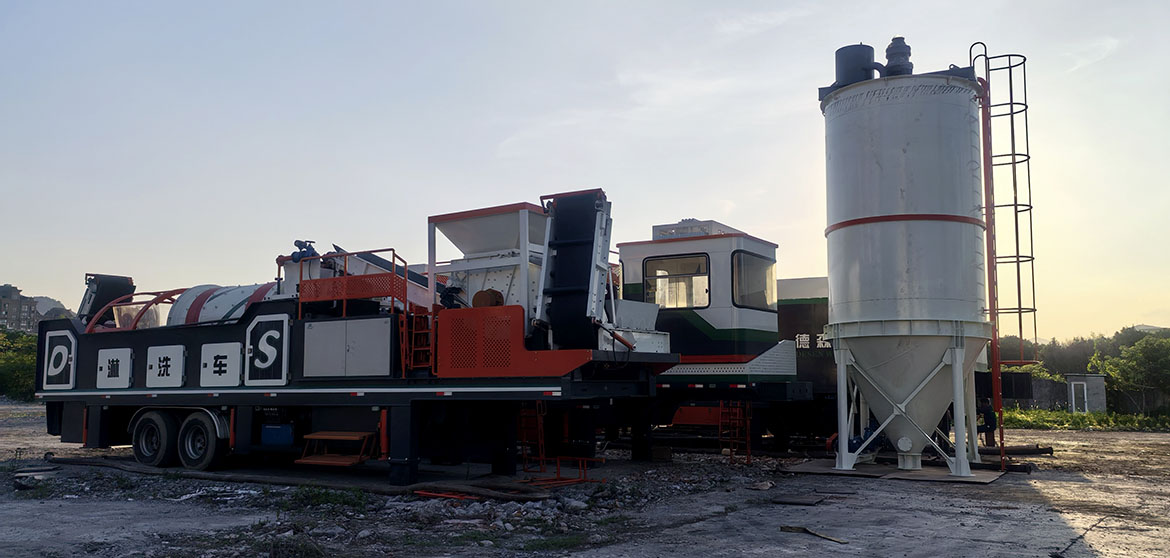
On a soil washing project, the screen rarely gets the attention the washer does, yet the whole line depends on it. A washing plant is built to scrub, separate and dewater a specific size range of soil. If the material arriving at the washer feed hopper is too coarse, too fine or simply inconsistent, the washing result drops no matter how well the plant itself is configured. Feed sizing is therefore one of the first technical conversations Desen Environmental has with every remediation contractor, and it is the reason a mobile screening plant is normally deployed ahead of the washing line rather than treated as an optional extra.
Why Feed Sizing Controls Washing Results
Soil washing works because contaminants such as heavy metals and petroleum residues concentrate in the fine particles and the organic fraction of the soil. The washing process scrubs these fines off the coarser grains and then separates the two streams. That separation only performs as designed when the size distribution of the incoming feed sits within the range the plant was engineered for.
The Size Fractions a Washing Plant Expects
- Above 20 mm: cobbles, gravel and demolition debris that scrubbing cannot clean economically; these are screened out and crushed or disposed of separately.
- 2 mm to 20 mm: sand and fine gravel, the main cleaning target for the scrubbing and attrition stages.
- 63 microns to 2 mm: coarse silt and fine sand, which wash but at higher water and reagent demand.
- Below 63 microns: the fraction where most contamination concentrates, separated downstream by hydrocyclone and thickened for controlled disposal.
A mobile screening plant placed in front of the washer removes the oversize and trims the fines share before material enters the process. On projects in Southeast Asia, where soils are often clay-rich and moisture runs high after monsoon rains, this prescreening stage is what keeps a washing line running steadily instead of blinding and stalling.
Setting Up the Mobile Screening Plant for Consistent Discharge
Deck Selection and Cut Point Settings
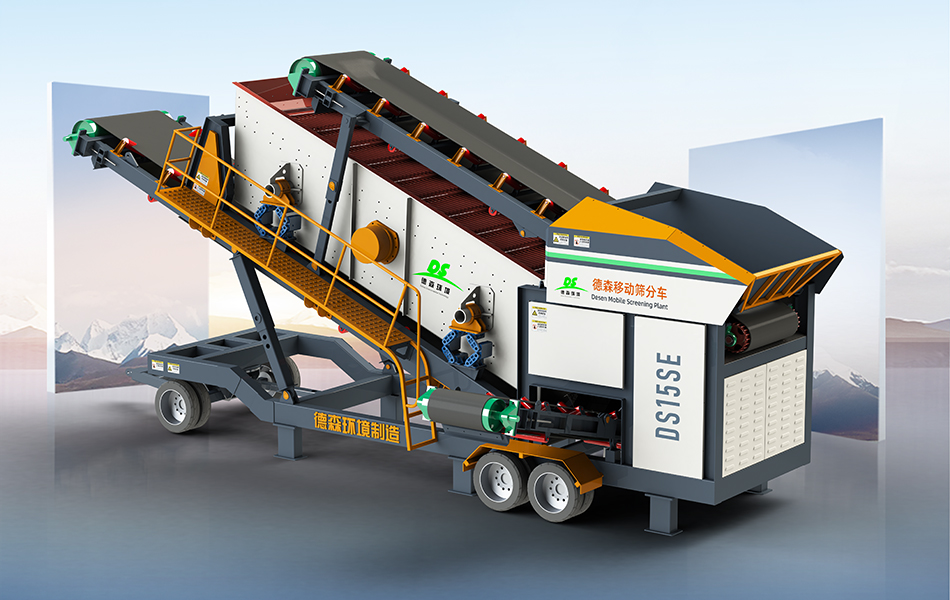
The first decision is the screen deck. For contaminated soil preparation, Desen typically configures mobile screening plants so the top deck removes oversize at around 20 mm, while a lower deck can split the mid fraction where the washing plant works hardest. The exact cut points are set after laboratory particle size analysis of the site soil, not chosen from a catalogue. Once the target gradation is fixed, screen aperture, deck angle and vibration settings are adjusted until the discharge matches it.
Keeping the Feed Flow Even
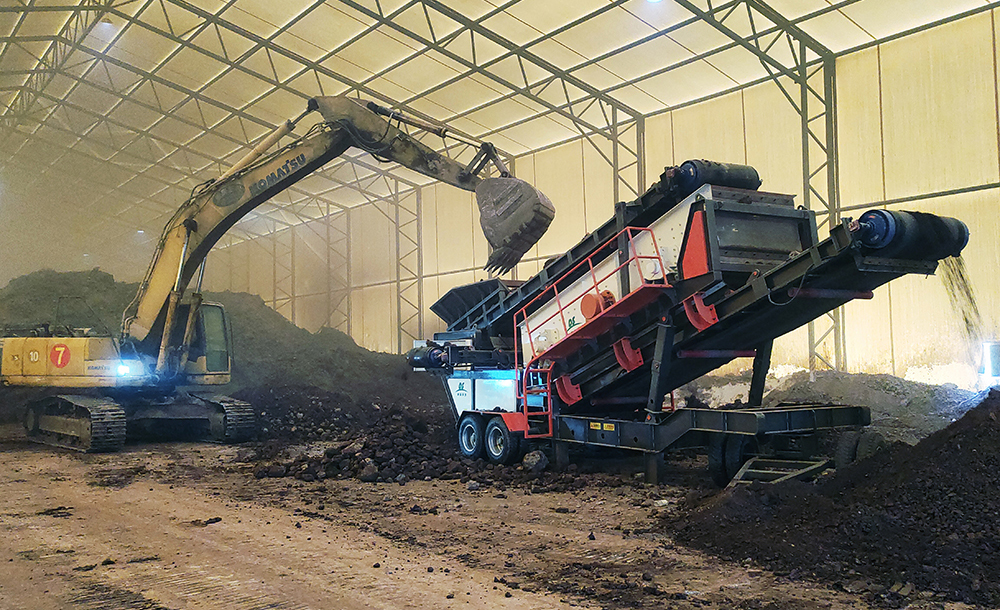
Washers tolerate variation in particle size far better than variation in flow. An excavator dumping irregular loads into the screen hopper produces surges that pass straight down the line. A steady feeding pattern, supported where necessary by a small buffer hopper, keeps the screen discharge belt loaded evenly, and that steadiness carries through to the dosing of the washing line behind it.
Matching Screen Output to Washer Capacity
Sizing the two machines to each other matters as much as sizing the particles. A screening plant that discharges 40 tonnes per hour in front of a washer rated for 25 tonnes per hour simply builds a stockpile; the reverse starves the washer of feed and raises the cost of every treated tonne. Before mobilising, Desen cross-checks three figures:
- Screen discharge rate at the chosen cut points, measured on site rather than taken from a brochure.
- Washer rated feed capacity at the actual moisture and clay content of the soil.
- Buffer volume between screen and washer, so a short interruption on either side does not stop the whole line.
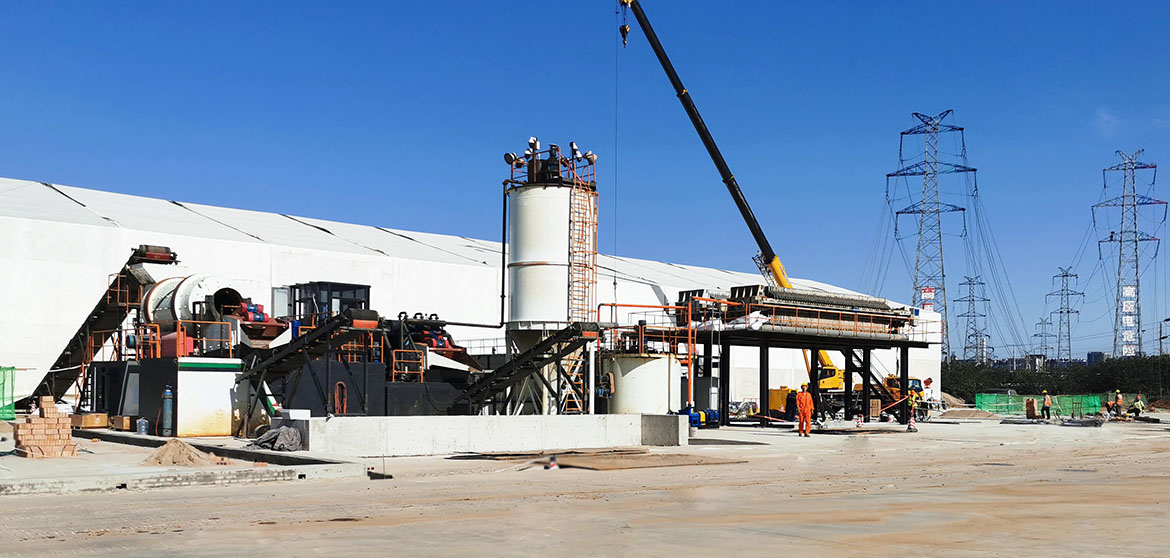
The arrangement above shows how the two stages connect on a working project: screening and scrubbing modules feed a shared line, with the thickener and filter press closing the water loop behind them. When discharge gradation and tonnage are matched this way, the washing line holds its design throughput and the treated soil leaves the process within specification.
Feed sizing is a modest investment compared with the washing plant itself, but it determines whether that plant performs to its design numbers. For contractors planning remediation work in Southeast Asia or other regions, Desen Environmental supplies mobile screening plants and modular soil washing lines as matched sets, with feed sizing reviewed against laboratory data before delivery.