Mobile Vibrating Screen for Contaminated Soil: Setting Up Prescreening Ahead of a Washing Plant
A mobile vibrating screen for contaminated soil removes oversize and splits fines ahead of a washing plant. See how Desen sets up prescreening for steady washer feed.
Mobile Vibrating Screen for Contaminated Soil: Setting Up Prescreening Ahead of a Washing Plant
Excavated contaminated soil rarely arrives at a remediation site in a condition that a washing plant can accept. It comes mixed with bricks, concrete lumps, roots, packaging debris and hard clods, from dust to blocks several hundred millimetres across. Feeding that mixture straight into a washing line does more than slow production: oversize blocks the washer, fines overload the water circuit, and the feed rate swings from starved to flooded within minutes. A mobile vibrating screen for contaminated soil solves the problem before it reaches the washer, turning an unpredictable excavation product into a sized, steady stream.
Why Contaminated Soil Needs a Dedicated Screening Step
On most contaminated land projects, the pollutants are not spread evenly through the soil. Metals and hydrocarbons concentrate in the fine fraction, because silt and clay particles offer far more surface area per kilogram than coarse grains. Screening exploits this distribution twice: it separates the oversize material that never needed washing at all, and it controls how much of the fine, contaminated fraction reaches the washing plant in what proportion. Three tasks define the job of a good prescreening stage:
- Oversize removal. Bricks, concrete, roots and other debris are screened out so they cannot jam the washer, damage pumps or consume wash water on material that will never be cleaned.
- Fines management. The undersize fraction, which carries most of the contaminant load, is routed deliberately into the washing line instead of entering it as uncontrolled slurry.
- Feed stabilization. A consistent size distribution lets the washing plant hold its design throughput instead of chasing a moving target.
What a vibrating screen does on difficult feed
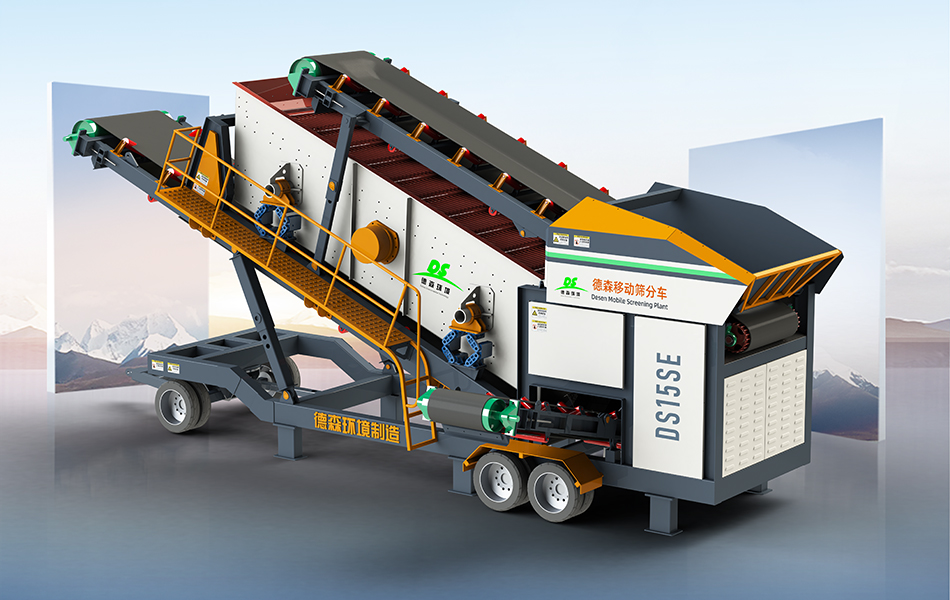
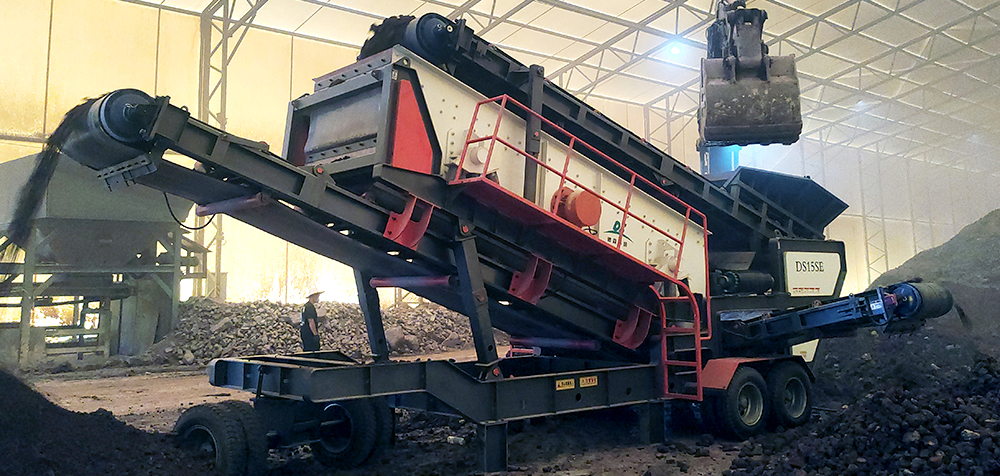
A vibrating screen moves material across the deck by throwing it forward and upward in controlled cycles. On contaminated soil, that motion does two things that static grizzlies and simple bar screens cannot. First, the agitation shakes near-size particles out of the apertures, which matters when wet clay blinds the mesh within minutes. Second, the throw and deck angle can be tuned to the material: a longer throw helps stratify a wet, sticky feed so fines reach the deck surface, while a steeper angle moves clay-rich soil along faster and prevents the bed from building up. Desen Environmental supplies this screening equipment as a wheel-mounted mobile unit with feed hopper, screen box and discharge conveyors, served by a single excavator.
Choosing the cut point for a washing line
The screen cut point should follow the washing plant, not the other way around. Most drum and scrubber based washing lines accept a defined top size, and material coarser than that specification simply cannot be treated efficiently. The screening deck is set so that everything above the washer limit is diverted to a separate oversize stockpile, where it can be crushed, checked for contamination and often reused as fill without any washing at all. Everything below the cut point continues to the washer. Setting this boundary correctly can remove a significant share of the excavation volume from the treatment circuit before a single litre of wash water is spent.
Setting Up the Screen on a Remediation Site
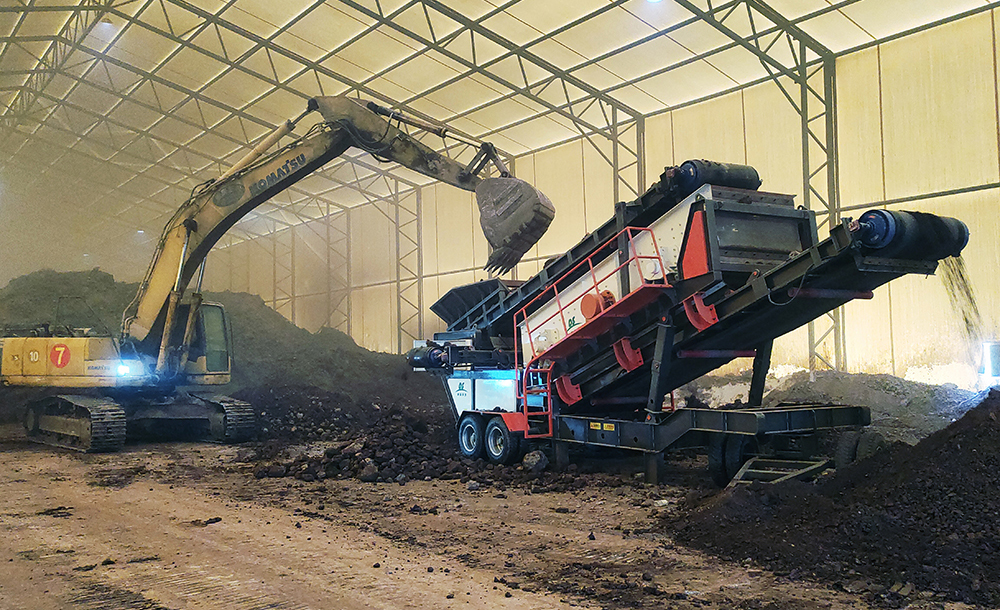
Mobility is the practical reason remediation contractors choose a wheeled screening unit. On a typical project the screen is towed into position, set on firm, level ground and connected to power, with no concrete foundation and no crane. An excavator feeds the hopper directly from the dig face, and the two discharge conveyors build two stockpiles: rejected oversize on one side, screened undersize on the other, close enough to the washing line for a wheel loader or a short conveyor to keep its buffer hopper supplied. Where dust or odor is a concern, the same station can work inside an enclosed treatment shed, as the compact footprint of a mobile unit allows.
Deck media and wear parts
Abrasive soil is hard on screen media, so aperture choice and panel material decide both the cut accuracy and the maintenance interval. Woven mesh gives precise sizing but wears fastest on gritty feed; punched or rubber-capped panels last longer and resist blinding on moist material. Desen units are arranged so the deck panels are accessible from ground level and replaceable with ordinary hand tools, which keeps the station running through short campaigns without service waits.
Feeding the washing plant evenly
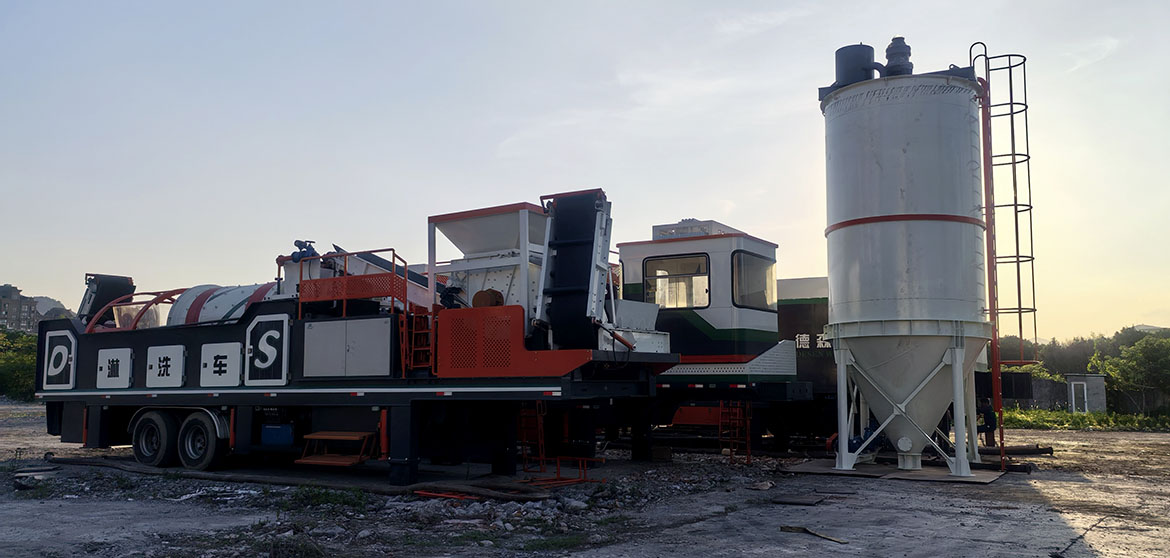
The screened undersize should not leave the station in surges. A buffer hopper with a controlled extraction feeder between the screen and the washing plant smooths the flow, and the screen operator adjusts the feed so the washer receives its rated tonnage continuously. Even feeding is what allows the wash water system, the fines dewatering stage and the discharge conveyors downstream to be sized economically rather than for worst-case peaks.
The Payoff Downstream
A correctly set up screening stage is invisible in the project report, but its effects are not: the washing plant holds its design capacity, wear parts last their full life, the water treatment circuit stays within its limits, and the volume that finally leaves the site as dewatered fines is as small as the soil allows. Desen Environmental supplies mobile screening and soil washing equipment as matched sets for remediation projects across Europe, the Middle East, Southeast Asia, North America and South Africa, and supports each project from feed testing through commissioning.