Chelating Agent Selection for Soil Washing: Matching Reagents to Heavy Metal Types
Chelating agent selection for soil washing decides extraction results. See how Desen matches EDTA, EDDS and GLDA to lead, chromium and other metals on site.
Chelating Agent Selection for Soil Washing: Matching Reagents to Heavy Metal Types
Water and mechanical scrubbing recover most of the coarse, free contamination on a remediation site, but heavy metals that cling to silt and mineral coatings rarely come off with water alone. That is where chemistry takes over. Chelating agent selection for soil washing determines how much metal is actually extracted, how the spent wash water must be treated, and whether regulators will accept both the process and the effluent. A reagent that performs well on lead can be nearly useless against arsenic, so the choice has to start with the contaminant profile, not the catalogue.
Why Chelant Choice Decides Washing Results
Metals do not sit evenly in a soil matrix. A fraction dissolves easily or sits loosely on particle surfaces, but most of the load is bound to carbonates, iron-manganese oxide coatings and organic matter, or locked inside mineral lattices. A washing plant can only remove the fractions that a reagent can mobilize within a practical contact time. The chelant works by wrapping metal ions in a stable soluble complex, pulling them off particle surfaces and holding them in solution so that classification and scrubbing can carry the clean sand and gravel one way and the metal-loaded fines the other.
Read the Speciation Before Ordering Chemicals
This is why lab-scale batch tests come before any reagent order. Sequential extraction on the site soil shows which fractions hold the metal, and the batch tests then verify the extraction rate a given chelant achieves at realistic dosage and contact time. Skipping this step is the most common reason washing lines underperform against their design recovery targets, particularly on mixed-contaminant urban sites where lead, copper and zinc each behave differently.
Matching Chelating Agents to Contaminant Types
Each major reagent family has a recognizable profile. The usual candidates on a heavy metal washing project include:
- EDTA and aminopolycarboxylates: broad-spectrum chelants with strong extraction of lead, cadmium, copper and zinc across a wide pH range. They are effective but persistent, so effluent limits and local approval often decide whether they can be used.
- Biodegradable chelants such as EDDS and GLDA: comparable performance on many divalent metals, far lower environmental persistence, and easier wastewater acceptance in Europe. Reagent cost per tonne is higher, which the mass balance usually offsets on projects with strict discharge rules.
- Organic acids such as citric acid: suited to moderately contaminated soils and to projects where gentle chemistry is preferred. Extraction rates are lower than EDTA on strongly bound fractions, so they need longer contact or higher dosage.
- Reducing agents for hexavalent chromium: Cr(VI) is an oxyanion that chelation does not capture well. It is first reduced to trivalent chromium with ferrous sulfate or sodium dithionite, then stabilized or removed through the washing circuit.
- Specialized chemistry for arsenic and mercury: both behave as oxyanions or form stubborn compounds, and neither responds reliably to standard aminopolycarboxylates. These sites need dedicated test work and often a combination of pH control, competing ions and targeted precipitants.
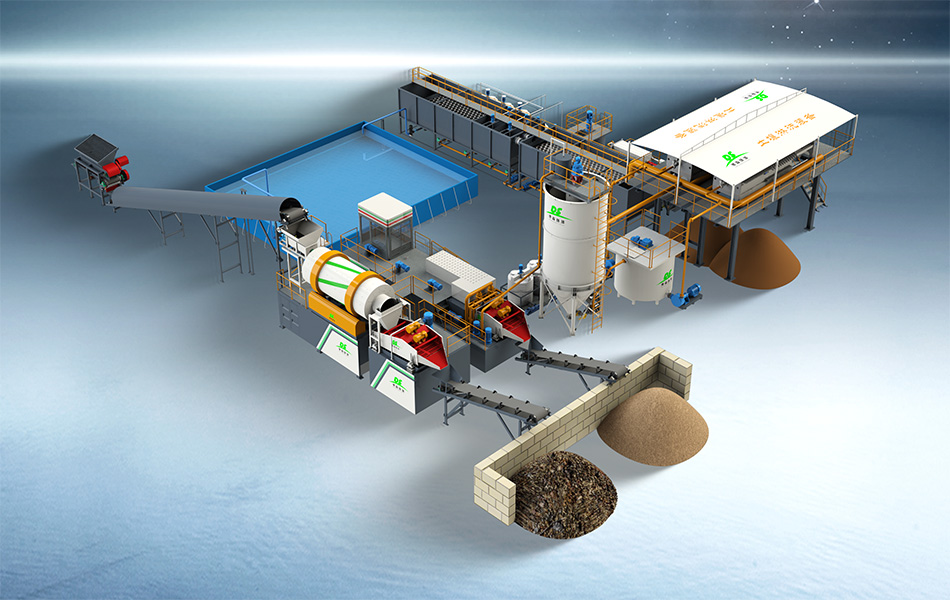
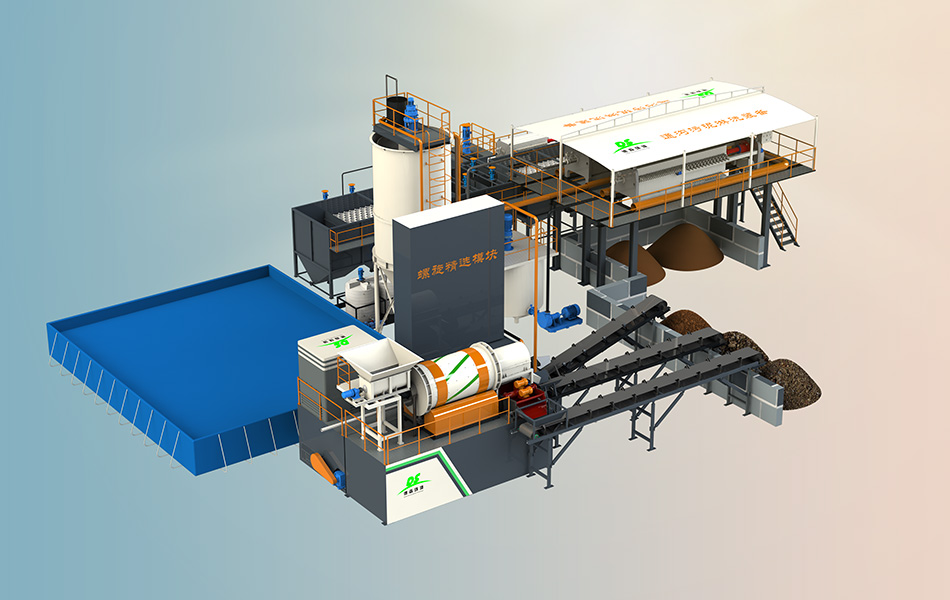
On many projects the practical answer is not a single reagent but a sequence: a primary wash for the bulk metals, followed by a conditioned second wash or neutralization stage for the residual fraction. The plant layout has to make room for dosing, mixing and reaction time, which is why reagent strategy should be fixed before the washing equipment is configured, not after.
Process and Wastewater Controls That Make Chelant Washing Work
Chelant chemistry only delivers results inside a controlled process. Three parameters dominate: pH, dosage and contact time. Most aminopolycarboxylates perform near neutral to slightly alkaline pH, and running too far outside the tested window can drop extraction sharply or re-release captured metals. Dosage is a cost lever as much as a performance lever; incremental dosage beyond the saturation point buys almost no extra extraction while multiplying effluent load. Contact time is set by the scrubber and reaction tanks, and it must match what the batch tests validated.
Treating Chelated Effluent Is Part of the Design
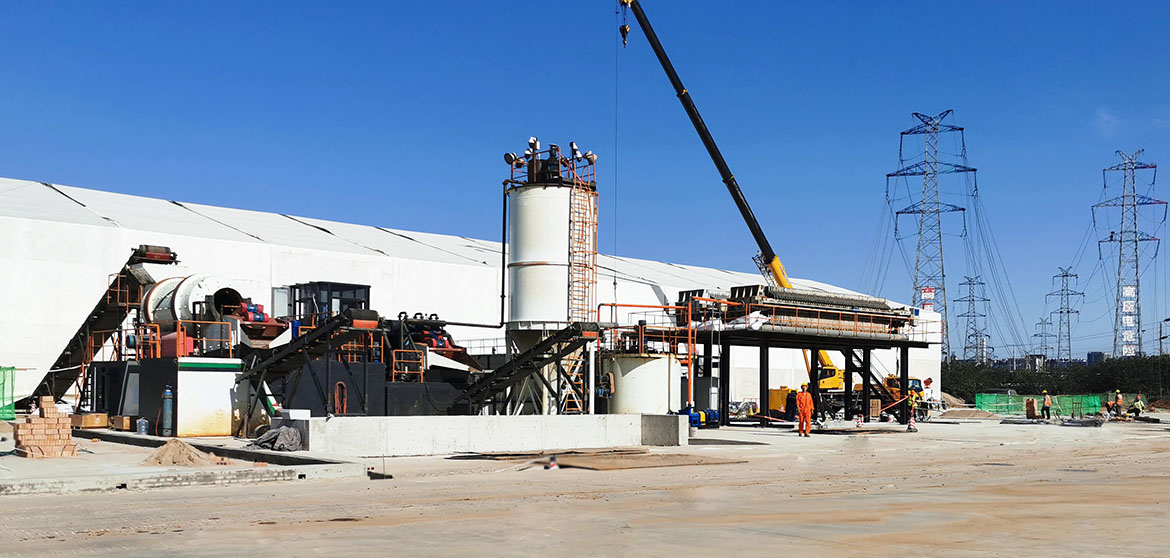
A chelated metal stays dissolved by design, which makes conventional hydroxide precipitation unreliable on wash water. Effective circuits break the complex first, typically by oxidation, or use targeted precipitants such as sulfide-based heavy metal scavengers, followed by clarification and sludge dewatering on a filter press. A closed-loop water arrangement then returns clarified process water to the head of the washing line, which cuts fresh water demand and keeps the effluent volume manageable for the site's discharge permit.
Desen Environmental builds modular and mobile soil washing equipment with integrated chemical dosing, reaction and water treatment stages, so the reagent strategy proven in the lab can be reproduced at full scale. For project owners comparing reagent options, the practical sequence is fixed: characterize the soil, run batch tests with two or three candidate chelants, lock the process parameters, and only then finalize the plant configuration and wastewater treatment design around them.