Drilling Cuttings Treatment Soil Washing Equipment: A Practical Route for Oil-Based Mud Waste in the Middle East
Soil washing equipment treats oil-based drilling cuttings by pre-screening, hot surfactant washing and dewatering, recovering oil and cutting disposal volumes on Middle East oilfield sites.
Drilling Cuttings Treatment Soil Washing Equipment: A Practical Route for Oil-Based Mud Waste in the Middle East
Every drilling program that relies on oil-based mud (OBM) generates one unavoidable waste stream: drill cuttings coated with base oil, barite and fine shale solids. Across Saudi Arabia, the UAE, Kuwait and Oman, operators face the same question once shakers and centrifuges have done their work — what to do with several thousand tonnes of cuttings accumulated on a well pad. Landfarming permits are tightening, burial pits are being phased out, and thermal desorption units are costly to mobilize between remote pads. Drilling cuttings treatment soil washing equipment offers a middle path: wash the cuttings where they are generated, recover a large share of the base oil, and shrink the volume that must be sent to a licensed disposal facility.
Why Oil-Based Drilling Cuttings Need Washing Rather Than Burial
What Makes OBM Cuttings Difficult to Handle
Cuttings discharged from a shale shaker typically carry 10 to 20 percent oil by weight, bound to clay and silt-sized rock flour that also holds chlorides from the drilling brine. The oil is hydrophobic and clings to particle surfaces, which is exactly why simple dilution or burial does not satisfy most modern waste acceptance criteria. Because the contamination concentrates on fines, the mass distribution matters: coarse cuttings grains are far easier to clean than the fine fraction, so a plant that separates sizes before washing treats only the fraction that genuinely needs aggressive cleaning.
The Regulatory Direction in the Gulf
Gulf regulators are moving steadily toward treated-waste thresholds based on total petroleum hydrocarbons and leachate testing, and several operators now require on-site reduction before any off-site haulage. Washing fits this direction because it combines two outcomes in one pass: oil recovery, which turns a liability into a saleable or reusable base fluid, and volume reduction, which lowers the per-tonne disposal fee that dominates the waste budget on multi-well campaigns.
How a Soil Washing Plant Processes Drilling Cuttings
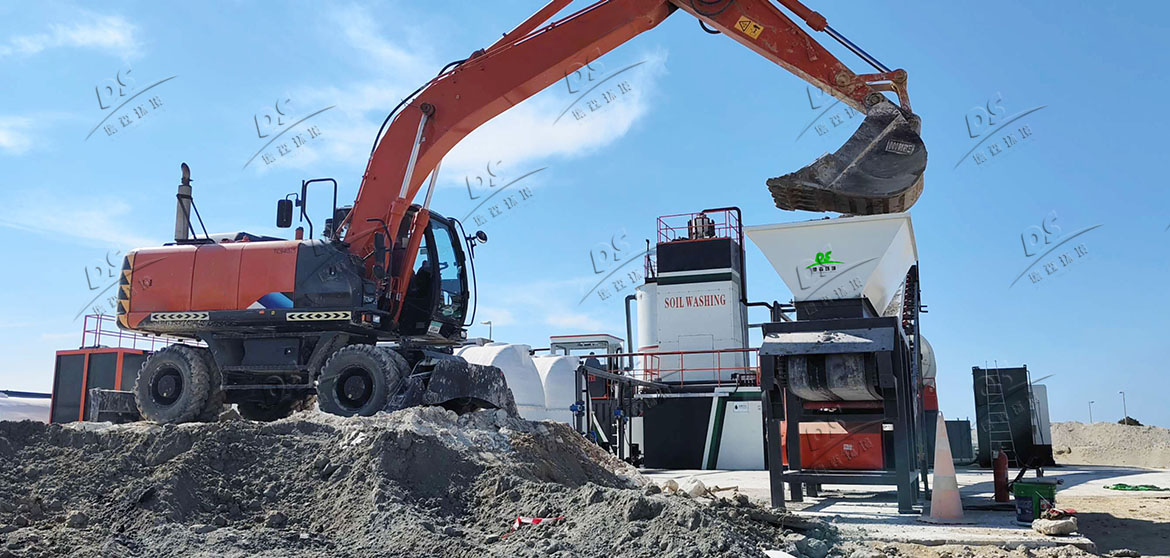
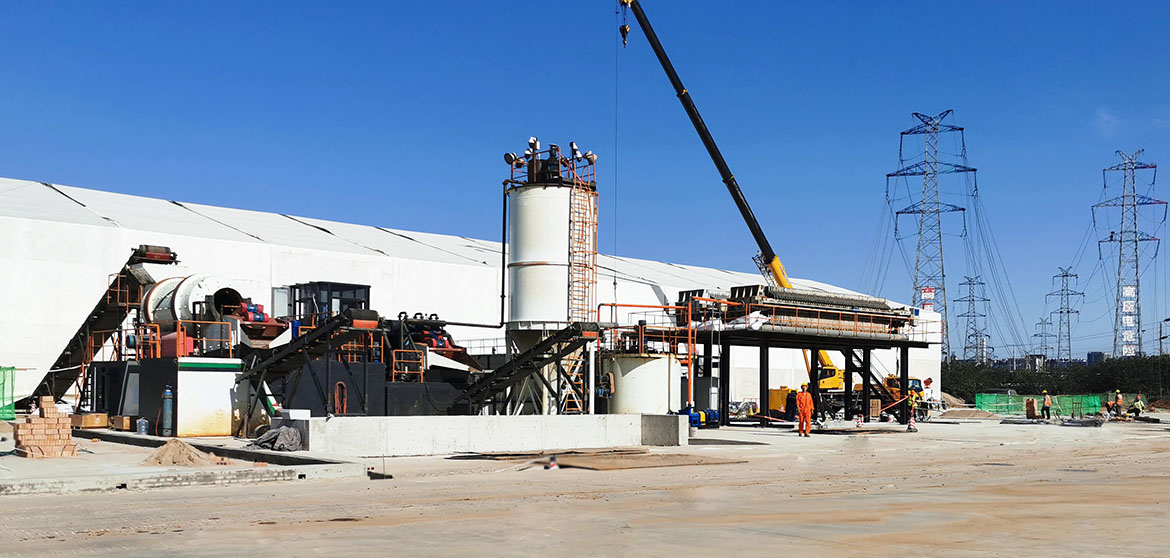
A cutting-washing line is a sequence of well-understood unit operations rather than a single machine. Feed is received into a hopper, screened to remove oversize, scrubbed hot with surfactant chemistry, then classified and dewatered so that clean sand leaves the process as a reusable solid while oil and fines report to the water treatment circuit. The photo below shows a complete washing arrangement with the scrubber, chemical dosing tanks and filter press working as one line.
Pre-Screening and Coarse Separation
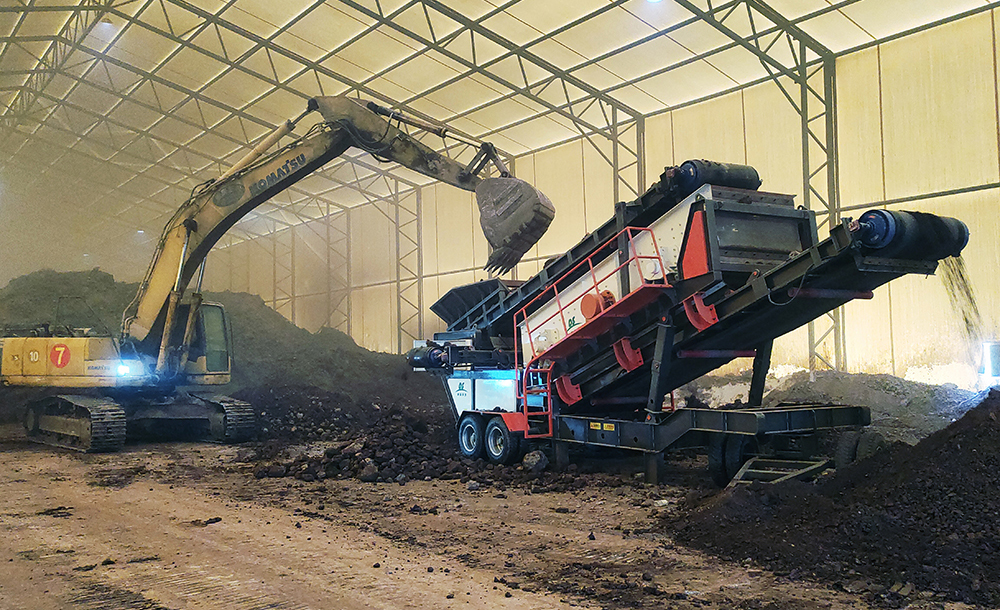
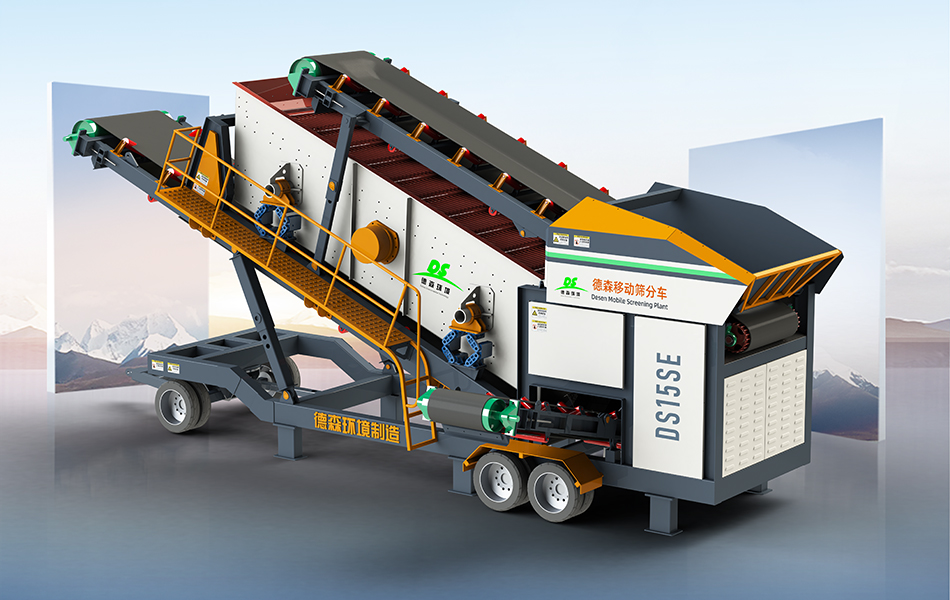
Before any chemistry is applied, cuttings must be size-sorted. Mobile screening equipment handles this step well on congested well pads, because it can be positioned next to the cutting bins and relocated as the campaign moves. Screening removes oversize rock and caked lumps, protects downstream pumps, and splits the stream so that only fines proceed to intensive washing.
Hot Washing With Surfactant Chemistry
The core step is scrubbing in warm water dosed with surfactant and, where required, caustic for pH control. Temperature and chemical dosing are tuned to the base oil type; the goal is to detach oil films from particle surfaces without creating an emulsion that is harder to separate afterward. Free oil floats off and is skimmed for recovery, while the scrubbed grains pass to classification.
Classification, Dewatering and Water Recycling
Hydrocyclones and attrition cells split washed sand from the fine, oil-rich slurry. Sand is dewatered on dewatering screens or cyclone stacks; the fines are thickened and pressed in a filter press so the cake can be hauled at minimal volume. Process water is clarified and recirculated in a closed loop, which matters in the Gulf where fresh water supply at remote pads is limited and trucked water is expensive.
- Feed hopper and vibrating feeder with oversize rejection
- Mobile screening unit for coarse separation and feed sizing
- Rotary trommel scrubber with hot surfactant washing
- Hydrocyclone classification and attrition cells for fines scrubbing
- Dewatering screens and filter press for sand and cake
- Oil skimming and closed-loop water treatment with clarifier
What to Confirm Before Ordering Cuttings Washing Equipment
Procurement teams comparing suppliers should press on specifics rather than brochure claims. A short technical checklist keeps the evaluation grounded:
- Verified pilot results on your cuttings, including oil-on-cuttings before and after washing
- Throughput in tonnes per hour at your actual solids content, not at ideal lab conditions
- Base oil recovery rate and how recovered oil is stored and handed back
- Water balance: recirculation ratio, makeup water demand and evaporation losses
- Mobility options — trailer-mounted, skid-mounted or containerized — matched to pad relocation frequency
- Spare parts availability and commissioning support in the operating country
Treated properly, drilling cuttings stop being a pure cost line. Washing recovers base oil, cuts haulage volumes to a fraction of the raw mass, and leaves clean coarse solids that can be used as pad or backfill material where local approval allows. For operators running multi-well programs in the Middle East, that combination is what makes soil washing equipment a practical, auditable route for OBM waste management.