PAH Contaminated Soil Washing Treatment: Recovering Soil at Former Gasworks and Tar Sites
PAH contaminated soil washing separates fine particles that carry polyaromatic hydrocarbons and scrubs them with hot surfactant water, cutting disposal volumes.
PAH Contaminated Soil Washing Treatment: Recovering Soil at Former Gasworks and Tar Sites
Former gasworks, coal carbonization plants, wood impregnation yards and creosote storage sites share one stubborn legacy: soil loaded with polycyclic aromatic hydrocarbons (PAHs). Because PAHs bind strongly to fine particles and organic matter, many developers assume the only option is to excavate everything and send it to landfill. In practice, PAH contaminated soil washing treatment can remove a large share of that contamination on site, shrink disposal volumes dramatically, and return cleaned sand and gravel fractions to the project as backfill material.
Why PAH Contaminated Soil Calls for Washing Rather Than Dig-and-Haul
Where PAHs Actually Sit in the Soil Matrix
PAHs are hydrophobic. They do not dissolve evenly through a soil body; they concentrate on the surfaces of fine particles such as silts, clays and organic humus, where specific surface area is highest. Coarse sand and gravel fractions from the same excavation are often only lightly coated or nearly clean. This uneven distribution is the single most important fact for any remediation plan, because it means a full soil mass rarely needs full treatment. Separating particles by size first, then scrubbing the fines, treats only what is actually contaminated.
The Cost Logic of Ex-Situ Washing
Dig-and-haul pricing scales with total mass. Washing changes the equation: after separation, most of the mass, the clean coarse fractions, can stay on site, while the washed fine fraction, which carries most of the PAH load, is dewatered and disposed of as a much smaller volume. On a 20,000-tonne gasworks site, the difference between hauling everything and hauling only fines is usually the largest single saving in the project budget. Washing also recovers material value: washed sand and gravel can be reused as engineered fill once verification confirms compliance with the site's target values.
How a PAH Soil Washing Plant Works
Pre-Screening and Feed Preparation
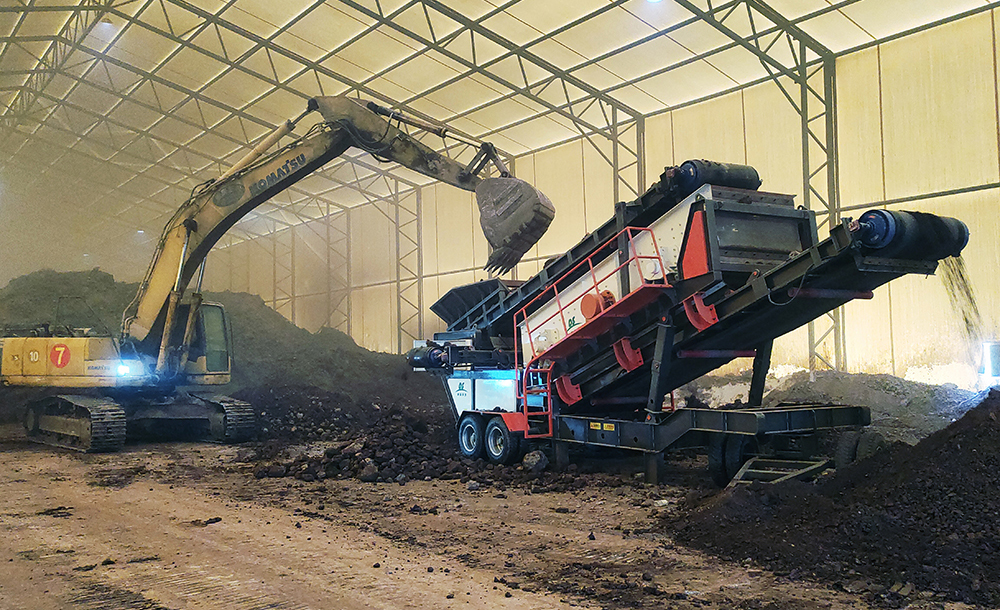
Washing starts with sizing. Excavated soil passes over screening equipment that removes oversize debris such as bricks, timber and metal, and splits the stream into coarse and fine fractions. Removing debris early protects downstream pumps and keeps water chemistry stable. 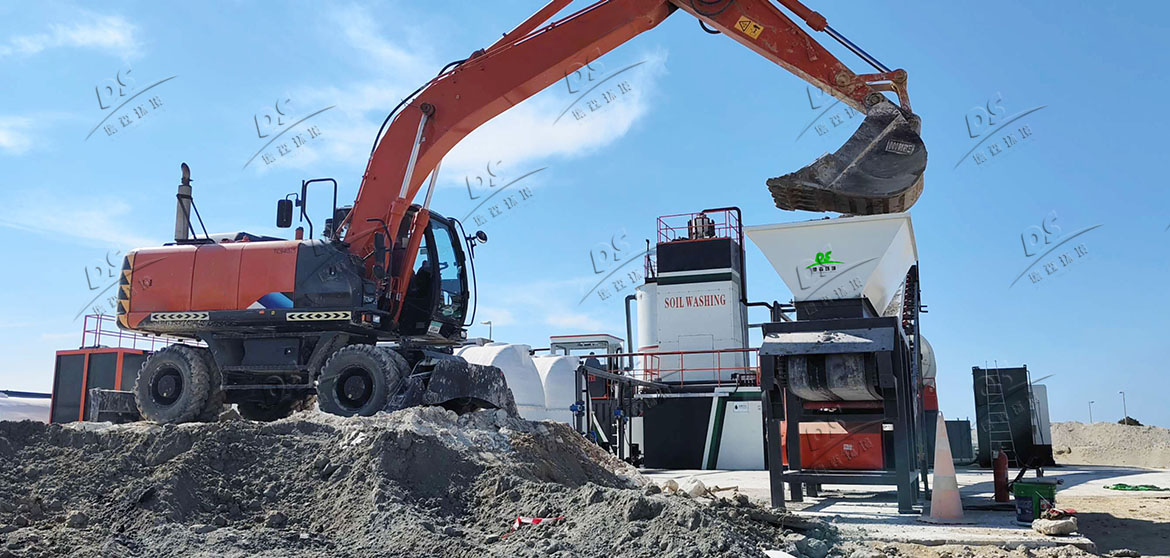 The coarse stream moves directly to scrubbing, while the fine stream, which holds most PAH contamination, is routed into the washing circuit where contact time and chemistry can be controlled.
Hot Water and Surfactant Scrubbing
PAHs respond to temperature. Hot water lowers viscosity and helps detach tarry films from particle surfaces, and when combined with a suitable surfactant it lifts hydrocarbon residues into the wash water where they can be captured. 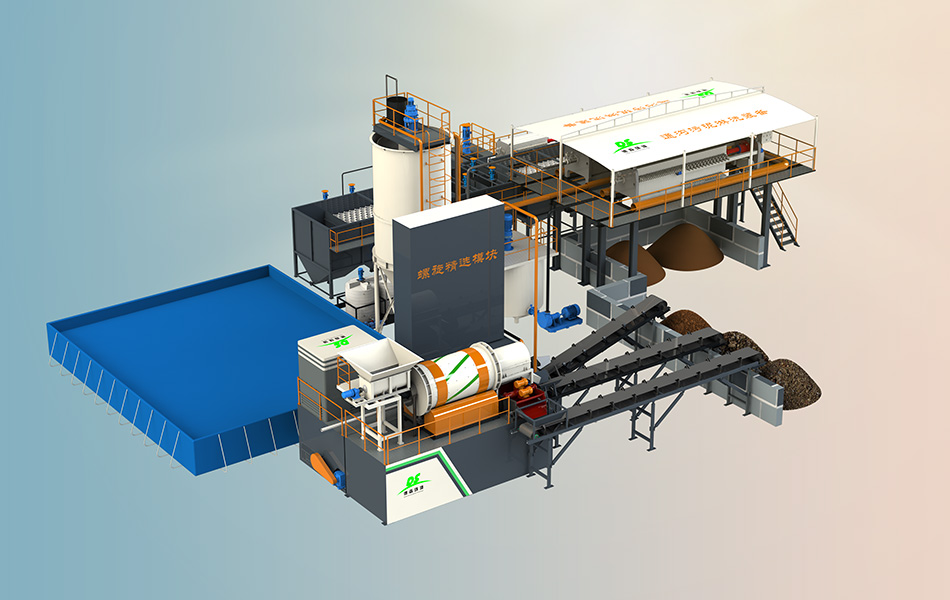 In modular plants the hot washing line runs as a closed circuit: wash water passes through treatment and returns to the process. This matters on city-center sites where neither fresh water supply nor discharge permits are generous.
Classification, Dewatering and Water Recycling
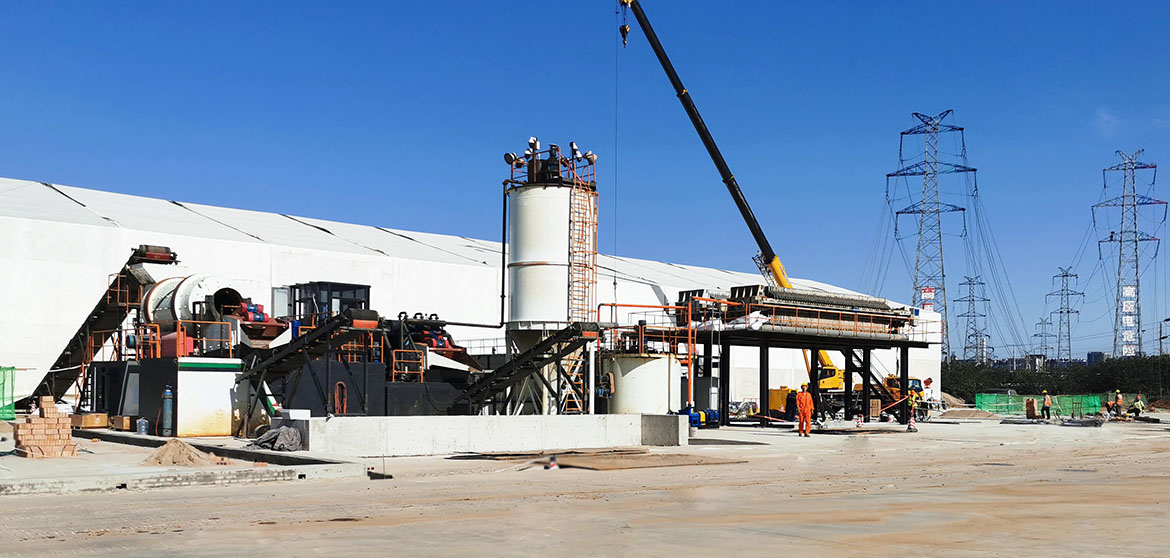
After scrubbing, hydrocyclones and screens classify the cleaned material by size. Sand and gravel are dewatered and stockpiled for verification testing, while the fine contaminated slurry is thickened and dewatered, commonly with filter presses, into a compact cake for licensed disposal. Process water is recycled through the plant's treatment loop, so the site exports sludge cake rather than thousands of cubic meters of contaminated water.
What Decides Success on a PAH Washing Project
Bench Testing Before Anything Ships
No washing plant should be ordered before a representative soil sample has been through bench-scale trials. The test answers the questions that determine plant configuration: how much of the PAH load sits in which particle fraction, what wash temperature and surfactant dose the soil responds to, and what residual concentrations the cleaned coarse fractions will reach. Results feed directly into the mass balance, the plant layout and the disposal plan.
A Modular Layout Suits Distributed Legacy Sites
PAH contamination rarely appears at a single point. Utilities, municipalities and remediation contractors usually face a portfolio of small and medium legacy sites rather than one megaproject. A modular soil washing plant, arranged from feeding, washing, dewatering and water treatment modules, can be deployed to one site, complete its campaign, and move to the next without rebuilding infrastructure. 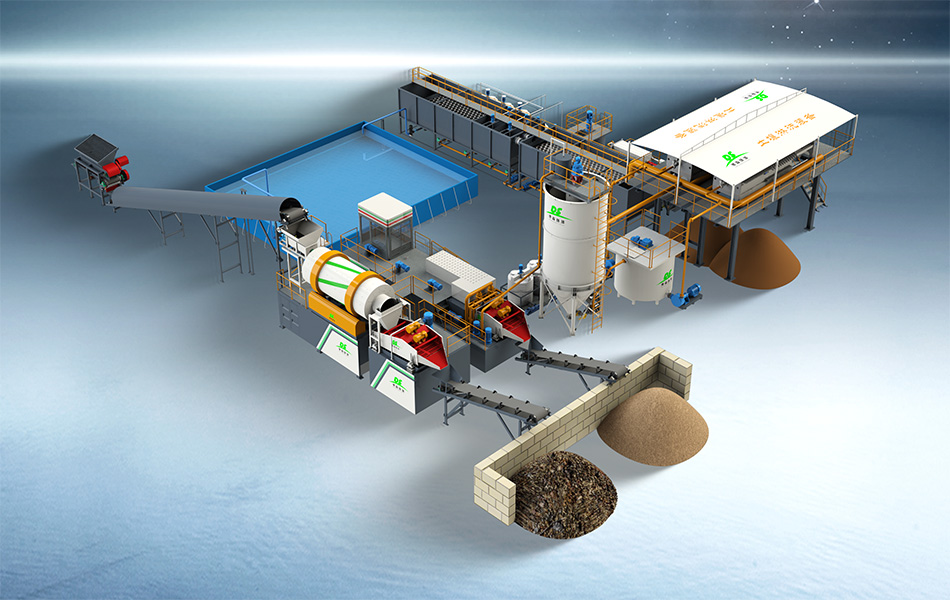 Typical module roles include:
- Feed module: hopper, feeder and pre-screening to stabilize input flow
- Washing module: scrubbers and attrition cells with temperature control
- Dewatering module: cyclones, dewatering screens and filter presses
- Water treatment module: sediment removal and closed-loop water recycling
Verification and Documentation Close the Loop
Regulators ask for evidence, not intentions. Each washed batch should be sampled and analyzed against the site's remediation targets, with records linking stockpiles, batches and disposal manifests. Plants that log process parameters such as wash temperature, retention time and water quality make verification straightforward and keep the project moving toward sign-off.
For owners of gasworks, tar ponds and creosote-impacted land, PAH soil washing turns an undifferentiated liability into two manageable streams: a small volume of concentrated fines for disposal, and a large volume of washed aggregate ready for reuse. Desen Environmental builds modular and mobile soil washing plants for exactly this kind of project, with bench testing and process design offered before equipment ships.