Soil Washing vs Landfill Disposal Cost Comparison Per Tonne: Finding the Break-Even Point
Compare soil washing and landfill disposal on a per-tonne basis: gate fees, haulage distance, washing consumables and the residue fraction decide the break-even point.
Soil Washing vs Landfill Disposal Cost Comparison Per Tonne: Finding the Break-Even Point
Most contaminated soil projects reach the same decision point: dig everything up and send it to landfill, or treat the soil on site and only remove the fraction that truly needs to leave. Neither route wins in every case, and the outcome is decided by a per-tonne comparison done early, with real numbers. This article walks through both cost stacks and shows how the arithmetic works. All figures below are illustrative examples for the calculation itself; actual quotes depend on the region, the landfill class and the soil.
The Cost Stack Behind Off-Site Disposal
Off-site disposal looks simple on paper: excavate, load trucks, pay the landfill. In practice the per-tonne landfill bill is rarely just the gate fee.
Gate Fees, Taxes and Landfill Class
The disposal cell type sets the baseline. Clean or lightly contaminated soil can often go to a general construction and demolition or non-hazardous cell, while soil that fails leaching limits must be characterised for a hazardous or specially engineered cell, where acceptance prices rise sharply. On top of the operator's gate fee, many states and provinces add disposal taxes or environmental levies per tonne, and these have trended upward as jurisdictions push diversion away from landfill. For a project holding tens of thousands of tonnes, each incremental levy is multiplied across the whole volume.
Haulage Dominates at Distance
Transport is the component most often underestimated. Trucking cost accumulates per tonne per kilometre, and contaminated soil loads frequently face routing restrictions, weighbridge delays and return-trip economics that raise the effective rate. A site 60 kilometres from the nearest accepted cell pays far more per tonne than one 6 kilometres away, and urban projects add queue time and community traffic complaints to the ledger. Haulage also does not fall as the project matures, and it carries the cost of handling every tonne twice, once out of the ground and once onto the truck.
The Cost Stack Behind On-Site Soil Washing
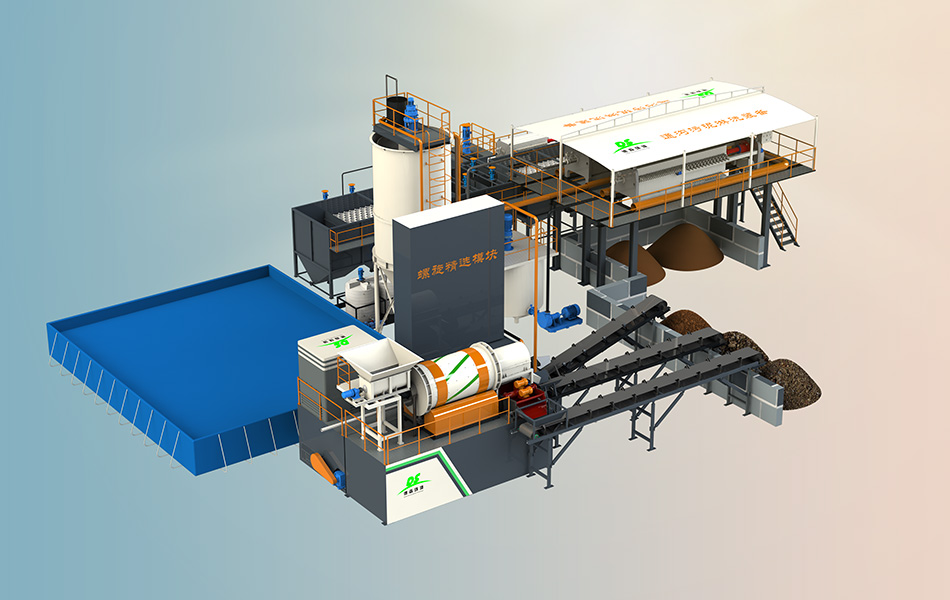
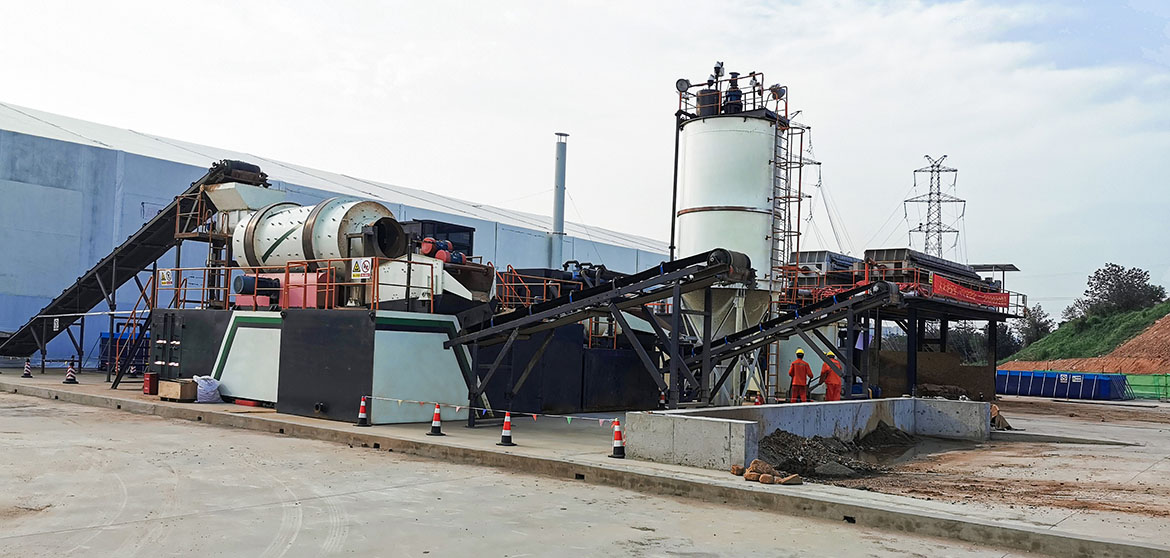
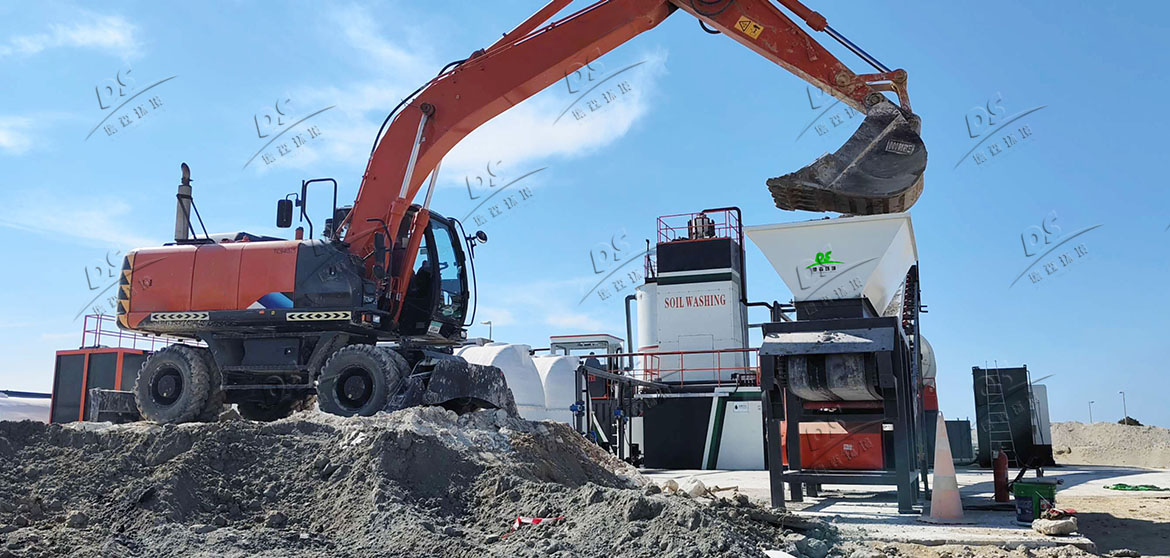
Soil washing approaches the same volume from the opposite direction. A washing plant separates the feed into fractions, scrubs the sand and gravel back to a reusable standard, and concentrates contaminants into a small dewatered fines stream. Most of the excavated mass stays on site or returns to the site as clean backfill, which means the disposal bill is paid on the residue fraction instead of the whole volume.
Mobilisation, Plant Rate and Utilisation
The fixed side of washing is mobilisation and demobilisation: hauling the plant to site, positioning it, commissioning, and reversing the process at the end. These costs do not care how many tonnes the project processes, so utilisation is the main lever. A modular or trailer-mounted washing plant in the 30 TPH class, running a two-shift day, can turn over several hundred tonnes daily, and multiple units can be combined for outputs in the 10 to 100 tonnes per hour range. The steadier the feed and the longer the campaign, the smaller the fixed cost per tonne becomes.
Consumables, Water, Power and Labour
The variable side covers operating inputs: wash water and its treatment, power for pumps and drives, reagents where metals need chemical extraction, wear parts, and the operating crew plus site laboratory costs for process control sampling. Closed-loop water recycling keeps fresh water demand and discharge fees down, and power demand for a modular plant in this class is modest, measured in tens of kilowatts rather than megawatts. What remains after the wash is the residue bill: typically a fraction of the feed volume, still requiring dewatering, testing and disposal, which is why the comparison below must count disposal on the fines even in a washing scenario.
Running the Per-Tonne Break-Even
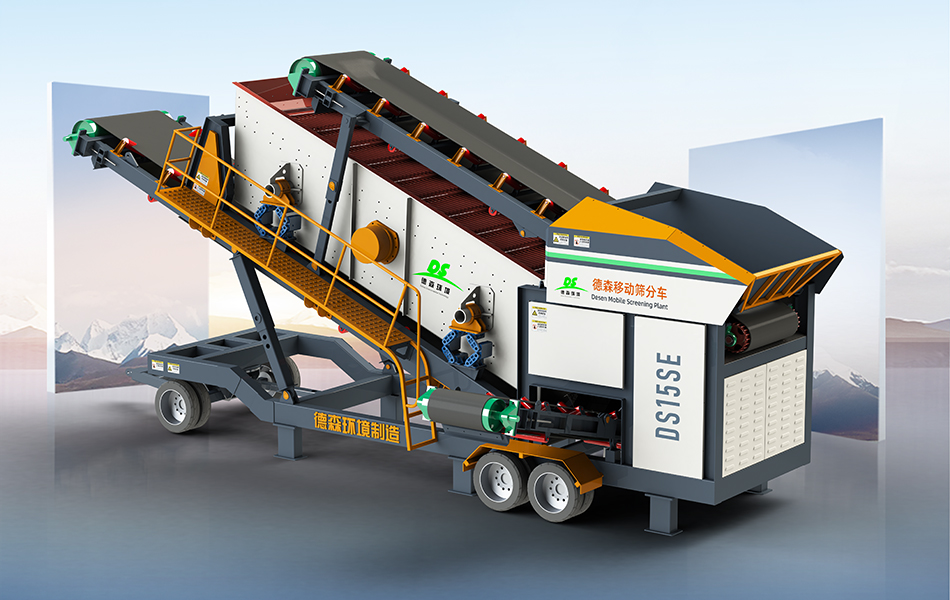
Screening ahead of washing sharpens the economics further, because separating oversize and clean coarse material reduces the tonnage that must be washed at all. With both stacks defined, the comparison reduces to one line of arithmetic. Using illustrative figures: suppose all-in disposal, gate fee plus taxes plus haulage, costs 70 currency units per tonne, and washing processes feed at 25 units per tonne with a fines fraction of 20 percent that still pays the 70-unit disposal rate. The washing route then blends to about 25 plus 0.2 times 70, or 39 units per tonne, saving 31 units on every tonne handled. If mobilisation adds 60,000 units, break-even is roughly 2,000 tonnes; beyond that, every additional tonne widens the margin.
- Total tonnage and campaign duration, which set how far fixed mobilisation is amortised
- Fines and clay fraction, which decide both the washing yield and the residue volume
- Haulage distance and the landfill class the soil qualifies for
- Local disposal taxes and their trajectory over the project period
- Reuse options for washed sand and gravel, which can turn a cost centre into a credit
The comparison also shows where landfill genuinely wins. Small volumes under a few thousand tonnes, soils dominated by clay that wash poorly, hazardous classifications that leave no reuse route, and sites next to a cell with spare capacity can all tip the balance toward direct disposal. Washing wins as tonnage grows, as the soil carries a washable sand and gravel skeleton, and wherever haul distance or disposal taxes are climbing. Desen Environmental supports buyers running this evaluation with equipment data and reference cases, and modular washing plants sized to match the tonnage the break-even calculation justifies.