Containerized Washing System for Remote Sites: Deploying Soil Washing Where Infrastructure Is Thin
A containerized washing system for remote sites brings soil washing to areas with weak infrastructure: skid modules, closed-loop water reuse and generator power for Gulf and African projects.
Containerized Washing System for Remote Sites: Deploying Soil Washing Where Infrastructure Is Thin
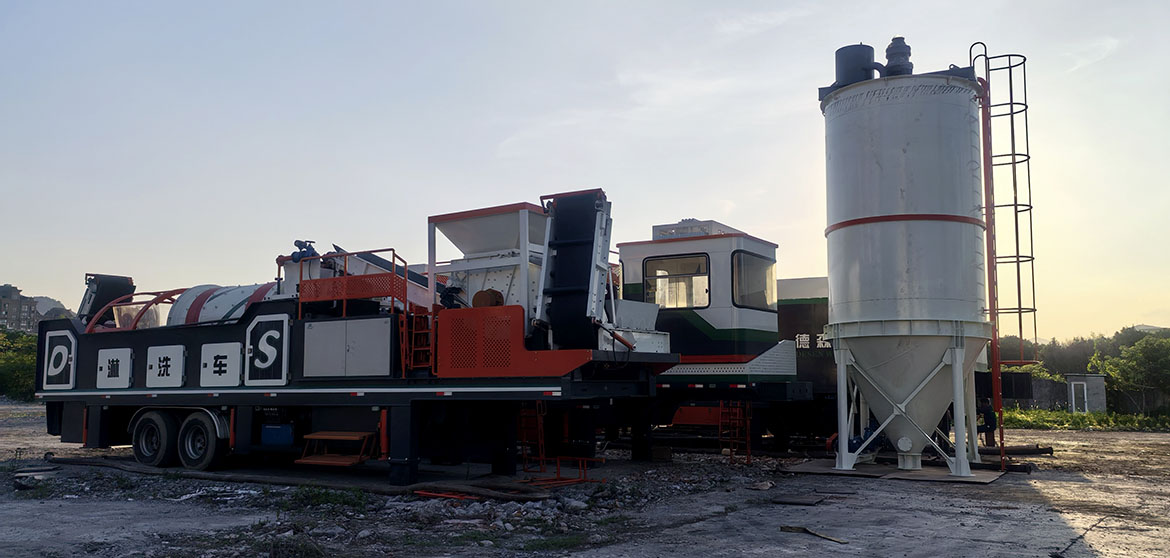
Some of the most heavily contaminated ground sits in the least developed locations: legacy waste pits inside desert oilfield concessions, tailings and dump sites around remote mining operations in Africa, landfills on coastlines without paved access. A conventional fixed washing plant assumes grid power, municipal water and a workshop nearby. A containerized washing system for remote sites is engineered for the opposite starting point, moving the treatment line to the contamination instead of hauling thousands of tonnes of soil toward infrastructure that does not exist.
Why Remote Sites Favor a Containerized Format
Haulage is the hidden cost that decides most remediation budgets. Once contaminated soil has to travel more than a few tens of kilometres to a treatment or disposal facility, transport and gate fees start to dominate the project cost, and every tonne washed on site avoids that charge. On-site washing also returns the coarse fraction as clean, reusable aggregate for backfill or road base, which cuts the volume leaving the site even further. For a concession several hundred kilometres from the nearest facility, treating soil where it lies is usually the only workable option, and containerized modules are what make that possible.
The Constraints a Remote Deployment Must Absorb
- Power: no grid connection is available, so the line must run from diesel generator sets sized for the connected motor load, including the scrubber and press hydraulics
- Water: many target regions are arid, so process water has to be recycled in a closed loop rather than drawn from and discharged to the environment
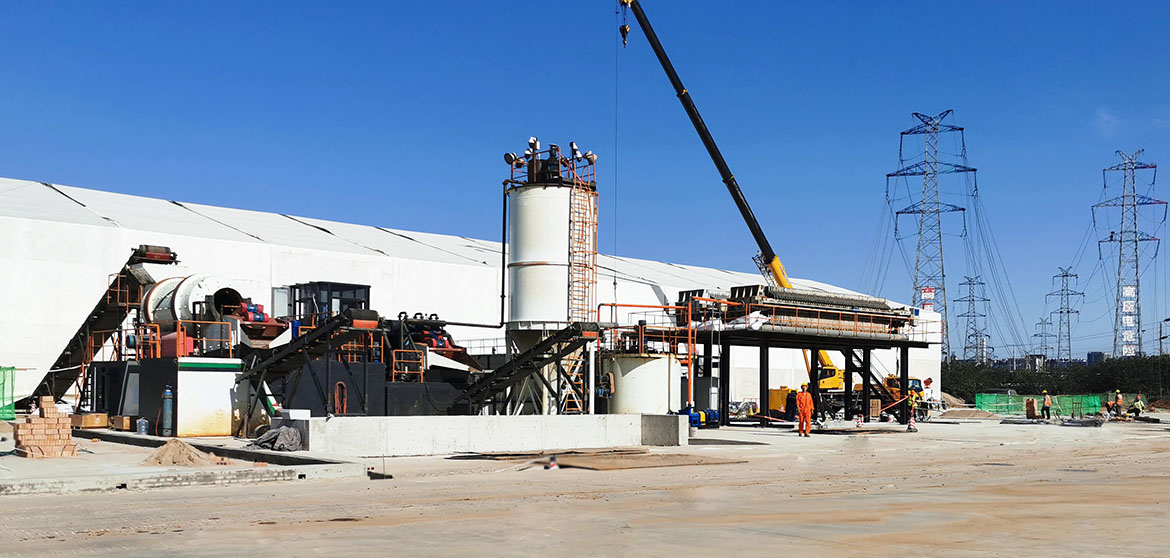
- Access: narrow tracks and load-limited bridges favor skid and container modules that ship in standard lots and can be lifted into place by a mobile crane
- Labour: crews at remote concessions are small, so dosing, pumping and dewatering need a level of automation that keeps operation manageable
- Space: the washing area often shares ground with stockpiles and camp facilities, so the layout has to stay compact
What Goes Inside the Modules
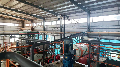
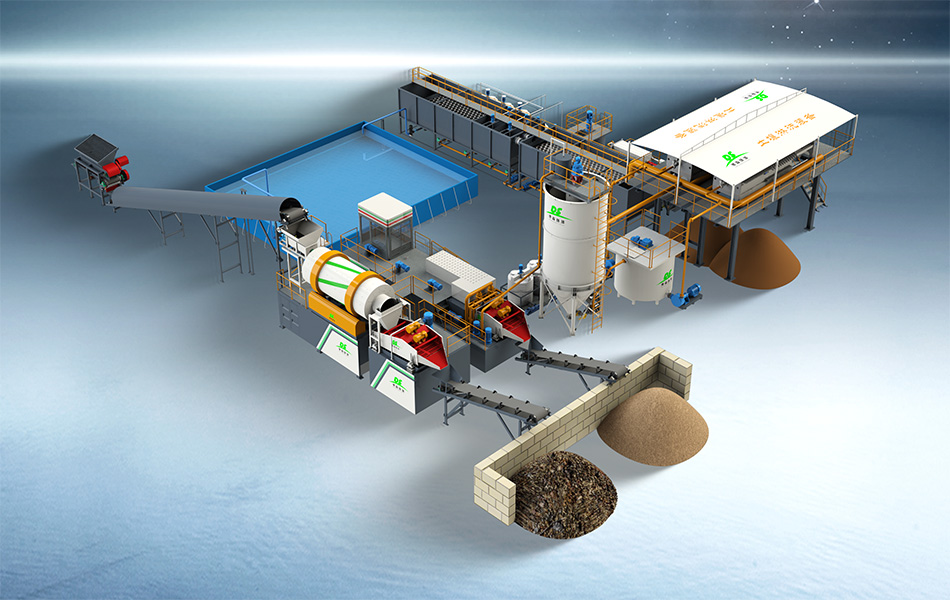
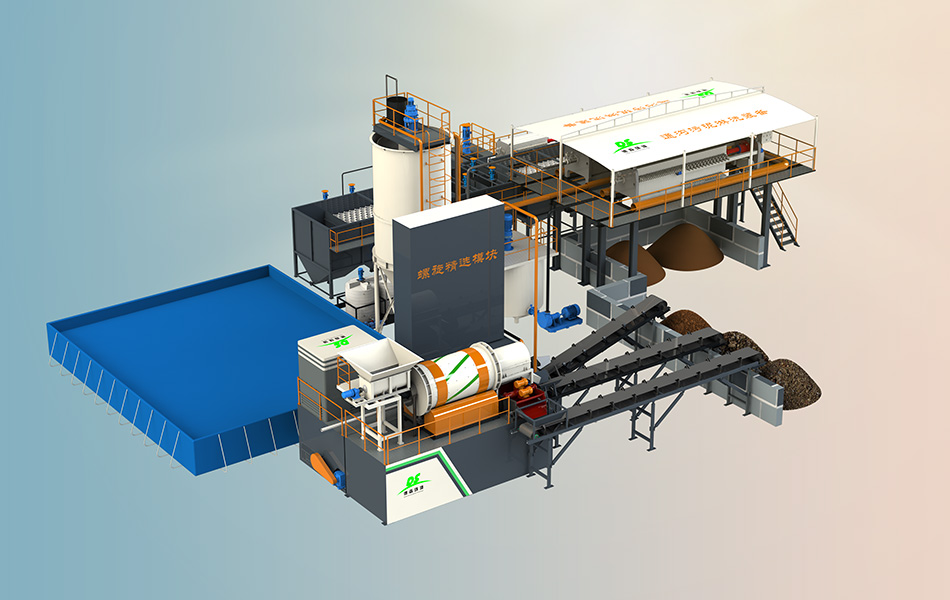
A containerized washing system for remote sites splits the process into transportable blocks. Excavated soil passes a feed hopper and a prescreen that removes oversize material. A drum scrubber then detaches contaminants from the coarse particles, and classification screens divide washed sand and gravel from the fines that carry most of the pollution. The fine slurry is pumped to a dewatering stage, typically a filter press that produces a stackable cake, while washed aggregate goes straight to stockpile. Reagent dosing and water treatment sit in their own modules, so the chemistry can be matched to the contaminant without modifying the mechanical line.
Closing the Water Loop in Water-Scarce Regions
In the Gulf and across much of Africa, water availability, not equipment capacity, often sets the pace of production. In a closed-loop arrangement, process water drains to settling tanks where coarse solids drop out, polymers flocculate the remaining fines, and clarified water is pumped back to the scrubber. Fresh water is only needed to replace the moisture that leaves the site inside the dewatered cake and washed aggregate. This keeps consumption low enough that a modest well or tankered supply can sustain the line, and it removes the need for a discharge consent that a remote concession may find difficult to obtain.
Preparing the Site Before the Modules Arrive
Containerized does not mean zero preparation. The washing area needs level, compacted ground with crane access for offloading, and the generator plan must match the washing line's connected load with enough fuel storage for continuous runs. Feed material should be characterized in advance, ideally through a pilot test, so that reagent dosing starts close to the right point on day one. Water for the initial fill and for makeup has to be secured, and local operators should be nominated early so they can be trained while the plant is being commissioned.
A Practical Readiness Checklist
- Levelled, compacted standing area with crane access for module offloading
- Generator capacity and fuel storage matched to continuous operation of the washing line
- A verified water source for the initial fill and periodic makeup
- Pilot-scale characterization of the feed soil, covering contaminant type and fines content
- Nominated local operators who join the commissioning team for on-site training
For project owners and remediation contractors in the Middle East and Africa, a containerized washing system for remote sites turns a logistics problem into a modular equipment decision. Desen Environmental supplies modular and containerized soil washing equipment with closed-loop water treatment, and supports overseas projects from site layout and commissioning through to operator training.