Modular Plant Installation Timeline: From Delivery to Operation in Weeks, Not Months
How fast can a modular soil washing plant be installed? See a realistic installation timeline from civil works and module erection to commissioning and first feed.
Modular Plant Installation Timeline: From Delivery to Operation in Weeks, Not Months
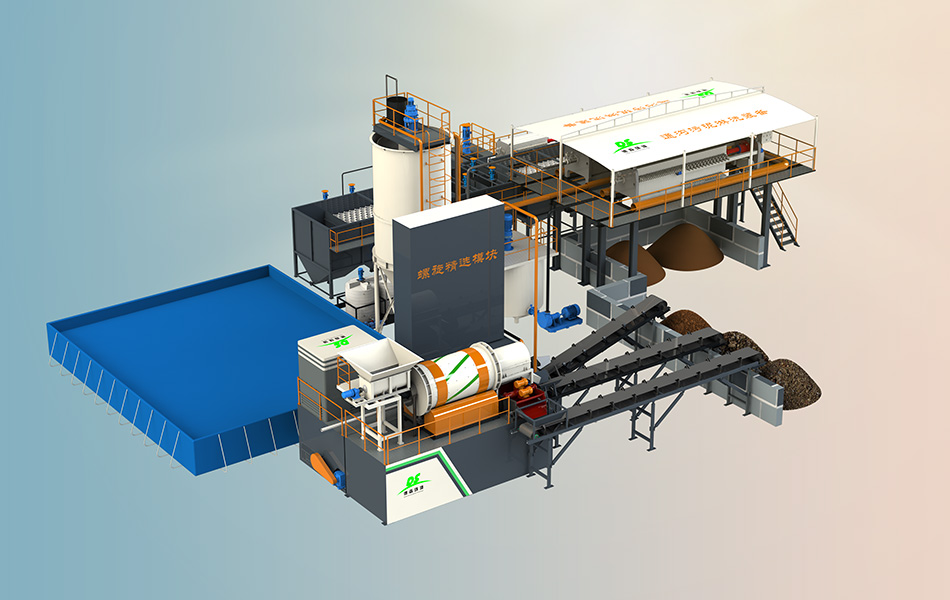
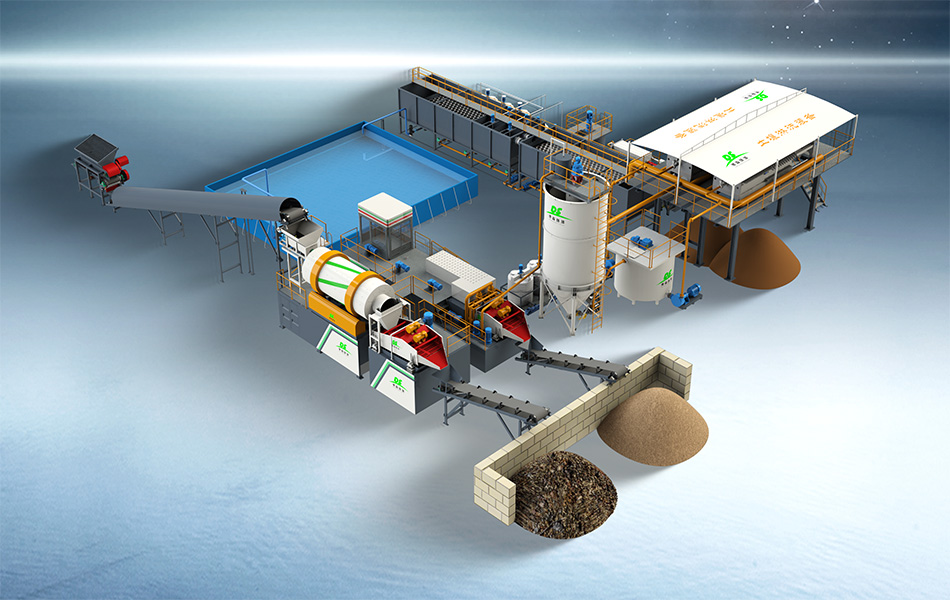
When remediation contractors compare washing options, the discussion usually starts with purchase price and ends with schedule. A conventional fixed washing plant can spend several months in civil construction before the first tonne of soil is washed, while the excavated material sits on site and storage costs keep running. This is a major reason the modular plant installation timeline has become a selection criterion in its own right. Modular soil washing plants arrive as pre-assembled skids and container modules, and on a prepared site they can move from delivery to first production in a matter of weeks. This article explains what actually drives the schedule and what a realistic week-by-week plan looks like.
What Actually Drives the Installation Schedule
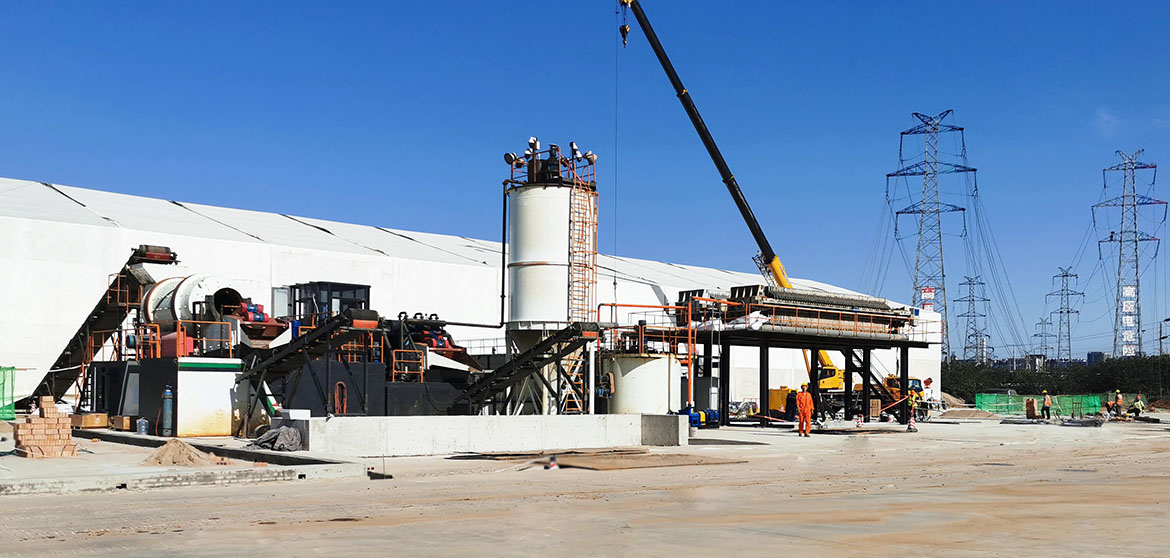
Module erection is rarely the bottleneck. Because the scrubbing, classification and dewatering stages are factory-built, the on-site programme is dominated by the work that happens before and around the modules.
Groundworks and Foundations
Most modular lines stand on reinforced concrete plinths or a single slab, and the concrete needs curing time before modules are craned into position. Pouring foundations as soon as the equipment order is confirmed — often while the plant is still in fabrication — is the single most effective way to protect the overall schedule. Drainage, a settling basin for process water and levelled hardstanding for stockpiles belong in the same phase, because every one of them becomes a delay if it is still unfinished when the trucks arrive.
The Typical Installation Sequence
- Delivery and offloading: modules arrive on containers and flat racks and are positioned with a mobile crane — usually two to three days for a mid-size line
- Module placement and alignment: skids are set on the foundations, shimmed level and bolted down to specification
- Interconnection: conveyor bridges, slurry piping, water lines and cable trays are run between the modules
- Utilities: mains or generator power is connected, the control cabinet is energised and the closed water loop is filled
- Commissioning: no-load running first, then washing with clean water, then load testing with the first contaminated feed
A Realistic Timeline for a Mid-Size Line
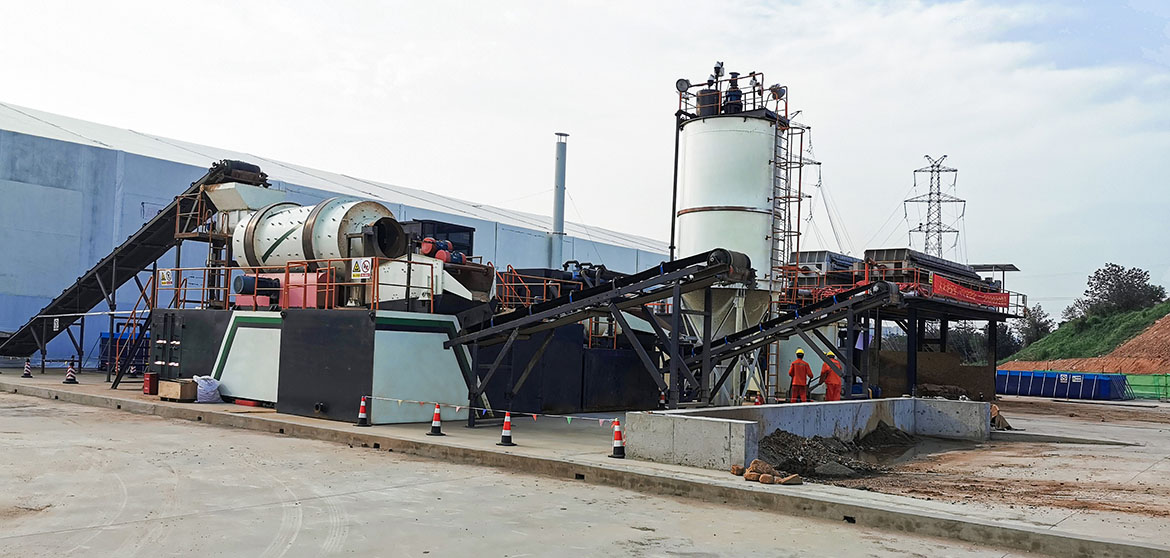
For a modular soil washing line in the 30 to 60 tonnes-per-hour class, the programme from delivery to sustained production typically falls into four windows.
Weeks minus 4 to 0 — parallel site works. While the plant is manufactured and trial-run at the factory, the site team completes foundations, drainage and hardstanding. Because this phase runs in parallel with fabrication, it does not extend the delivery-to-operation window; it only does so when it is started late.
Days 1 to 5 — offloading and erection. A mobile crane sets the modules on their plinths in feed, washing, classification and dewatering order. Conveyor and piping crews follow the crane module by module, so alignment and interconnection proceed together rather than in two separate passes.
Days 6 to 12 — interconnection and utilities. Slurry and water piping is completed, electrical wiring between modules and the control cabinet is finished, and the water loop is filled and checked for leaks. Reagent dosing equipment is calibrated against the target contaminant and soil type.
Days 13 to 20 — commissioning and operator training. The line runs empty to confirm rotation, seals and interlocks, then washes clean soil to stabilise the water chemistry, and finally takes the first contaminated feed. Throughput and classification cut points are tuned during this window, and operator training runs alongside so the client crew takes over a line they already understand.
Added up, around four working weeks on a prepared site is a realistic planning figure, against two to four months of construction for a comparable fixed plant. Weather, customs clearance and foundation curing remain the main variables, and a schedule written before the order should carry contingencies for all three.
How to Keep the Timeline Short
Factory Pre-Assembly and Trial Runs
Ask the supplier to assemble and trial-run each module before shipment. A pre-dispatch run surfaces wiring, sealing and hydraulic issues at the factory, where corrections take hours instead of the days the same fault can cost on a remote site. It also shortens commissioning, because the water loop and dosing system arrive already proven.
Prepare the Site in Parallel, Not in Sequence
Foundations, the power supply and the settling basin should be contract items that start the week the order is placed, not after the equipment lands. Projects that wait for delivery before breaking ground routinely add a month to a schedule that could have been four weeks.
Planning a modular soil washing project? Desen Environmental supplies modular and mobile soil washing plants with supervised installation and commissioning for projects worldwide. Visit materialwashing.com or contact the team for an installation schedule matched to your site conditions.