Stockpile Management for Contaminated Soil Screening: Organizing Storage and Handling on a Remediation Site
How to organize stockpile management for contaminated soil screening: segregation, covered storage, one-way traffic flow and batch records for a tidy site.
Stockpile Management for Contaminated Soil Screening: Organizing Storage and Handling on a Remediation Site
On a contaminated soil remediation site, the screening plant gets most of the attention, but the stockpiles around it decide whether the operation runs smoothly or churns in place. Every tonne of excavated soil has to wait somewhere before it is screened, and again after screening while laboratory results are confirmed. Where that material sits, how it is segregated, and how it moves between the pile, the screen and the washer determine double-handling cost, dust and runoff risk, and how easily the site passes a regulatory inspection. This article sets out a practical approach to stockpile management for contaminated soil screening, covering segregation, storage conditions, traffic flow and batch records.
Why Stockpiles Decide the Pace of a Screening Operation
Segregate by source, contamination class and destination
A stockpile is not just a place to park soil. It is the site's material ledger. Excavated soil arrives with different contaminant profiles from different areas of the site, and the difference matters: lightly impacted soil that can be washed and reused on site carries a completely different handling cost from heavily contaminated material destined for secure disposal. If the two end up in the same pile, the recoverable volume is effectively written off. The working rule is one stockpile per source area and contamination class, separated by berms or bunds and labelled with the source, the date of excavation, the estimated volume and the status of laboratory results. The same logic applies after screening: material waiting for confirmation of its cleanup levels should sit in its own designated area, physically apart from untreated feed.
Storage conditions that hold up during rain and inspection
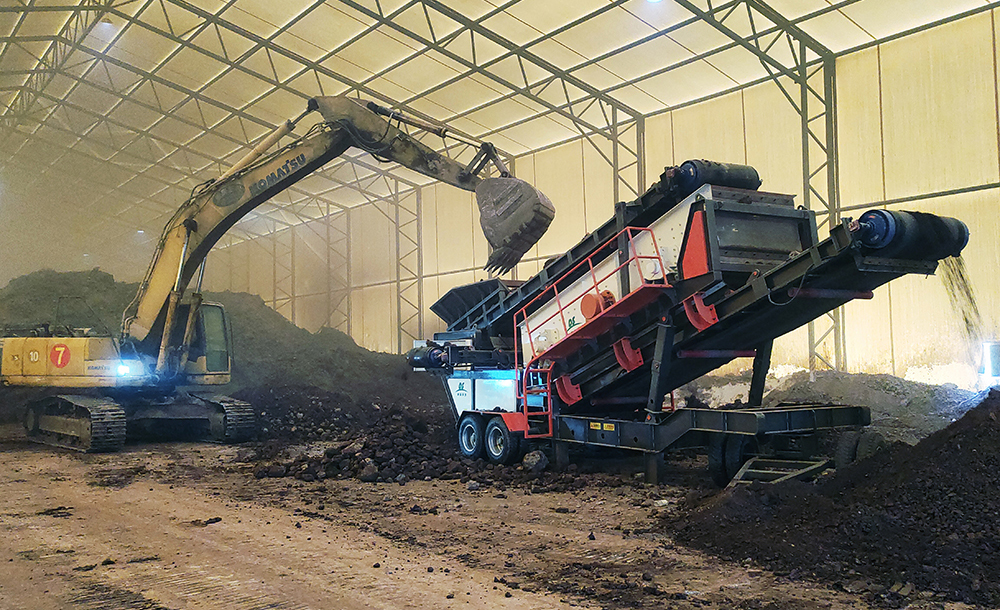
Contaminated soil, especially the fine fraction, generates leachate when it rains. Stockpiles should therefore sit on an impermeable pad or liner with bunding around the perimeter, and any runoff must be collected and routed into the site's water treatment loop rather than the nearest ditch. Where the site works through a wet season or handles odorous material, covered storage is worth the effort: a roof or covered shed keeps the moisture content stable, which in turn keeps screening performance consistent instead of swinging with every shower.
Organizing the Flow Between Stockpile, Screen and Washer
Zone the site around one-directional flow
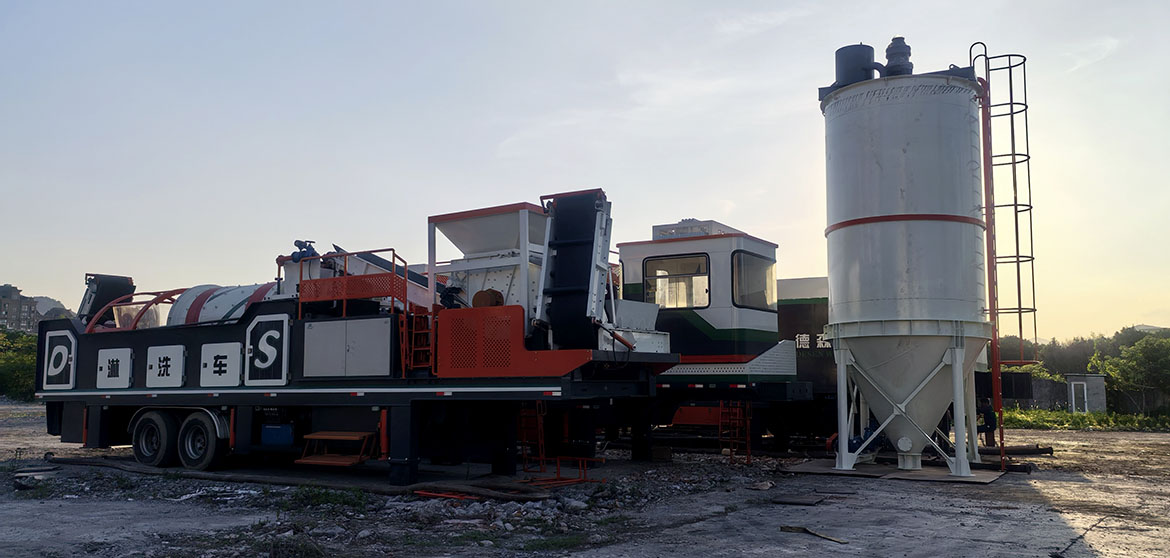
The most common source of wasted hours on a remediation site is traffic crossing itself: a loader carrying screened aggregate back through the untreated zone, or the screening plant sited so that feed has to be re-handled twice. Zoning solves this on paper before it becomes a problem on the ground. A practical layout separates four zones: incoming and unscreened soil, the screening and washing line, screened output pending confirmation, and residues such as washed fines awaiting disposal. Equipment is then arranged so material moves through these zones in one direction, with loading routes that never cross from a clean zone into a contaminated one. On compact urban sites, placing the washing line close to the unscreened stockpiles and keeping the output zone near the site exit shortens every haul.
Track batches from excavation to sign-off
Regulators increasingly ask for a documented trail showing where each batch of soil came from, how it was treated and where it ended up. A simple batch register fills this gap without extra software: each stockpile gets an identifier, and the register records the screening run it fed, the output stockpile it produced, the laboratory sample points and the final destination. This record directly supports waste acceptance documentation at the receiving landfill and any end-of-waste argument for reused aggregate. It also protects the contractor when results are questioned months later.
A working checklist for site supervisors
- One stockpile per source area and contamination class, separated by berms and labelled with source, date and volume
- Impermeable pad or liner under every contaminated stockpile, with runoff collected into the treatment loop
- Covered storage for fines and odorous material to stabilize moisture and screening performance
- Screened output stockpiled in a separate zone until laboratory confirmation is received
- Loading routes planned so equipment never carries material from a clean zone through an untreated one
- A batch register linking each pile to its screening run, lab results and final destination
None of this requires additional equipment. It requires layout discipline on day one and a register that someone actually maintains. Sites that get it right feed the screening plant without interruption, avoid re-handling the same soil twice, and walk into audits with a paper trail that answers questions before they are asked.