Star Screen vs Trommel Screen for Wet Soil: Choosing the Right Mobile Screening Plant
Star screen vs trommel screen for wet soil: how each technology handles sticky, high-moisture feed, where each fits ahead of a soil washing line, and how to choose.
Star Screen vs Trommel Screen for Wet Soil: Choosing the Right Mobile Screening Plant
On a dry, sandy remediation site, screening is the easy step: separate oversize, feed the washer, keep moving. Raise the moisture content and add clay, and the same step can stop an entire washing line. Sticky feed smears across screen surfaces, wet lumps wedge into apertures, and crews spend more time unclogging decks than producing material. When contractors specify a mobile screening plant for wet soil, the shortlist usually comes down to two technologies: the star screen and the trommel screen. Both are far more tolerant of moisture than a conventional vibrating deck, yet they work in very different ways. This article compares the two on wet soil and sets out where each fits ahead of a washing line.
Why Wet Soil Is Hard on Screening Equipment
Blinding and pegging
Most screening surfaces fail on wet feed in one of two ways. Blinding occurs when fine, sticky particles coat the aperture openings until effectively nothing passes through. Pegging occurs when wet, irregular lumps wedge tightly into the holes and stay there. A conventional vibrating screen fights both problems with acceleration and deck inclination, but once clay and moisture rise, vibration alone rarely keeps the surface open. Production falls, operators stop the plant to scrape the deck, and material behind the screen backs up.
Why the prescreening step matters for washing
On contaminated soil projects, the screen does more than remove stones. Heavy metals and organic contaminants concentrate in the fine fraction, so the cut the screen makes largely defines what enters the washing plant. An inconsistent, clogged screen sends oversize into the washer or fines into the oversize pile, and both mistakes cost money downstream. The screening technology has to hold its cut point on wet material, not just on the dry laboratory sample.
How a Star Screen Handles Sticky, High-Moisture Feed
A star screen uses rows of parallel shafts fitted with polyurethane discs shaped like stars. The shafts rotate in the direction of material flow, and the discs toss the feed forward while fines drop between the shafts. Because the discs flex as they turn, clay and moist fines rarely build up, which gives the star screen its defining property on wet soil: the working surface cleans itself while the plant runs. The discs also break up soft lumps, so wet clay balls are reduced instead of riding over the deck as oversize.
- Self-cleaning action: flexible discs shed sticky fines, keeping the effective cut point stable on wet feed
- Gentle handling: low impact speed limits the formation of new fines when the feed must stay within a narrow gradation
- Adjustable cut size: disc spacing and shaft speed typically cover cuts from roughly 10 to 80 mm
- Compact and mobile: most units are track- or wheeled-mounted and set up beside the stockpile within minutes
The trade-off is precision. A star screen makes one main cut between fines and oversize, and its separation of mid-size fractions is less exact than a deck-based machine. For very fine cuts below about 10 mm, or where a project needs two or three defined products at once, it is usually the wrong primary tool.
How a Trommel Screen Performs on Wet Soil
A trommel screen is a rotating cylindrical drum perforated with sized apertures; material is lifted and tumbled as the drum turns. That tumbling action is an advantage on wet soil: soft lumps are broken against the drum wall and against lifters, and many sticky particles are released before they can seal the apertures. Where moisture runs high, trommels are specified with larger apertures, brush or scraper cleaning systems, and in some cases water sprays.
The strengths show up at higher tonnage. A trommel keeps its separation quality as feed rates climb, it can produce two or three fractions in a single pass with sequential drum sections, and it tolerates oversize objects better than most alternatives. It needs more space, power and height than a star screen of the same duty, which matters on tight urban remediation parcels.
Choosing Between Them for a Soil Washing Project
In practice the decision follows the material, not the brochure. What matters is how each machine behaves on the project's own soil at its own moisture. Five checks cover most cases:
- Moisture and clay content: for very sticky, high-moisture feed, the star screen's self-cleaning discs hold the cut point with less operator attention
- Target cut size: for a single fines cut ahead of washing in the 10 to 80 mm range, both work; for finer or multiple cuts, lean toward the trommel
- Throughput: above roughly 60 t/h, trommels usually hold separation quality better
- Site space and setup time: star screens are lighter, lower and faster to position beside a stockpile
- Downstream feed sizing: whichever machine is chosen, confirm its discharge gradation matches the washing plant's feed requirement
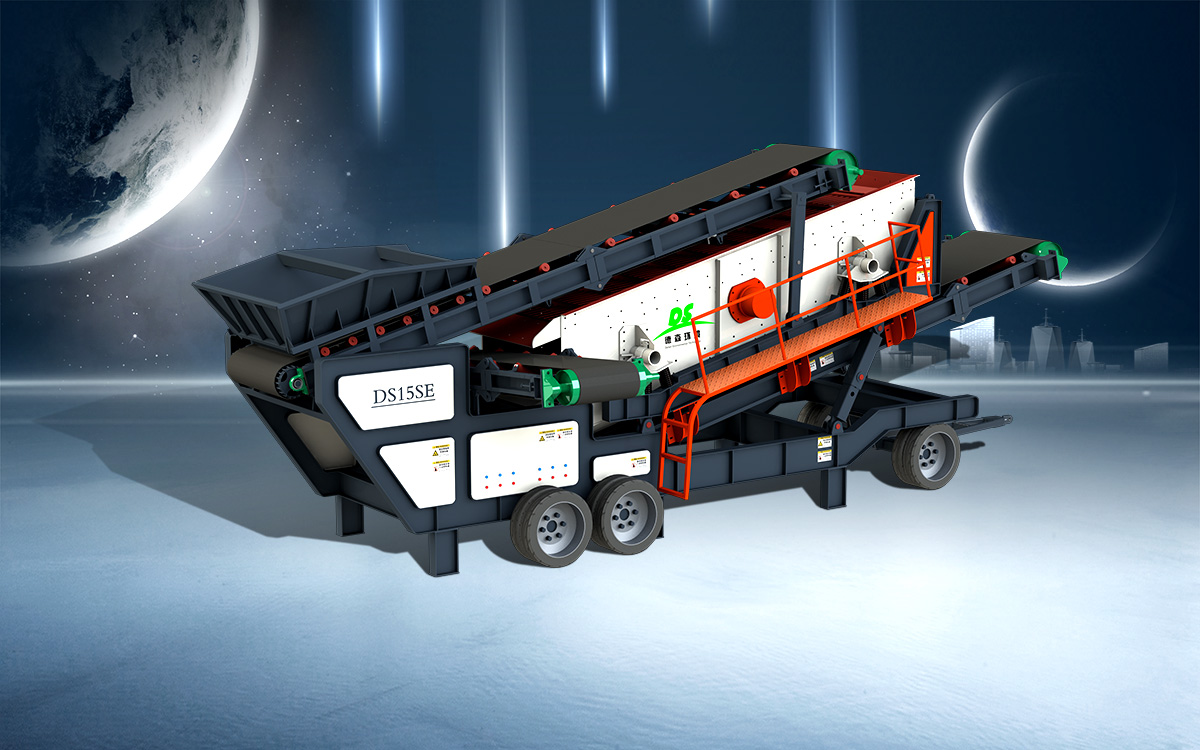
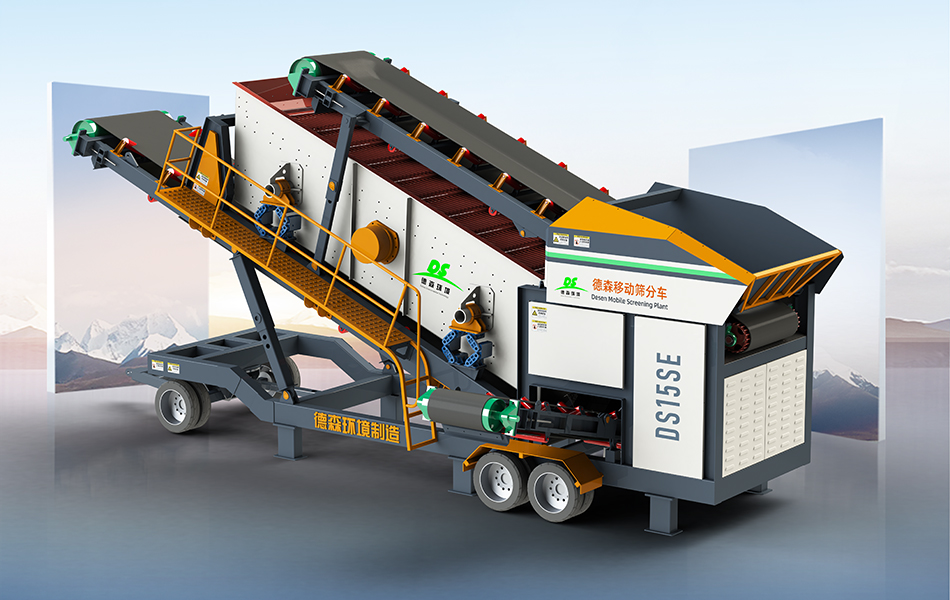
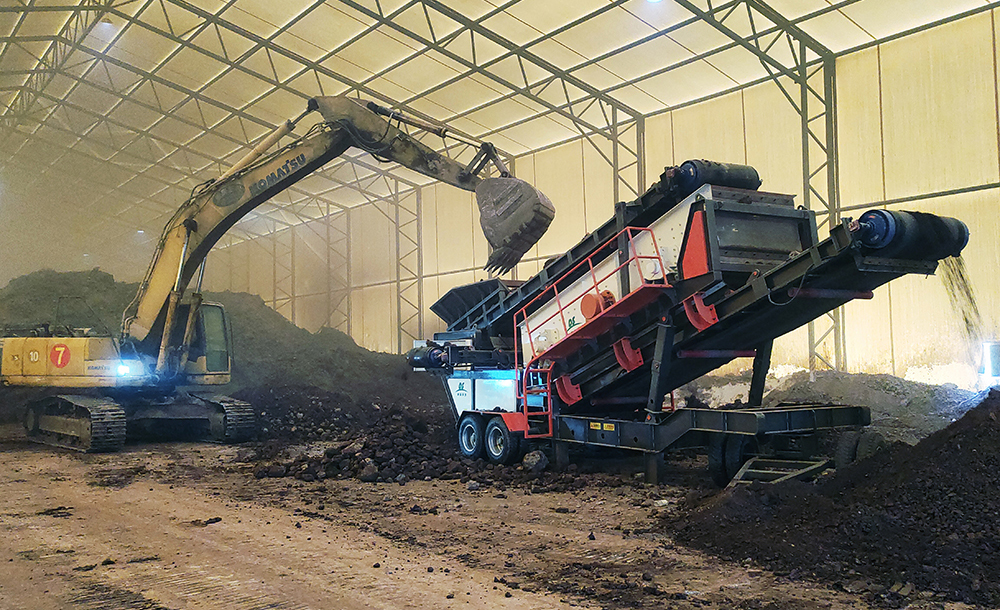
Many washing contractors end up using both: a star screen scalping sticky oversize at the excavation face, and a trommel making the final cut before the washer. Desen Environmental supplies mobile screening plants, including the tracked DS15SE unit shown above, alongside its modular and mobile soil washing equipment, and matches the screening configuration to the gradation and moisture data from each project. Getting the screening step right on wet soil is what keeps the washing line — and the project schedule — moving.