Attrition Scrubbing Intensity for Clay Bound Metals: Tuning Energy Input Before Chemistry
Clay-bound heavy metals need mechanical energy before chemistry. See how attrition scrubbing intensity, solids density and residence time shape a soil washing plant.
Attrition Scrubbing Intensity for Clay Bound Metals: Tuning Energy Input Before Chemistry
On many contaminated land projects, the heaviest metal load hides in the finest material. Silt and clay fractions below 63 microns routinely carry most of the lead, cadmium, copper and zinc found on a site, because clay platelets offer an enormous reactive surface for metal adsorption. Sand alone rarely fails a cleanup target. This is why attrition scrubbing intensity for clay bound metals has become a core design question for any soil washing plant that aims to release clean sand and coarse fractions for reuse instead of sending the whole excavated volume to landfill. 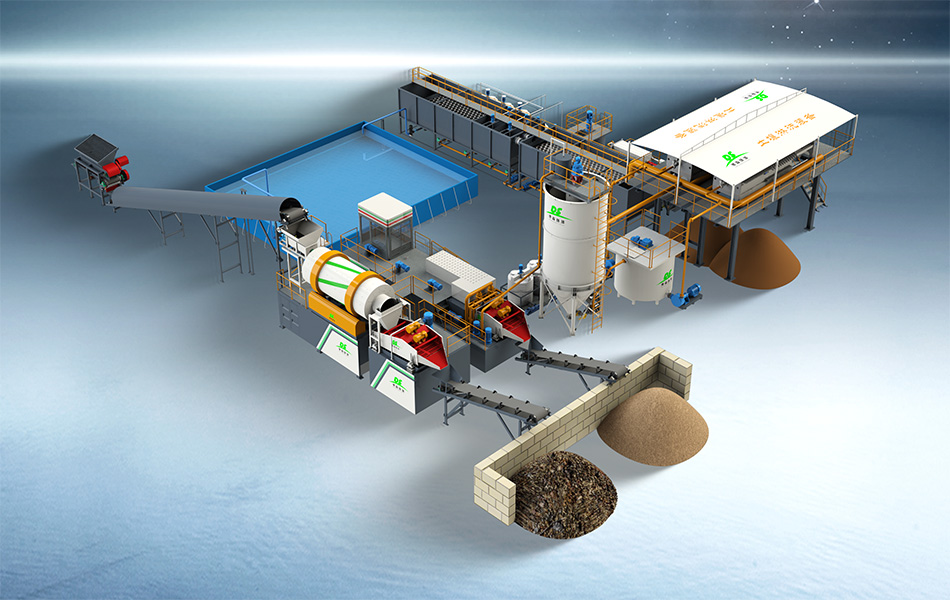
Why Clay-Bound Metals Resist Simple Washing
Rinsing contaminated soil, even with warm water and a wetting agent, barely moves metals that are sitting on clay surfaces. The metal ions are adsorbed onto clay platelets, complexed with iron and manganese oxide coatings, and trapped inside aggregates that survive gentle mixing. Washing the coarse fraction removes loose contamination quickly, but the fines keep failing the leaching test and drag the whole batch back into the hazardous stream.
Attrition scrubbing attacks the problem mechanically. In an attrition scrubber, the slurry is kept at a high solids density and stirred hard enough that grains scrub against each other rather than only against the impeller. Particle-on-particle abrasion breaks down soft aggregates, strips clay and oxide coatings from sand surfaces, and disperses the fines so the following classification stage can separate them. The chemistry that comes next, whether a chelating agent or a simple pH adjustment, then works on surfaces that are actually exposed.
What Intensity Means in Practice
Intensity is not a single number but four working parameters that act together: energy input per unit volume, rotor tip speed, residence time, and solids density. Raise the power draw and the same residence time delivers more scrubbing events per particle. Hold the slurry dense enough for grain-on-grain contact and the abrasion becomes self-sharpening. Cut the residence time too far and coated grains pass through untouched; run it too long and you pay energy for little additional metal release.
The Trade-Off: Harder Scrubbing Is Not Always Better
Pushing intensity upward has a cost. Aggressive attrition fractures brittle grains and manufactures new fines, which increases the load on the filter press and enlarges the fraction that must be managed as residue. Excessive tip speed also accelerates wear on rotors and liners. On clay-rich soils the practical target is the lowest intensity that removes the coatings, confirmed by particle size analysis of the scrubbed slurry, not the highest intensity the equipment can deliver.
Setting the Intensity on a Modular Washing Line
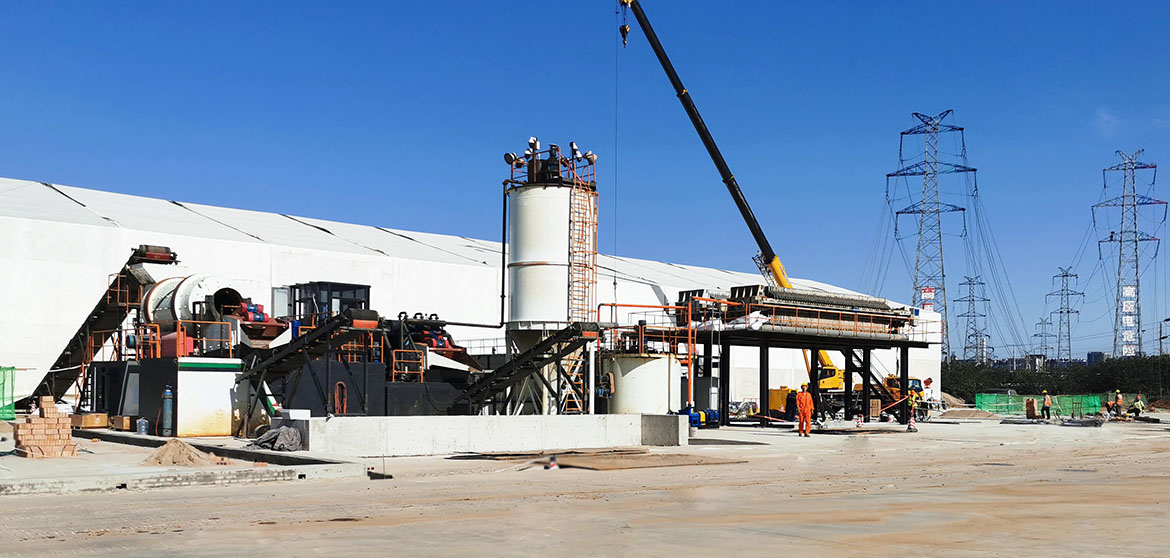
On a modular or containerized washing line, intensity is set in two places: the attrition cell itself and the conditioning stage ahead of it. Slurry density is held in a dense working range, total residence time is often split into two shorter passes rather than one long one, and dispersant dosing is adjusted so the clay actually separates instead of re-flocculating downstream. Because each module runs independently, the crew can tune one stage without stopping the rest of the line.
- Run a bench-scale attrition test on representative soil before fixing the design point
- Hold solids density high enough for grain-on-grain contact instead of dilute stirring
- Split the total residence time into two attrition passes with classification between them
- Adjust dispersant dosing until the fines stop re-flocculating downstream
- Track the minus 63 micron fraction before and after scrubbing as the control variable
- Watch motor current draw, since a falling current often signals a change in slurry density
None of these settings transfer between sites. A sandy soil with clay lenses may need only a moderate pass, while a sticky, high-plasticity soil can demand stronger conditioning and longer contact. A washing plant should therefore treat intensity as an adjustable set of dials rather than a fixed factory setting.
Proving the Result Before You Buy a Plant
The most direct way to de-risk this decision is a pilot test on your actual soil. Batch trials should report metal content per size fraction before and after scrubbing, the mass split between washed coarse material and contaminated fines, and the water demand of the circuit. Those numbers let you estimate how much volume can leave the site as reusable aggregate and how much must go to disposal or further treatment.
Field evidence matters just as much. 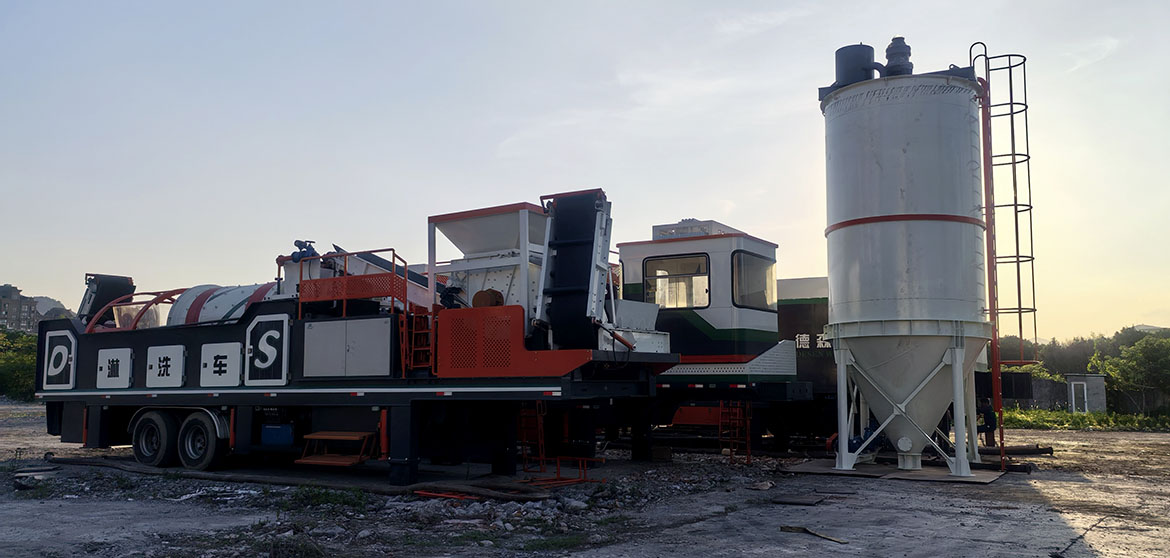 Ask potential suppliers for case records in which clay-bound contamination was the main challenge, and check whether the reported volume reduction comes from the coarse fraction alone or from the whole excavated mass. The difference between those two figures is where budgets are won or lost.
Attrition scrubbing intensity is where soil washing projects either succeed or quietly underperform. Set it from lab and pilot data on your own soil, keep it adjustable on the plant, and verify it with fraction-by-fraction assays. That discipline turns a washing line from a volume reduction tool into a genuine recovery system for clay-bound heavy metals.