Process Water Quality Monitoring in Washing Plants: Keeping the Recycle Loop Under Control
Process water quality monitoring in washing plants: where to sample, which five parameters matter, how to read drift patterns and what records auditors ask for on a remediation site.
Process Water Quality Monitoring in Washing Plants: Keeping the Recycle Loop Under Control
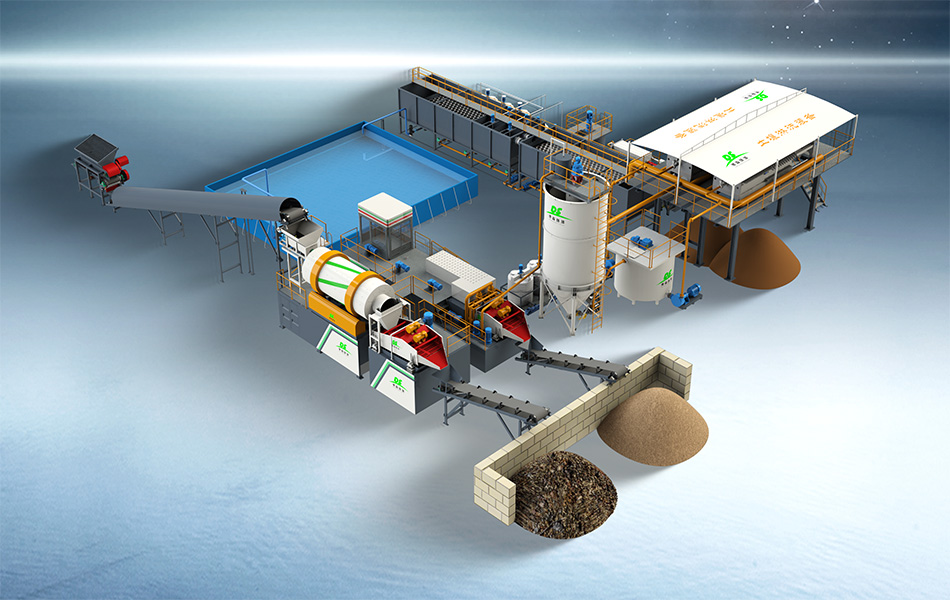
Most remediation sites run their washing plant on recycled water. Fresh make-up has to be trucked in or pumped from a borehole, discharge permits are slow to obtain, and a closed loop is often written into the environmental approval as a condition. That makes process water quality monitoring in washing plants a production issue rather than a laboratory formality. When turbidity climbs, clay travels back into the scrubber circuit, reagent demand rises, and the sand leaving the plant is dirtier than it was on the previous shift. The article below covers where to measure, how often, what the readings usually mean, and how to turn them into actions an operator can take during a shift.
Monitoring Points Along the Water Circuit
Measure at the point of use, not only at the tank
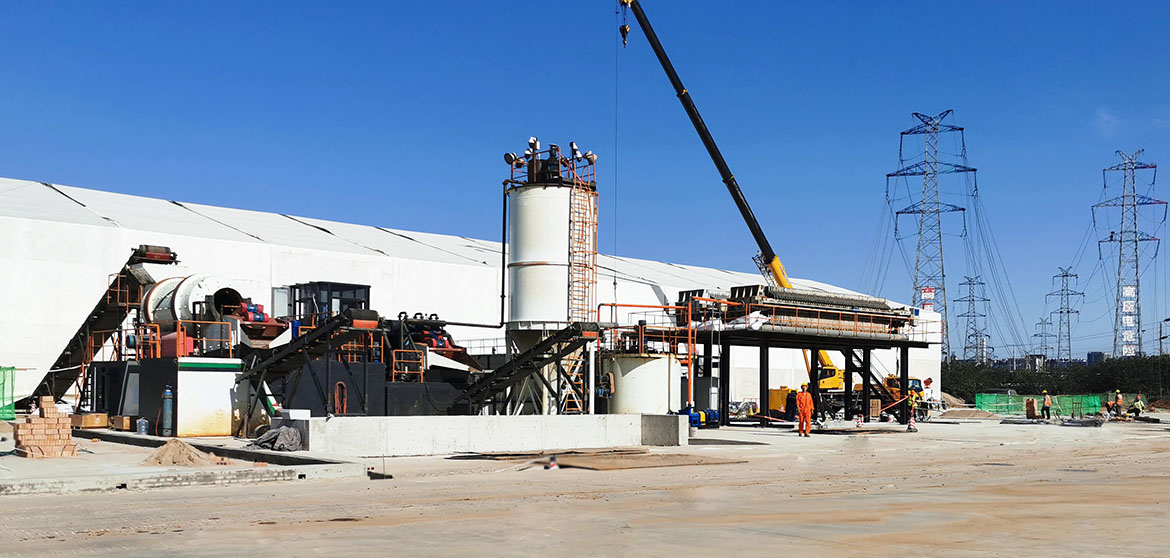
A single sample pulled from the recycle tank tells you the average of everything that happened over the past hour. Instruments placed at the point of use show what the soil actually sees. On a modular plant the practical set is three: make-up or final rinse water entering the circuit, recycled process water ahead of the scrubber, and thickener overflow returning to the storage tank. If the plant has a hot washing section, add the heater outlet, because temperature drift changes both viscosity and reaction rate.
The parameters that earn their place
It is easy to specify a long list of analyses and then ignore all of them. Five parameters cover most of the operating risk on a soil washing line:
- Suspended solids and turbidity — the fastest indicator of a flocculant or thickener problem. A rising value means clay is recirculating onto material that has already been washed.
- pH — shifts change metal solubility and can reverse the effect of a chelating agent. A drifting pH also points to incomplete mixing or a dosing fault upstream.
- Electrical conductivity — tracks dissolved salt build-up in a closed loop, which matters on sites with saline groundwater or high-chloride soils.
- Residual chelating agent — checked by titration or test strip. Excess residual is reagent cost leaving the plant and a question at the discharge or reuse point.
- Temperature — recorded on hot washing circuits, where a seasonal change alters settling behaviour in the thickener.
Turning Readings Into Operating Decisions
Continuous where it is cheap, manual where it is not
Inline turbidity and pH probes with a daily grab-sample cross-check is the usual compromise. Reagent residual is normally titrated once per shift, while dissolved metals in the final rinse go to an external laboratory weekly or per batch, depending on what the acceptance criteria require. Probes need cleaning on a fixed schedule; a fouled turbidity sensor reads low and hides exactly the condition it was installed to catch.
Drift patterns worth recognising
Three patterns account for most of the incidents we see on site. A slow rise in turbidity over several days usually means flocculant dose has fallen behind the feed, or the polymer has aged in storage. A step change immediately after a new stockpile is opened points to a higher clay fraction and calls for a screening or blending decision, not more chemical. A steady climb in conductivity with stable turbidity indicates insufficient blowdown: the loop is retaining dissolved salts while the solids side looks healthy.
Records, Thresholds and Reporting
Set a response ladder, not a single alarm
A single alarm threshold produces either constant nuisance trips or no reaction at all. A three-level ladder works better: a watch level that triggers an extra check, an action level that changes dosing or feed rate, and a stop level that halts washing until the circuit is corrected. Write the levels on the control panel and record who authorised each action.
What clients and regulators ask for
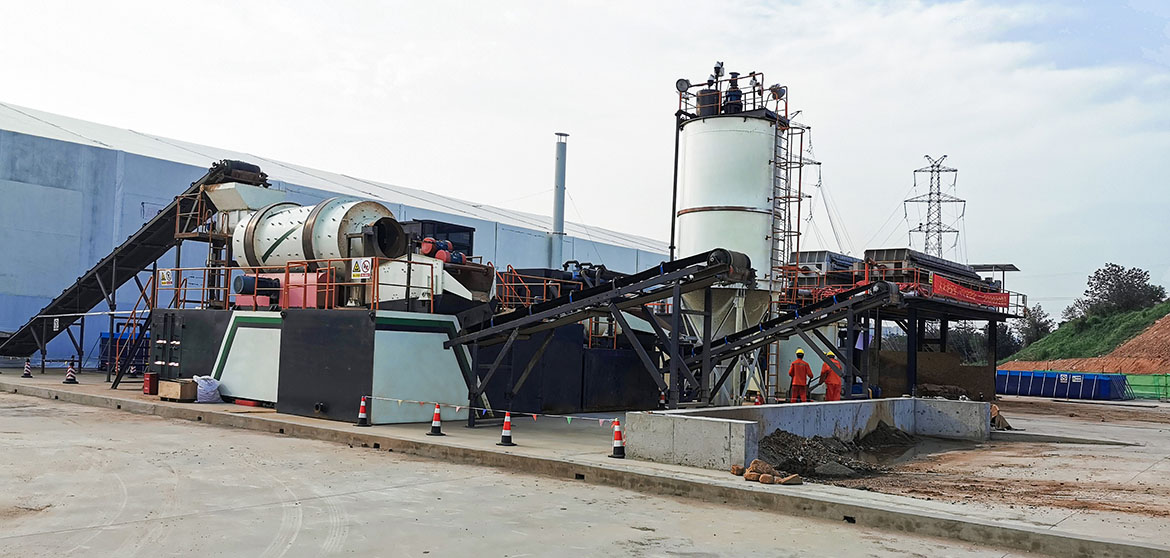
Auditors rarely ask for the newest instrument. They ask for a log that matches the material leaving site: daily readings with the time and the initials of the person who took them, calibration records for each probe, chain-of-custody paperwork for laboratory samples, and a water balance showing make-up volume against water leaving with the product and the filter cake. Plants that keep these four items together pass review without argument; plants that reconstruct them afterwards rarely do.
Desen Environmental configures modular and mobile washing plants with sampling points, tank instrumentation and a monitoring schedule agreed during design, so the water circuit can be audited from the first shift rather than rebuilt around afterwards.