Soil Washing Reagent Dosing Control: Metering, Monitoring and Adjustment on a Modular Washing Line
Soil washing reagent dosing control explained: dosing points, flow-paced metering, pH and ORP feedback, concentration checks and the records that keep a line auditable.
Soil Washing Reagent Dosing Control: Metering, Monitoring and Adjustment on a Modular Washing Line
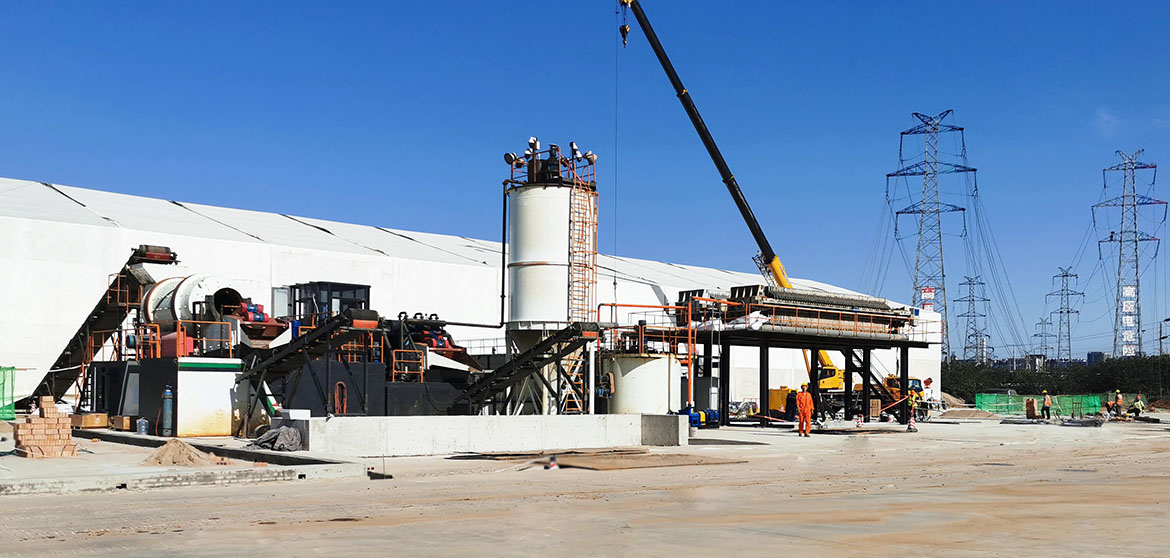
On a soil washing project, the mechanical side of the plant — scrubbers, screens, classifiers — gets most of the attention during procurement. Yet once commissioning starts, the conversation shifts to chemistry: how much reagent, added where, at what concentration, and adjusted how often when the feed changes. Reagent cost and process stability on a washing line are decided almost entirely by dosing discipline. This article sets out how soil washing reagent dosing control works on a modular plant: where the dosing points sit in the process, how metering and feedback loops are arranged, and which records keep the operation auditable.
Where Reagents Enter a Soil Washing Process
Typical dosing points along the line
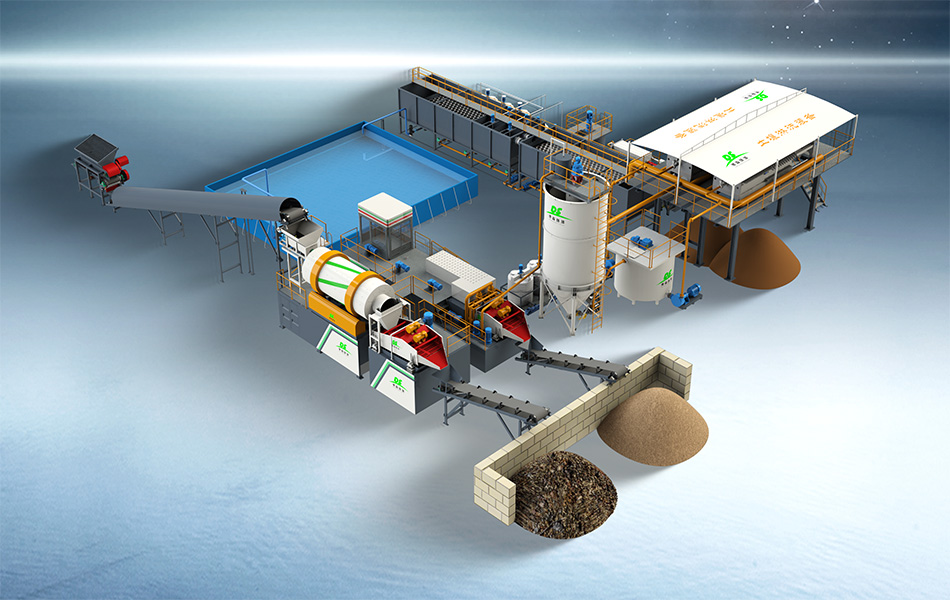
Reagents are not added at one place. On a typical modular soil washing plant, several dosing points serve different purposes. Conditioning tanks ahead of attrition scrubbing receive wetting agents or dispersants that break down clay aggregates and release contaminated fines from sand surfaces. The scrubber circuit may receive chelating agents or pH modifiers that mobilize heavy metals such as lead, cadmium, copper and zinc into the liquid phase. Downstream, flocculants and coagulants are dosed into the process water circuit so that suspended fines settle quickly in thickening and clarification tanks and the water can be recycled. Each of these points has its own target concentration, its own response time, and its own consequences when the dose drifts.
What the dosing stage must achieve
The objective is narrower than simply adding chemicals. A well-controlled dosing stage holds the process inside a window: enough active reagent for the target reaction, without the overshoot that wastes product, disturbs downstream pH, or leaves residues in the treated soil that complicate acceptance testing. On sites where wash water is recycled in a closed loop, overdosing also accumulates in the water circuit over time, so the control strategy has to account for recirculating residuals rather than treating each pass as fresh make-up water.
How Dosing Control Works in Practice
Flow-paced metering with feedback correction
The baseline arrangement is flow-paced dosing: a metering pump injects stock solution in proportion to the flow of the liquid stream it enters. If the feed pump slows down or a section is bypassed, the reagent flow follows automatically. On top of that baseline, feedback loops trim the dose. pH probes in the conditioning tanks and scrubber circuit drive acid or alkali addition to hold the target range, which matters because metal solubility and chelating performance are both strongly pH dependent. ORP measurement plays a similar role where oxidation or reduction steps are used, for example when hexavalent chromium has to be reduced before washing. Turbidity or particle monitoring on the recycled water line supports flocculant control.
Concentration and dosage: two settings that are often confused
Operators adjust two different variables, and mixing them up is a common source of instability. Stock solution concentration is prepared in the make-up tank — how much active product per litre of water. Dosage is the ratio of that solution to the material or water stream. A dose that looks stable can still drift if the make-up crew prepares batches at slightly different concentrations, so batch preparation records belong inside the control loop, not in a separate filing cabinet. Most plants standardize on one or two stock concentrations and adjust dosage at the pump, which keeps the arithmetic visible at shift handover.
Verification, Records and Daily Routine
Dosing control is only credible if it is verified against the process, not against the pump display. A practical daily routine on a modular washing line includes:
- Calibration check of each metering pump against a graduated cylinder at the start of the shift
- Verification of stock solution concentration in the make-up tank before the first batch is drawn
- pH and temperature readings logged at defined points and cross-checked against the inline probes
- Laboratory jar tests whenever the feed source or contamination profile changes
- Reagent consumption recorded per tonne of feed, so cost and dose trends stay visible week by week
Records that auditors and clients ask for
On remediation projects, the dosing record is part of the compliance file. Regulators reviewing treated soil acceptance typically want to see which reagents were used, at what dosage ranges, and how excursions were handled — for instance, what the crew did when a batch of clay-rich feed pushed the pH out of range. Time-stamped dosing logs, batch preparation sheets and probe calibration records answer those questions without reconstruction. They also support pilot test interpretation: when a full-scale plant underperforms its trials, the dosing history is the first place to look for the difference.
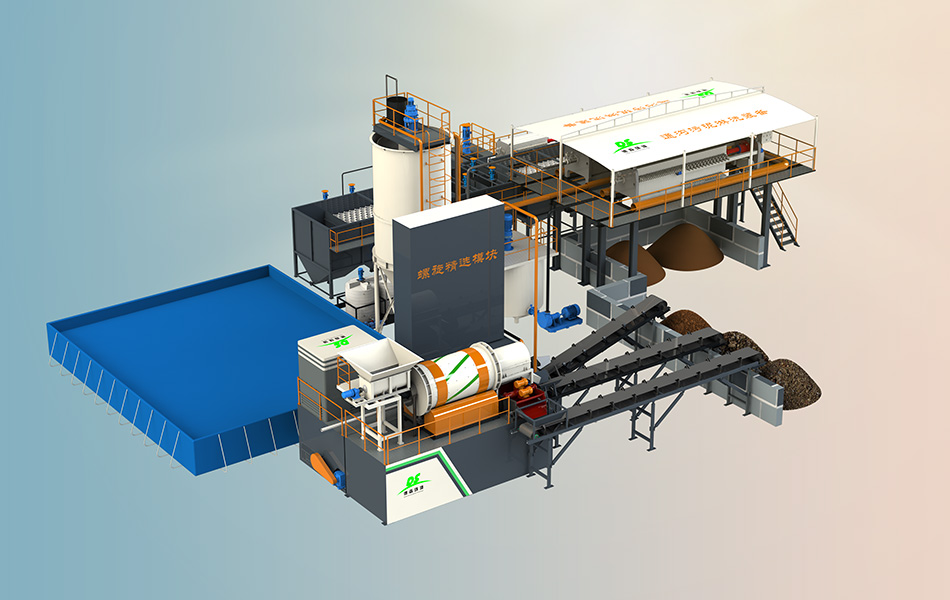
Handled this way, reagent dosing stops being a running cost that fluctuates with operator habit and becomes a controlled parameter of the plant — measured, recorded and tuned like screen aperture or scrubber residence time. For contractors evaluating modular soil washing equipment, it is worth asking suppliers how the dosing points, metering pumps and feedback probes are integrated into the control system, and which dosing records the plant generates automatically.