Copper Smelter Site Soil Washing for Heavy Metal Recovery: Turning Smelter Land Into Reusable Material
Copper smelter site soil washing for heavy metal recovery: how fractionation, attrition scrubbing and water recycling turn smelter soil into reusable material.
Copper Smelter Site Soil Washing for Heavy Metal Recovery: Turning Smelter Land Into Reusable Material
Former copper smelters are among the most challenging industrial legacy sites in any remediation portfolio. Decades of roasting, converting and casting operations leave copper, arsenic, lead and zinc distributed through surface soil, slag storage areas and settleable dust far beyond the plant boundary. When the land is redeveloped, the usual choices are excavation with off-site disposal or long-term containment. Copper smelter site soil washing offers a third route: separate the contaminated fines from clean coarse material on site, and where the metal concentrations justify it, recover a metal-bearing concentrate as a saleable by-product. This article explains how the process works, what the equipment arrangement looks like, and which checks matter before a contract is signed.
Why Smelter Soil Behaves Differently From Other Contaminated Sites
The metal follows the fines
Smelter emissions produce two distinct contamination patterns. Dust deposition spreads copper and arsenic across wide areas at moderate concentrations, while slag fragments and spilled converter material create hot spots with very high metal content. In both cases the metals concentrate in the fine fractions. Silt and clay below 63 microns offer enormous reactive surface area, and iron and manganese oxide coatings on sand grains bind additional copper. This is why a simple rinse achieves little: the metal is not sitting loosely on the surface, it is attached to coatings and trapped inside aggregates that survive gentle mixing.
Recovery potential changes the economics
On a site where copper in the coarse sand fraction reaches one to three percent after concentration, the recovered fraction can be sold to a smelter or hydrometallurgical processor instead of being landfilled as hazardous waste. The revenue is rarely decisive on its own, but it reduces disposal tonnage twice over: clean sand stays on site as backfill, and the metal-bearing concentrate leaves as a product rather than as a liability. Every tonne that avoids the hazardous waste gate is a tonne that does not carry gate fees, transport cost and long-term liability documentation.
How a Soil Washing Line Recovers Metal-Bearing Fractions
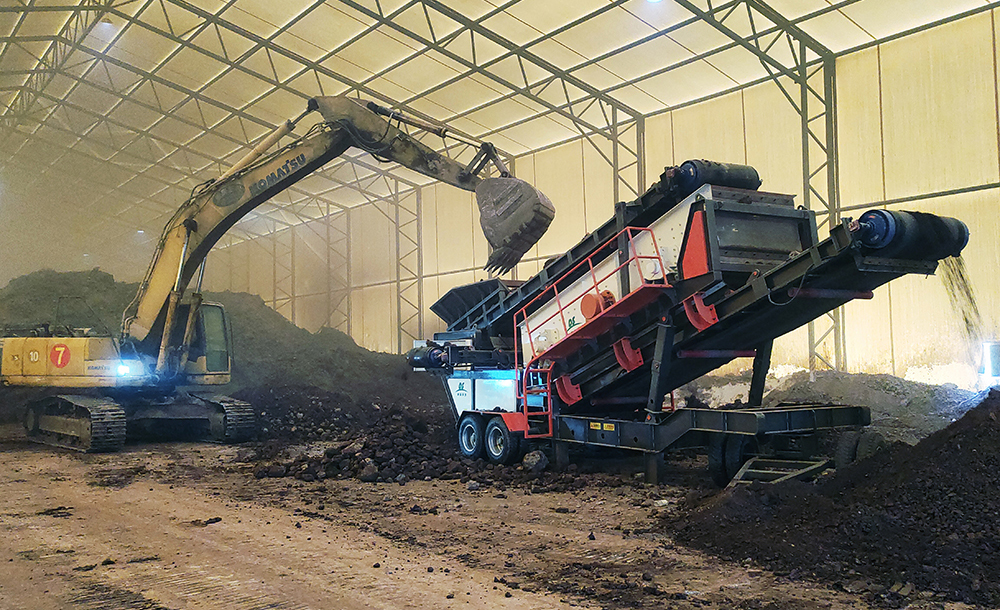
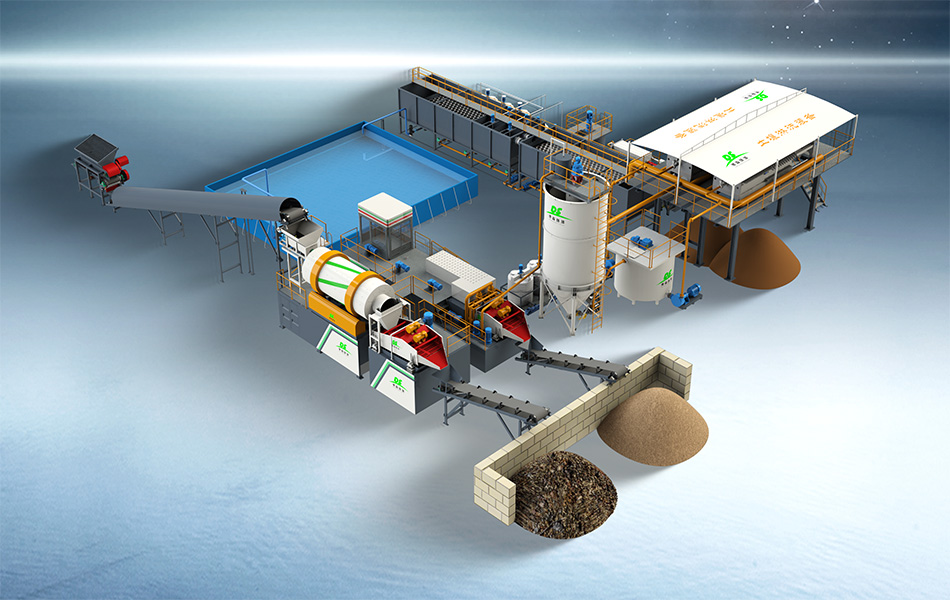
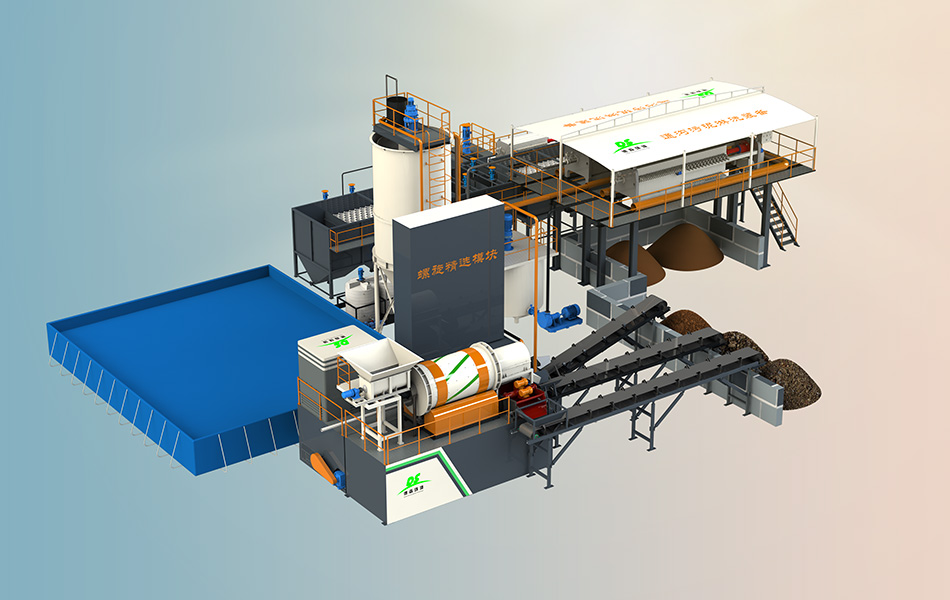
A modular washing plant processes smelter soil through a sequence of physical stages, each of which concentrates the contamination into a smaller and smaller stream:
- Pre-screening removes oversize slag, rubble and debris so the washing equipment receives a steady, sized feed.
- Attrition scrubbing stirs the slurry at high solids density so grains abrade against each other, breaking aggregates and stripping metal-bearing coatings from sand surfaces.
- Classification separates the washed sand and gravel from the metal-rich fines, typically with hydrocyclones and fine screens.
- Reagent washing applies pH adjustment or chelating chemistry where residual copper on the sand still exceeds the reuse target.
- Water treatment and recycling routes the fine slurry to a thickener and filter press, returning clarified water to the head of the plant.
The output split is the point of the exercise. On a well-configured line, 70 to 85 percent of the excavated mass leaves as clean sand and gravel, while the contamination ends up in a filter cake that may represent only 15 to 30 percent of the original volume. Where copper values are high enough, the cake itself becomes the concentrate delivered for metal recovery. 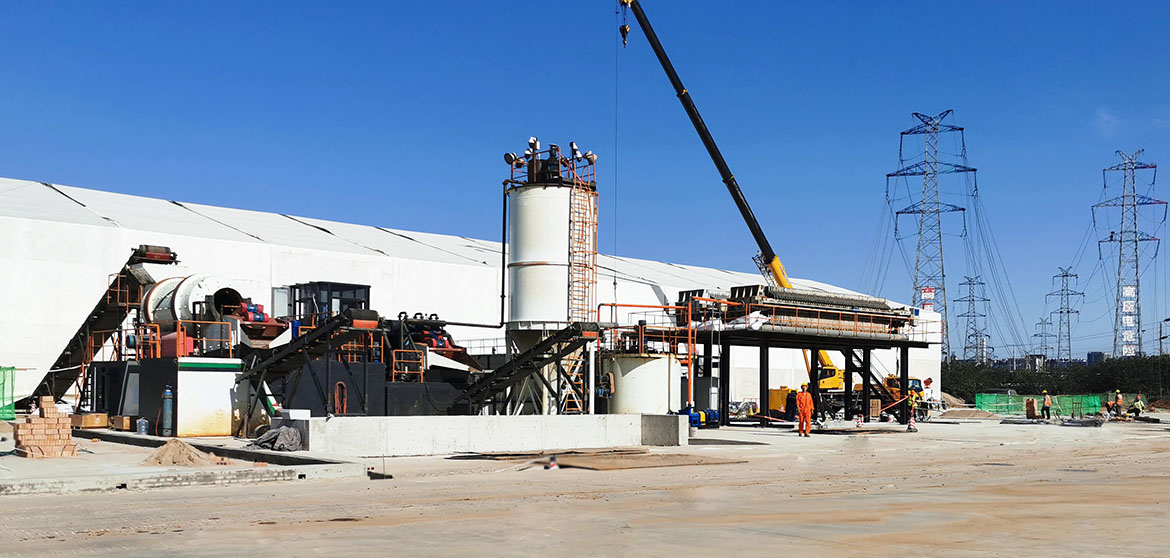
Design choices that matter on smelter soil
Smelter projects reward a few specific configuration decisions. Attrition scrubbers sized for high energy input release more metal from coarse aggregates than standard mixers. Closed-loop water systems keep arsenic-bearing fines out of surface discharge, which matters because arsenic limits are usually the strictest parameter in the permit. And arranging the plant in modules allows the contractor to treat hot spot areas first, verify results, then reposition equipment across the wider dust-deposition zone without rebuilding the line.
What Buyers Should Verify Before Committing
Because smelter soil varies more than most feed materials, the validation work before ordering equipment carries real weight. A feasibility study should report recovery rates per fraction, not only total removal percentages, and the pilot test should be run on soil from the actual smelter rather than a surrogate blend. Three questions separate a serious proposal from a generic one:
- What mass split and per-fraction metal removal did the pilot achieve on this specific soil?
- How is the filter cake classified for disposal, and is the receiving facility identified?
- Can the plant layout be repositioned across the site as treatment zones are completed?
Handled this way, copper smelter site soil washing converts a rigid disposal problem into a staged recovery program: clean material stays on the site, metals re-enter the supply chain, and the hazardous stream shrinks to the volume that genuinely needs secure disposal. For owners and contractors weighing the options on a former smelter, that combination of volume reduction and material recovery is what makes washing lines worth evaluating before the excavators mobilize.