Lead Contaminated Soil Washing at Battery Recycling Sites: A Modular Plant Approach
Lead contaminated soil washing at battery recycling sites: fractionation, attrition scrubbing and water recycling cut disposal volumes while keeping cleanup evidence auditable.
Lead Contaminated Soil Washing at Battery Recycling Sites: A Modular Plant Approach
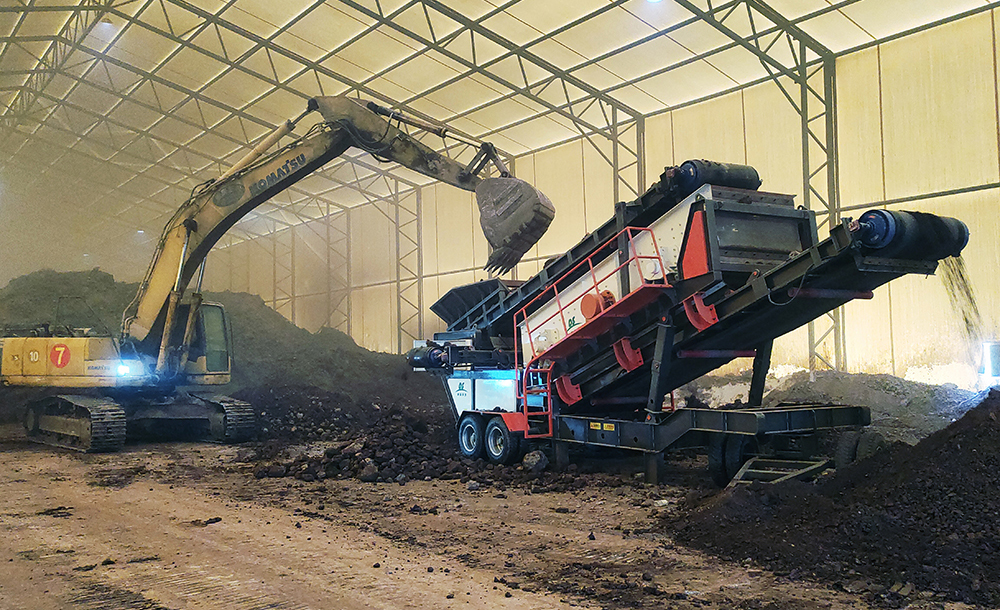
Battery recycling yards are among the most persistent sources of lead contamination on industrial land. Decades of breaking, storing and smelting scrap lead-acid batteries leave fine lead dust in surface soil, stormwater channels and stockpile areas, and the contamination rarely stays within the fence line. When such a yard is redeveloped, sold or pushed through a permit renewal, regulators usually ask for site-wide soil verification. At that point, excavation and off-site disposal becomes the largest single line in the budget, which is why lead contaminated soil washing with a modular plant is increasingly the route project owners examine first. This article explains how the process works at battery recycling sites, what the equipment arrangement looks like, and which points deserve verification before a contract is signed.
Why Lead at Battery Recycling Sites Demands Fractionation
The size cut decides the outcome
Lead at these sites does not spread evenly. Sampling grids almost always show hot spots around the breaking floor, the battery storage bays and the old smelter feed area, while soil taken between them can pass a leaching test without any treatment at all. The second pattern that repeats on nearly every project is particle size. Lead dust and lead paste fragments cling to silt and clay, so the fraction below about 63 microns carries a disproportionate share of the total mass. Sand and gravel, once the adhering fines are scrubbed off, frequently meet reuse criteria on their own. This is the physical logic behind soil washing: instead of treating the entire excavated volume as hazardous, the plant splits it into a large, clean coarse stream and a small, concentrated fine stream that is cheap to stabilize or dispose of.
Why digging and hauling alone falls short
Dig-and-haul does remove the problem from the site, but it moves the cost with it. Tonnage from a typical recycling yard runs into thousands of tonnes, landfill gate fees for lead-bearing soil are high, and transport through populated areas draws its own scrutiny. Worse, excavation without pretreatment gives the site owner no reuse material back, so clean soil has to be imported for the redevelopment. Fractionation on a washing line reverses that equation: a large share of the excavated mass leaves the plant as verified aggregate that can stay on site.
How a Modular Washing Line Treats Lead-Bearing Soil
Feed preparation and attrition scrubbing
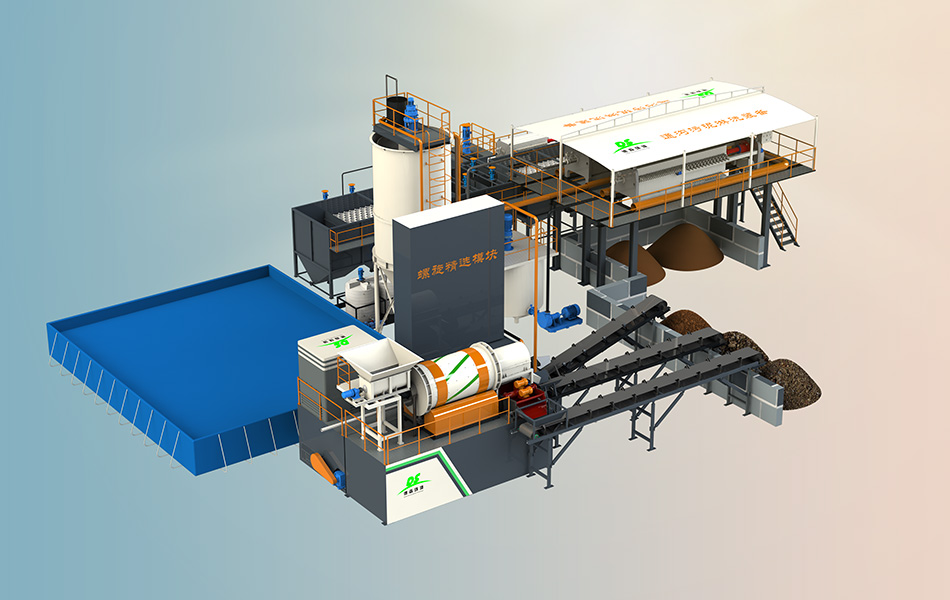
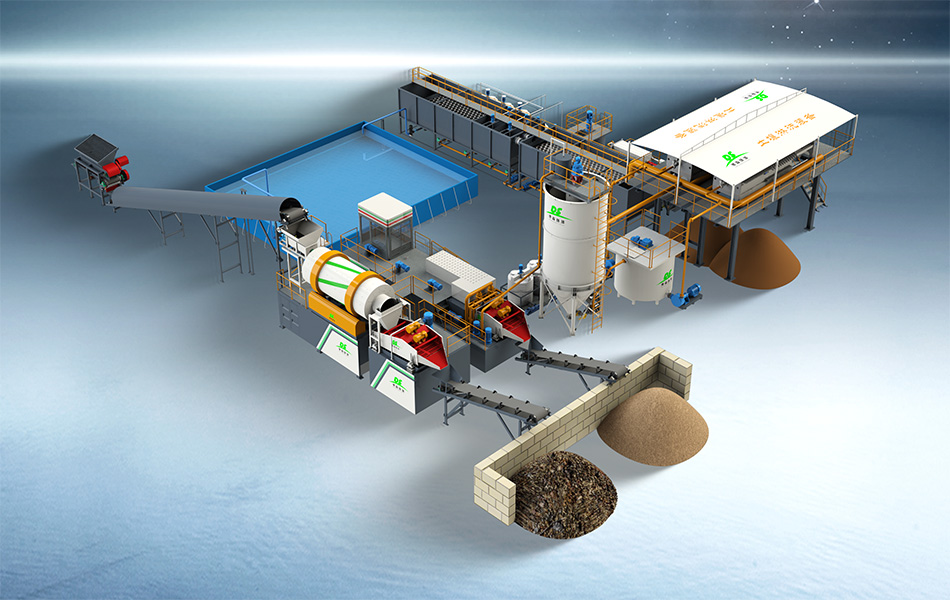
A modular arrangement begins with the same screening logic used on any contaminated land project. Oversize debris, brick and scrap metal are removed ahead of the plant so the washing equipment sees a controlled feed. The core unit is the rotary scrubber, where water and mechanical energy break down clay agglomerates and strip lead-bearing dust from sand grains. For soil where lead is locked into coatings, an attrition stage raises grain-on-grain abrasion before classification. Hydrocyclones and fine screens then divide the slurry at the critical size cut established during the bench test, sending fines toward thickening and returning washed sand for final dewatering.
Chemistry matched to lead species
The washing water itself does most of the physical work, but lead chemistry decides how far the cleanup can go. Carbonate-bound lead responds to pH-adjusted washing, while residues trapped in oxide coatings may need a chelating agent dosed into the scrubber circuit. Because spent battery paste brings sulfate and acidic residues into the mix, operators on these sites watch pH closely; drift in the circuit shows up quickly as darker discharge water and failing sand samples. The residual fine stream, which now carries most of the lead load, is commonly stabilized with phosphate-based reagents before it leaves the site.
Water and sludge closing the loop
Fines settle in a thickener, flocculant speeds the process, and clear overflow returns to the process water tank for reuse. A filter press then dewaters the underflow into a manageable cake, which slashes the volume sent for disposal and keeps the plant largely independent of external water supply. On constrained urban sites this closed loop is often a permit condition rather than a preference, and a modular layout lets the thickener and press sit directly beside the washing line instead of at the end of a pipe run.
What to Verify Before Committing to On-Site Washing
Vendors can be compared objectively if the same checklist is applied to each proposal:
- Representative sampling across breaking, storage and smelting areas, not one composite sample.
- A bench or pilot test on the site's own soil, reporting achievable lead reduction per size fraction.
- A water balance covering make-up demand, the recycle loop and any discharge consent.
- A residuals route with filter cake acceptance criteria and stabilization options in writing.
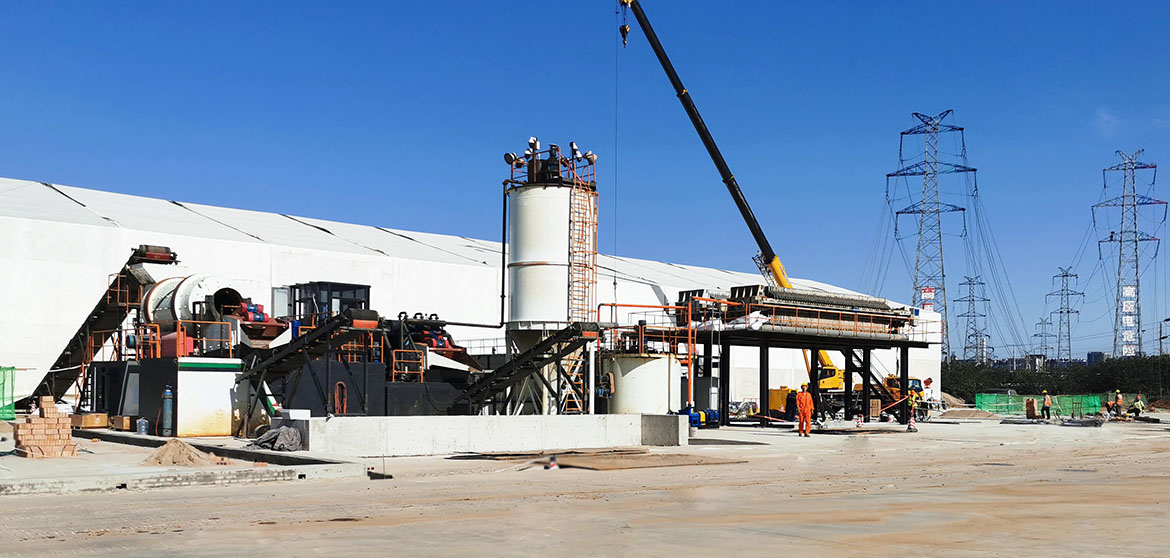
- Plant layout against the real yard, including access width, power supply and ground conditions.
- Documentation for the regulator: batch records and leaching test results tied to treated stockpiles.
Desen Environmental builds modular and mobile soil washing plants for exactly this class of project, with rotary scrubbing, classification and closed-loop water treatment in one skidded arrangement. Project teams evaluating lead contaminated soil washing at a battery recycling site can start with a bench test on representative samples and scale the module count to match the verified tonnage. Case references and equipment specifications are available at materialwashing.com.