Landfill Mining Soil Washing Material Recovery: Reclaiming Value From Closed Landfill Sites
Landfill mining soil washing material recovery: how excavated landfill mass is screened, washed and fractionated to reclaim soil, sand and aggregates while cutting disposal volumes.
Landfill Mining Soil Washing Material Recovery: Reclaiming Value From Closed Landfill Sites
As suitable land for new disposal cells becomes scarce and older landfills reach the end of their design life, more municipalities and private operators are turning to landfill mining: excavating a closed or active cell, processing the stored mass and recovering both land volume and reusable material. The technical heart of such a project is rarely the excavator. It is the treatment line that turns a mixed, wet and odorous mass into defined output streams, and that is where landfill mining soil washing material recovery earns its place in the project budget. A properly arranged washing and screening plant separates soil, sand and aggregates from fine degraded waste, so the largest share of the excavated tonnage leaves the site as a usable product instead of a disposal cost.
What a Closed Landfill Actually Contains
Composition varies more than most tenders assume
Every landfill is different, and the difference is driven by what the site accepted. A cell that took mainly construction and demolition waste yields concrete, brick and timber with a moderate share of fine soil. A mixed municipal cell from the 1980s or 1990s contains decomposed organic matter, plastics, textiles, glass, metals and a large fraction of fine material that no longer resembles anything in particular. Mining an industrial or sludge cell adds its own contaminants. Trial pits and a laboratory characterisation programme, completed before the plant is specified, remain the only reliable basis for sizing the equipment.
Why the fine fraction is the real problem
Coarse materials are comparatively easy to handle: magnets pull out ferrous metal, eddy current separators recover non-ferrous metal, and manual or air separation removes oversized film and textiles. The difficulty sits below roughly 20 millimetres. Degraded organic matter, soil and small fragments of glass and plastic form a sticky, wet mass that clogs dry screens and refuses to separate by air. This fine fraction frequently accounts for half of the excavated mass, and it is exactly the fraction a soil washing plant is designed to resolve: water suspends the fines, attrition scrubs adhering coatings off sand and gravel particles, and classification returns clean, defined size cuts.
How a Washing Line Is Arranged for Landfill Mining
Excavation, feeding and pre-screening
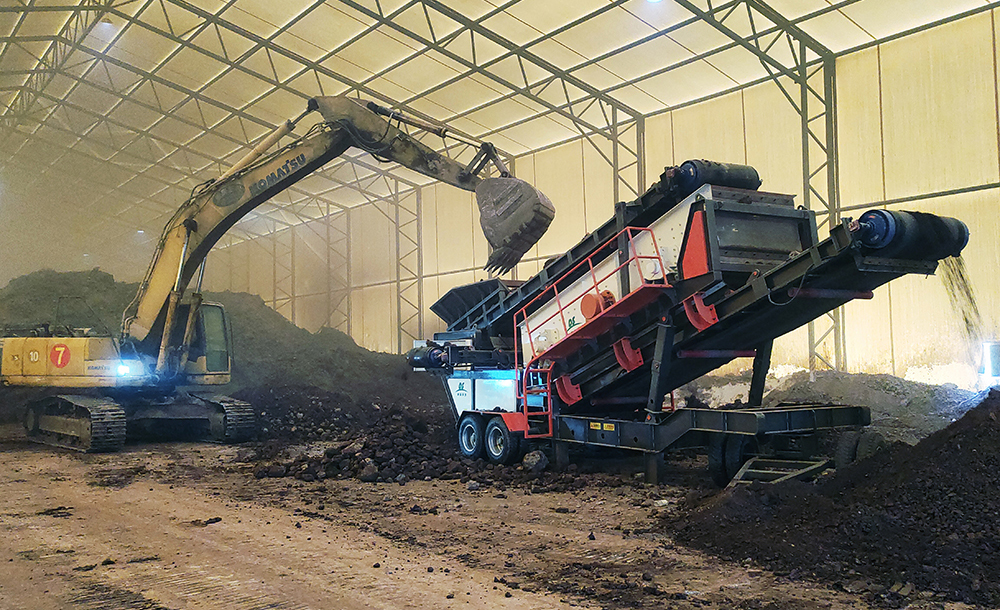
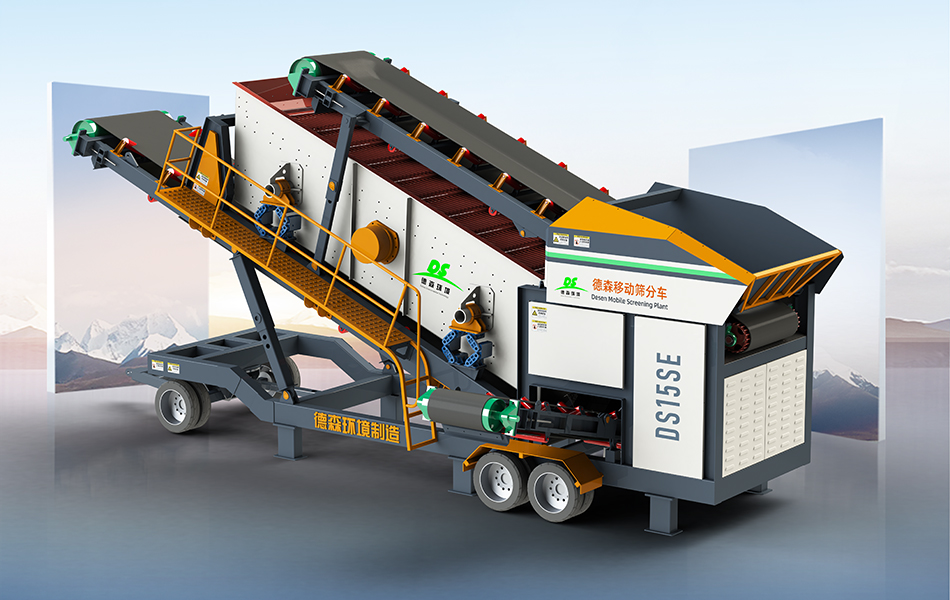
Excavated mass is fed by excavator or loader into a mobile screening plant, which removes oversized objects before anything reaches the wet process. On sites where odour and dust matter, the feed area is placed inside an enclosed hall, as in the photograph above. A bar screen or trommel at this stage protects the downstream pumps and scrubbers, and it produces the first saleable streams, since clean stone and concrete can often be crushed and reused directly on site.
Washing, classification and what comes out
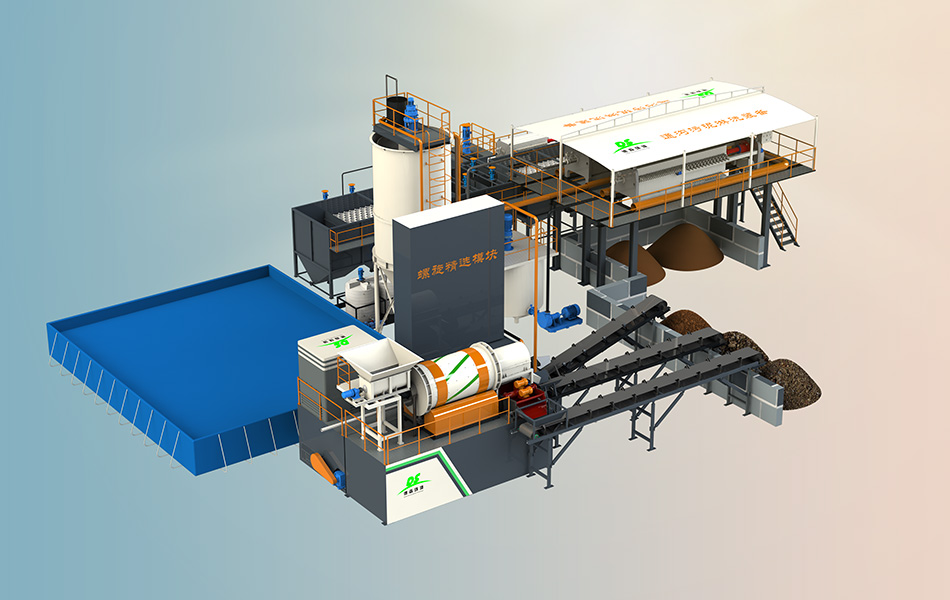
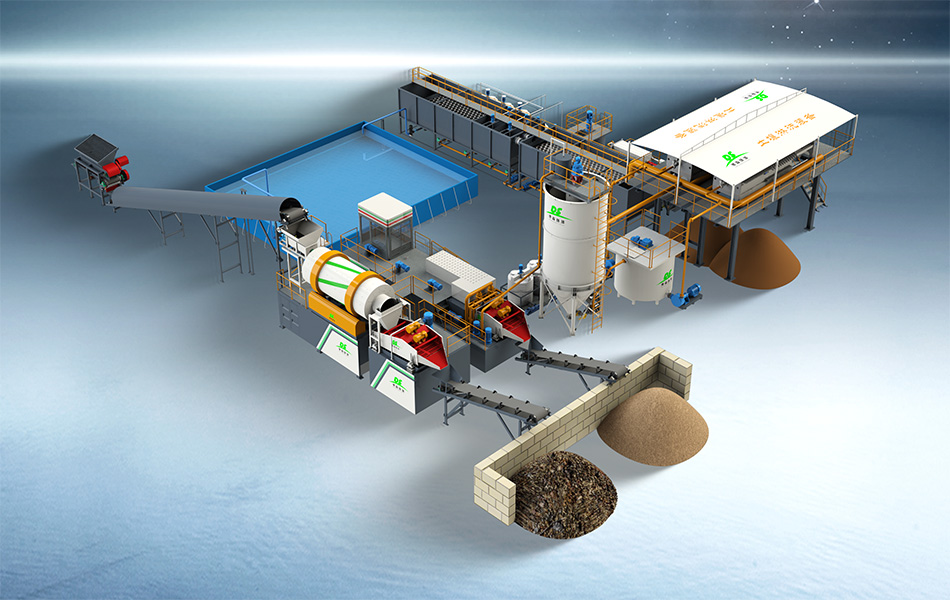
Once the undersize reaches the wet section, the plant splits the mass into fractions, each with its own destination:
- Washed sand (0–2 mm) — after attrition and desliming, suitable as engineering fill or, where local rules allow, as aggregate in earthworks;
- Washed gravel (2–20 mm and coarser) — clean enough for drainage layers or recycling aggregates;
- Recovered soil fraction — coarse soil that passes verification testing and can be reused on site for profiling;
- Fine sludge — dewatered by filter press and either treated, stabilised or sent to controlled disposal in a much smaller volume than the raw mass;
- Process water — recycled through thickeners, with fresh make-up demand typically cut to a small share of once-through use.
Handling the residual fines
Not everything in a landfill can be recovered, and a credible plan says so. The washed fine fraction carries most of the residual contamination, and after dewatering it normally represents a small percentage of the original excavated tonnage. Reducing the disposal volume from the full mass to this residual stream is usually the single largest saving in the project financial model.
What to Verify Before a Landfill Mining Project Starts
- A waste characterisation report with enough trial pits to cover the working areas of the cell, not only its edges;
- Local acceptance criteria for each recovered fraction, confirmed in writing with the authority or the offtaker;
- A pilot washing test on representative samples, to fix the achievable split between recoverable and residual streams;
- Water management: source of make-up water, closed-loop design and discharge conditions;
- An odour, dust and vector control plan covering the excavation and feed areas;
- Throughput matching: excavation rate, plant capacity and dewatering capacity sized to the same number.
Landfill mining rewards preparation. Projects that treat it as a bulk excavation exercise routinely stall at the washing stage, while projects that characterise first, pilot the wash and size a modular plant around the real composition recover land volume and material at a predictable cost. Desen Environmental builds modular and mobile soil washing and screening equipment for exactly this kind of work, and supports overseas clients from sample testing through to on-site commissioning. If you are evaluating a former landfill for material recovery, share your characterisation data with our engineers and we will help you model the fractions before any excavation begins.