Discharge Permit for Washing Process Water: What to Prepare Before a Soil Washing Plant Starts Up
A discharge permit for washing process water shapes how a soil washing plant is built and run. Learn the parameters, data and monitoring EU regulators expect before startup.
Discharge Permit for Washing Process Water: What to Prepare Before a Soil Washing Plant Starts Up
Soil washing is a water-based process, and in Europe the water that leaves the site — to a sewer, a watercourse or a tankering contractor — is regulated activity. Before a modular or mobile soil washing plant is switched on, the operator normally needs a discharge permit or consent for its process water. Applying is not a formality for commissioning week: the answers regulators ask for depend on how the plant is laid out, which treatment steps are installed and how the water loop is closed. This article sets out what to prepare, in an order that keeps paperwork and plant build moving together.
Why the Discharge Permit Shapes the Plant Design
A regulator assessing a discharge application is essentially asking three questions: what is in the water, how much of it leaves the site, and where does it go. Each answer traces back to engineering choices made months earlier. A plant that recirculates its wash water through settlement and clarification only releases a small bleed stream; a single-pass design releases everything it uses. The discharge point matters too — a sewer outfall under a trade effluent consent is assessed very differently from a direct discharge to a stream or groundwater.
Parameters Regulators Typically Set Limits On
- pH — wash water chemistry changes with reagent dosing, and receiving systems need a defined range
- Suspended solids — fine silt and clay particles are usually the first thing a consent limits
- Heavy metals — lead, zinc, copper, arsenic, nickel and cadmium, matched to the site's contamination profile
- Hydrocarbons and PAHs — relevant where petroleum-impacted or gasworks soils are being washed
- Flow rate and daily volume — the receiving system has a hydraulic capacity
- Sampling point and monitoring frequency — where the discharge is measured and how often
Because these limits apply to the bleed stream rather than to the wash water inside the loop, the treatment steps between loop and outfall — settlement, clarification, filtration and, where needed, pH correction — are what turn a marginal water quality into a compliant discharge. Sizing those steps is part of the plant design, so the permit application should be prepared in parallel.
Closing the Water Loop Before You Apply
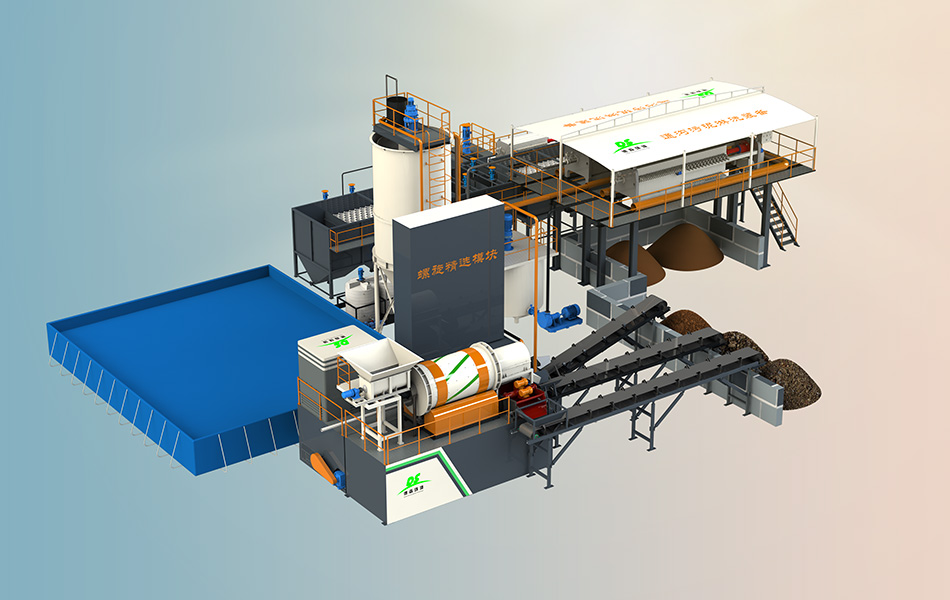
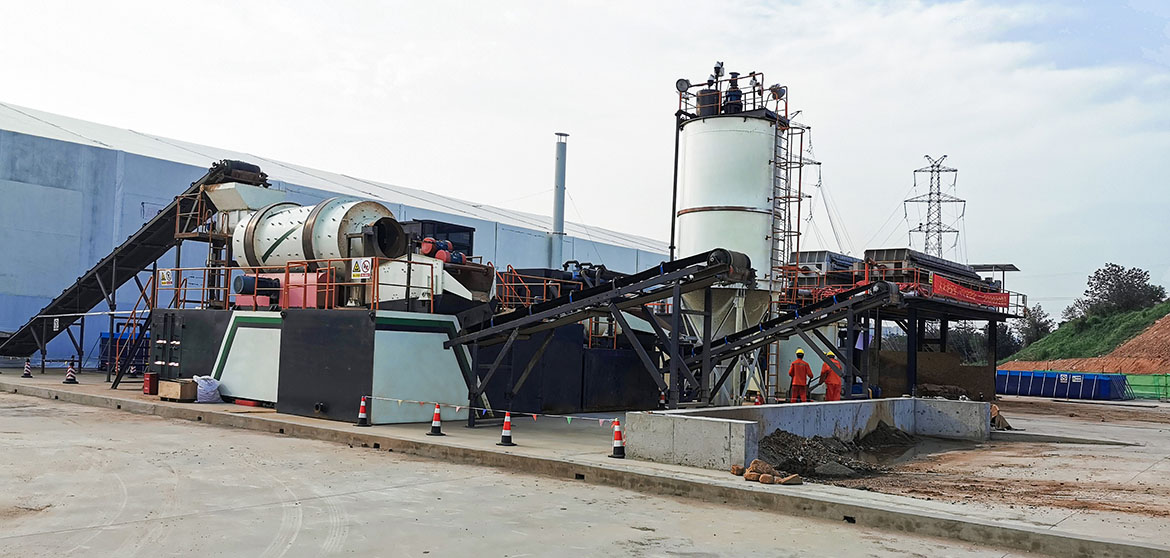
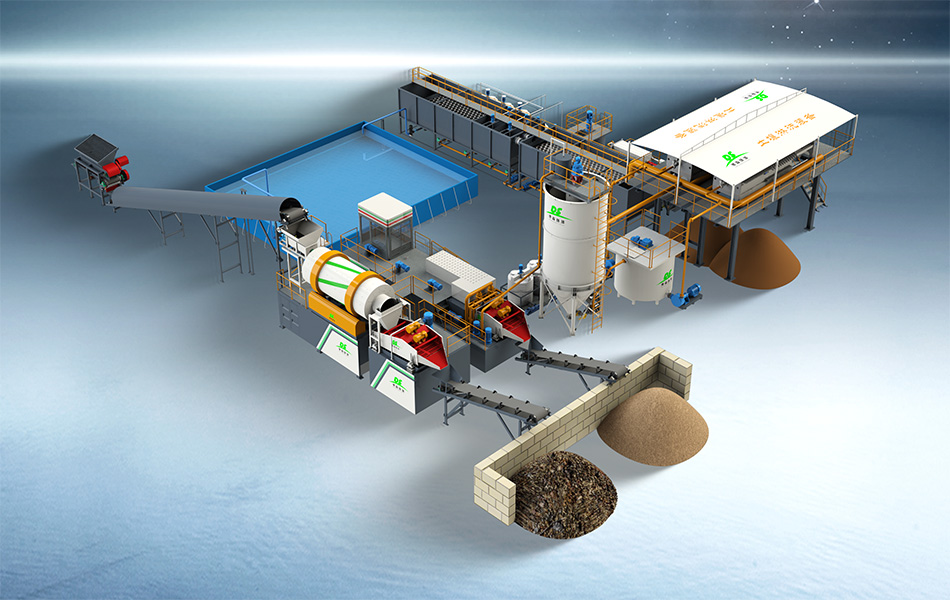
The most effective way to simplify a discharge permit is to shrink the discharge itself. Modern modular soil washing plants are built around a recirculating water circuit: process water drains from the wash stages into a lined pool or settlement basin, fines settle out, clarified water is pumped back to the scrubber and attrition stages, and only a controlled bleed is drawn off to prevent salts and dissolved contaminants building up. Fresh water top-up then roughly replaces the water that leaves with the washed product and the bleed stream.
Characterisation Data to Collect
A complete application package normally includes the site's soil contamination data, the expected wash water chemistry for each contaminant group, a list of reagents used in the process, the treatment steps installed between loop and outfall with their design capacities, and a water mass balance showing make-up, recirculation and discharge volumes. Information about the receiving environment matters equally: the sewer operator's trade effluent requirements, or the regulator's standards for the watercourse, set the targets the treatment train has to hit.
Choosing the Discharge Route
Discharging to a public sewer under a trade effluent consent is often the more straightforward route, because the sewage works provides secondary treatment and the consent focuses on what its process can absorb. A direct discharge to a surface water or to ground is assessed against much tighter environmental quality standards and usually demands more treatment before the outfall. Where neither route is practical — remote sites, seasonal watercourses, very small volumes — off-site tankering can bridge the gap.
Operating Within the Permit Once the Plant Runs
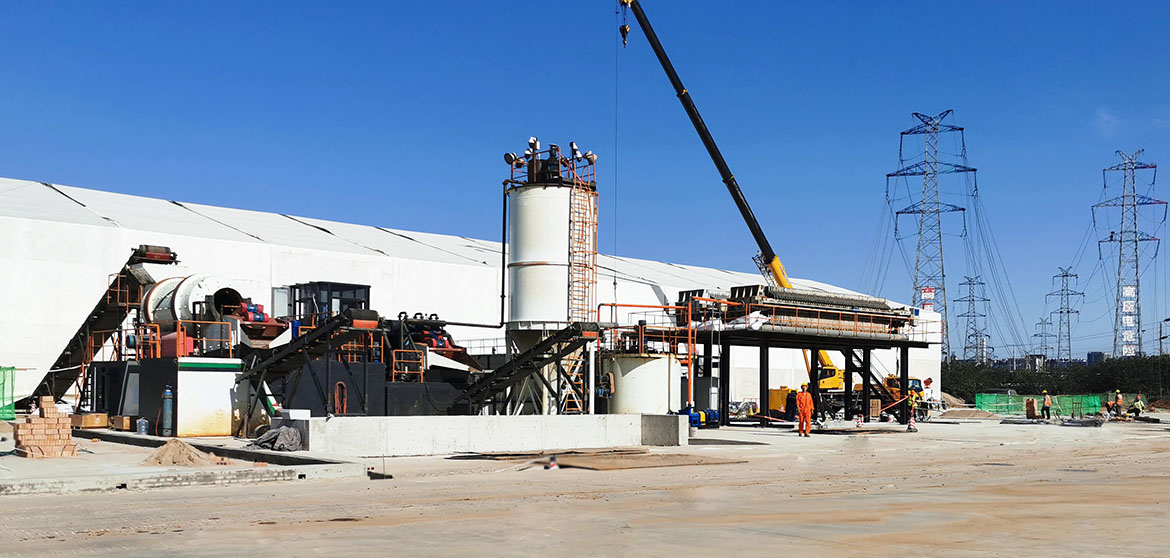
Receiving the permit changes the job from application to compliance, and the conditions become part of daily, auditable plant operation.
Monitoring and Record Keeping
Most consents require continuous or frequent measurement of flow, pH and turbidity on the discharge line, with periodic laboratory sampling for the listed metals and organics. Instruments need calibration records, samples need chain-of-custody documentation, and exceedances need reporting within defined timescales. On a Desen modular washing line, sampling points sit at the treatment train outlet so consent samples represent the water actually leaving the site — worth confirming in the layout review, because retrofitting one after commissioning is far more disruptive.
Why Applications Stall — and How to Avoid It
In practice, permit applications for washing process water rarely fail on principle; they stall on incomplete evidence. The recurring gaps are a missing water mass balance, treatment steps described without design capacities, an outfall location described vaguely, and soil data that does not cover the fractions the plant will actually process. Preparing a single characterisation package — soil data, water chemistry projection, treatment train specification, mass balance and proposed monitoring plan — and agreeing it with the regulator before formal submission shortens the assessment noticeably.
Planning the discharge permit as part of the plant design, rather than as an administrative step afterwards, keeps the mobilisation schedule intact. Buyers evaluating soil washing plants are advised to ask suppliers for the water loop drawings, treatment step sizing and sampling point positions early — these documents form the technical core of the permit application.