Total Cost of Ownership for Soil Washing Equipment: What Drives Cost After Delivery
Total cost of ownership for soil washing equipment covers energy, wear parts, water and labor long after delivery. See which running costs dominate and how to compare quotes fairly.
Total Cost of Ownership for Soil Washing Equipment: What Drives Cost After Delivery
Every soil washing procurement conversation starts with the quotation, but the quotation is only the first line of a much longer ledger. Total cost of ownership for soil washing equipment covers everything from the day the plant leaves the factory to the day the remediation contract closes: energy, wear parts, water, reagents, labor and every hour of unplanned downtime in between. Contractors who evaluate equipment on purchase price alone often discover that the least expensive quote becomes the most expensive plant over a multi-year project pipeline.
What Total Cost of Ownership Actually Includes
A useful way to frame TCO is to separate what you pay once from what you pay continuously, and then to look for the costs that never appear on any quotation at all.
- One-time costs: purchase price, freight and insurance, import duties, civil works and foundations, installation, commissioning and operator training.
- Continuous costs: electricity, fuel for feed loaders, process water and make-up water, reagent consumption, wear parts and crew wages.
- Hidden costs: production lost during breakdowns, air-freighting replacement parts, rental of substitute equipment while the line is down, and site standing charges that keep accruing while nothing is washed.
Most buyers budget carefully for the first category, roughly for the second, and almost never for the third. Yet a washing plant that stops for a week in the middle of a fixed-price contract costs money whether it washes or not.
Where the operating spend concentrates
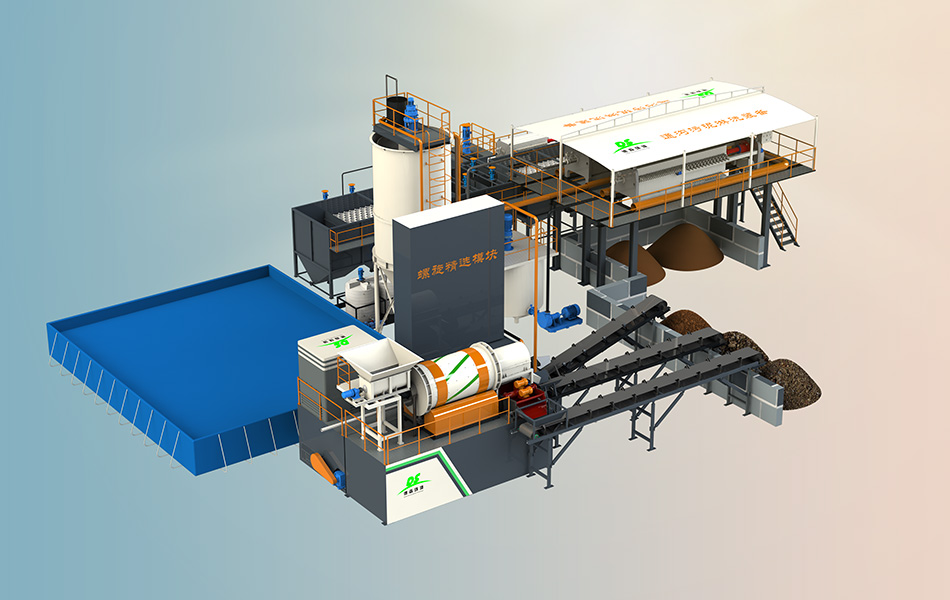
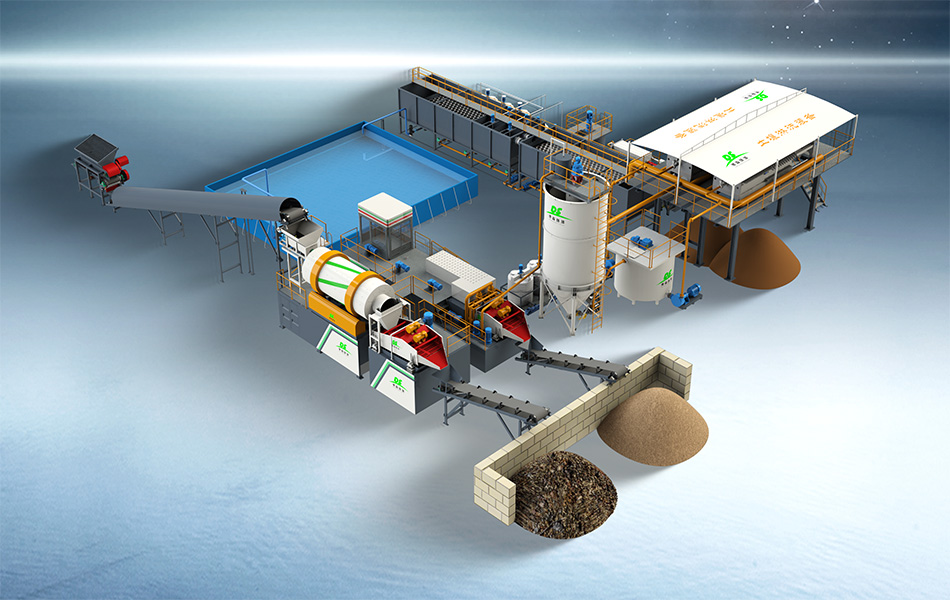
On a modular soil washing line, operating expenditure is not spread evenly. It concentrates in a few stages: the attrition scrubbing and pumping circuit, the dewatering stage, and the continuous consumption of wear parts in contact with abrasive soil. Knowing this shape lets you interrogate a supplier's numbers where it matters, instead of comparing totals that hide the detail.
The Four Running Costs That Dominate
Energy
Attrition scrubbing, slurry pumping and filter press cycling are all power-hungry stages. Energy demand per tonne washed depends on the feed size distribution, the solids density the plant runs at, and how far water and slurry move between stages. A plant built around a closed water loop has a structural energy advantage, because recycled water is typically pumped shorter distances than fresh supply from a municipal connection or a deep well. Ask each supplier for a specific figure in kilowatt-hours per tonne at your soil's feed gradation, not a generic motor rating.
Wear parts and consumables
Pump liners, screen panels, hydrocyclone liners and the rubber or ceramic protection inside scrubbing drums wear at rates set by the abrasiveness and angularity of the soil. This is the category where quotes differ most and disclose least. A fair comparison requires wear part life expressed in operating hours on comparable soils, and a full year of consumption priced line by line rather than a single set of spares bundled into the delivery. Also confirm which parts are stocked regionally, because the true cost of a wear part includes the freight and the waiting time behind it.
Water and reagents
Fresh water demand and effluent volumes are running costs with a compounding effect: every cubic meter of water you do not draw is also a cubic meter you do not pay to treat or discharge at the end of the circuit. Reagent costs, mainly chelating agents and pH adjustment chemicals, scale with contaminant loading and with how well dosing matches addition to actual process conditions. A plant with flow-paced dosing and feedback control consumes measurably less chemistry than one running on fixed manual rates.
Labor and supervision
Crew size is a recurring monthly cost that stays on the ledger for the life of every project. The relevant question is not only how many operators the plant needs, but how much supervision and specialist skill each shift requires. A modular or mobile configuration that one trained crew can operate, relocate and restart across several sites spreads the labor cost over more tonnes and more contracts, which is why utilization across a project pipeline matters as much as headcount on any single site.
How to Compare Quotes on Lifetime Cost
With the cost categories clear, the comparison becomes a structured exercise rather than a negotiation over the headline number.
- Ask every bidder for a priced 12-month consumables and wear parts list, with expected life in operating hours for each item.
- Request energy figures in kilowatt-hours per tonne at your actual feed gradation, and normalize them before comparing.
- Confirm fresh water demand and effluent volume per tonne, and who pays for disposal of the wash water.
- Check the promised availability of the plant, the regional spare parts stock, and the committed service response time.
- Model the end of the project as well: demobilization time, transportability to the next site, and the residual value of the equipment.
Run this across all bids and the ranking often changes. A plant with a moderately higher purchase price but lower energy draw, regional parts stock and a smaller crew routinely finishes a multi-season program with a lower total cost than the quote that won on price. In the end, the meaningful comparison is not which quotation is lower, but which plant delivers more washed tonnes per dollar of total ownership cost across the whole life of the equipment.