Soil Washing Plant Capacity Sizing: Matching Plant Throughput to Project Volume and Schedule
Soil washing plant capacity sizing should start from project volume and schedule, not datasheet figures. Learn how to turn site tonnage into a realistic throughput target.
Soil Washing Plant Capacity Sizing: Matching Plant Throughput to Project Volume and Schedule
When contractors compare soil washing plant offers, the first figure on the datasheet is usually nominal throughput, quoted in tonnes per hour. Yet the question that actually decides whether a remediation project finishes on time is a different one: how many tonnes of contaminated soil must this washing line process, over how many working days, at what feed grading? Capacity sizing that starts from the project volume, rather than from the brochure figure, is what separates a plant that completes its campaign on schedule from one that needs an unscheduled second season.
Start From the Volume You Actually Have to Treat
The starting point is simple division: total tonnage of excavated soil divided by the number of working days the site realistically has. A 40,000-tonne project with 80 working days available under the remediation permit needs 500 tonnes per day of washed output. If the plant runs one long shift with around ten effective processing hours, the line must sustain an average of 50 tonnes per hour — and that average, not the peak rating, is the number the equipment has to deliver day after day.
What erodes nominal throughput
No washing plant runs at nameplate capacity for a full shift. Several factors pull real output below the datasheet figure, and each should be priced into the sizing calculation before an order is placed:
- Feed variability: boulders, construction debris and large clay lumps force the feed hopper to slow down or stop while operators clear the flow.
- Wear-part downtime: screen panels, pump liners and hose sections need periodic replacement, and each stoppage costs more than the part itself.
- Water balance: where make-up water is scarce, settling and recycling capacity can throttle the washers long before mechanical limits are reached.
- Weather and ground conditions: rain days, frozen ground or soft standing areas shorten the effective working calendar, especially in northern Europe.
A practical planning approach treats 60 to 70 percent of nominal rating as the deliverable average for sizing purposes. If the project needs 50 tonnes per hour of real output, the selected plant should carry a nominal rating comfortably above that — which is a very different machine from one chosen by reading the datasheet alone.
How Feed Grading and Layout Decide Real Output
Capacity and contamination follow the same logic: both concentrate in the fines. A feed that arrives well graded — oversize removed, clay broken down, moisture within the scrubber's working range — lets the washing modules run continuously. A feed that arrives as mixed excavation does not, whatever the plant's rating says.
Prescreening protects the washing capacity
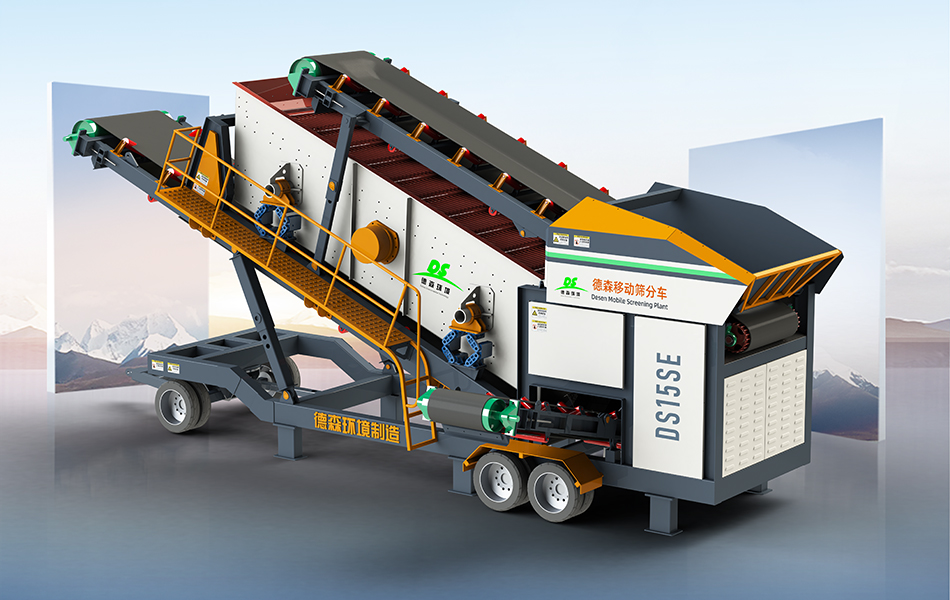
A screening stage ahead of the washers removes oversize stone and debris that would otherwise occupy washer volume without benefiting from washing. A mobile screening unit such as the Desen DS15SE below can be set up beside the wash plant and adjusted so that only the fraction that genuinely needs washing continues down the line. On tight sites, this separation often recovers more effective hours than any change to the washing equipment itself.
What a modular layout gives back
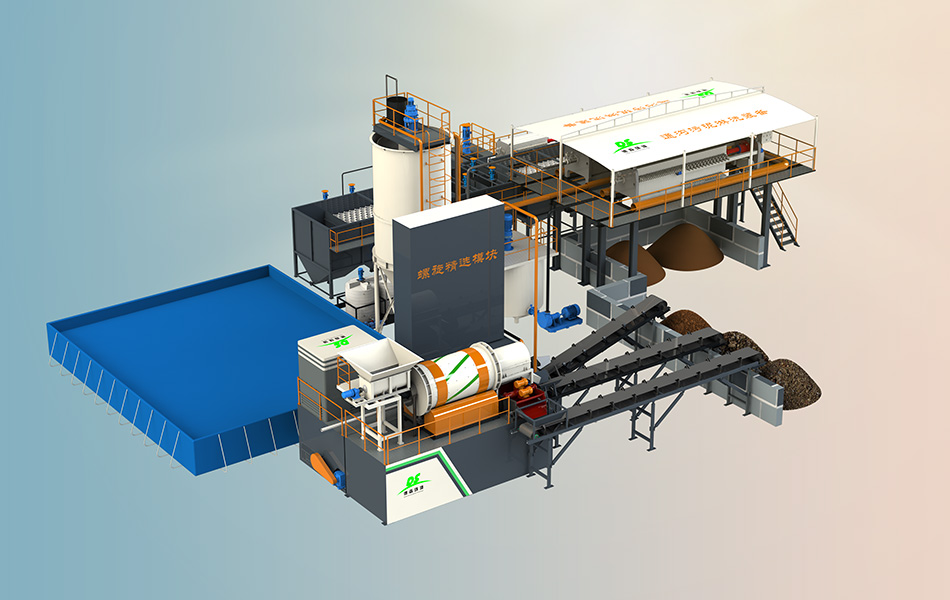
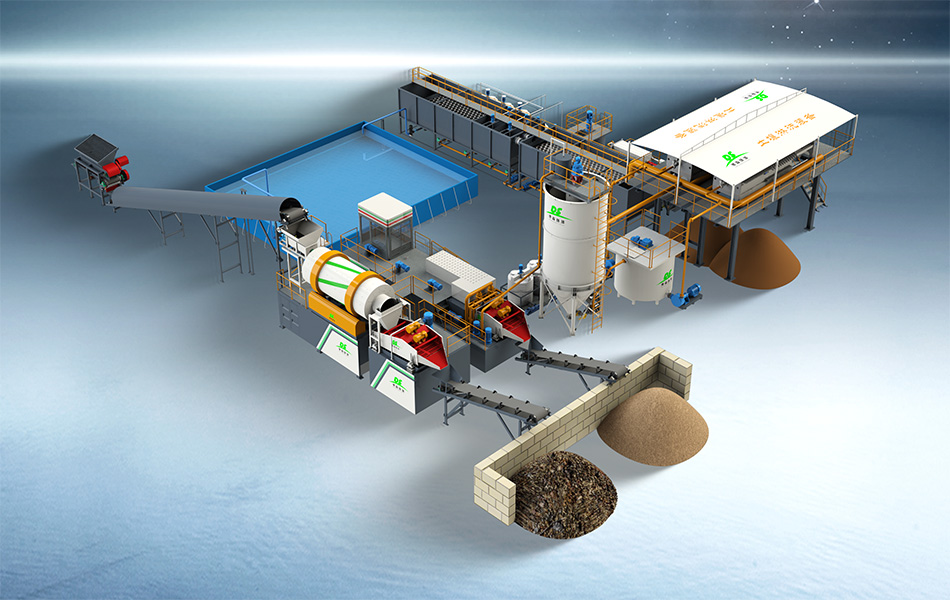
Modular washing lines help capacity in a less obvious way: they keep intermediate stages decoupled. Buffer hoppers between scrubbing, sizing and dewatering absorb short stoppages upstream without starving the rest of the line, and parallel modules allow one train to keep running while the other is serviced. When the project volume is fixed and the calendar is short, that decoupling is frequently what makes the average throughput target achievable.
A Worked Example: Sizing for a 40,000-Tonne Urban Site
Consider a former industrial plot in a European city: 40,000 tonnes of heavy-metal contaminated soil, a remediation window of 100 calendar days, and permit conditions that restrict work to daytime hours. Rain and inspection days reduce the calendar to roughly 75 effective working days, which sets a requirement of about 533 tonnes per day.
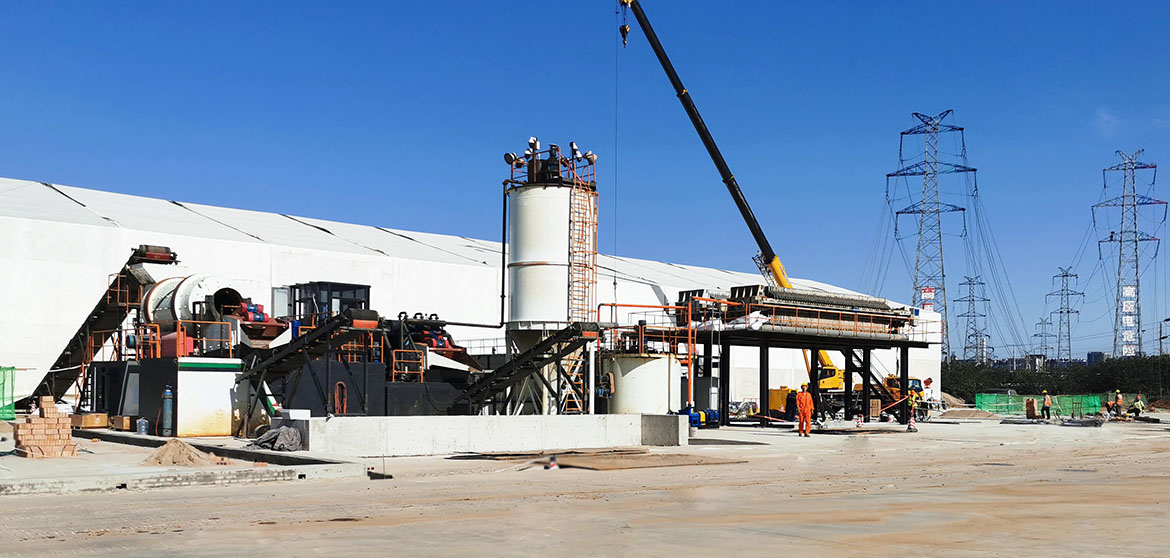
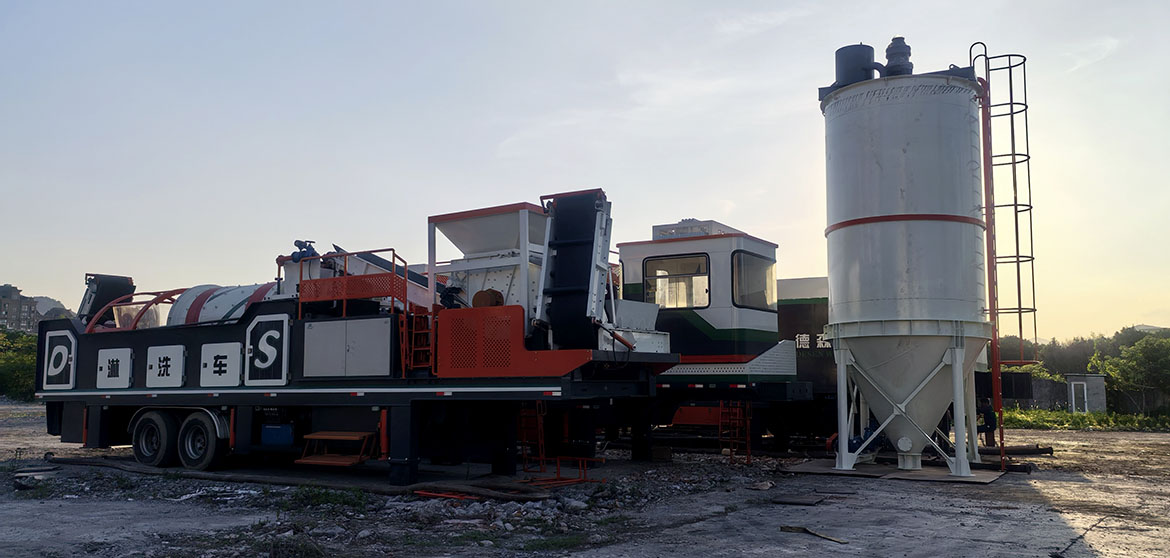
At twelve effective processing hours per day, the line must average 44 tonnes per hour. Applying a 70 percent availability factor to cover wear parts and feed interruptions points to a nominal plant rating in the 60 to 80 tonne-per-hour class, with a dewatering and water-recycling capacity matched to the same figure. The photograph below shows how such a line sits on a real site: washing modules, filter press and stockpiles arranged in a compact loop, with excavators feeding continuously from the excavation face.
Sizing a soil washing plant is a planning exercise, not a catalogue choice. Starting from project tonnage and the working calendar, discounting for real-world availability, and checking the feed grading before the order is signed will do more for project economics than any feature listed on a datasheet. If you are preparing a tender or a budget application, share the volume, the schedule and the soil analysis — a sizing proposal built on those three inputs is far more useful than a standard quotation.