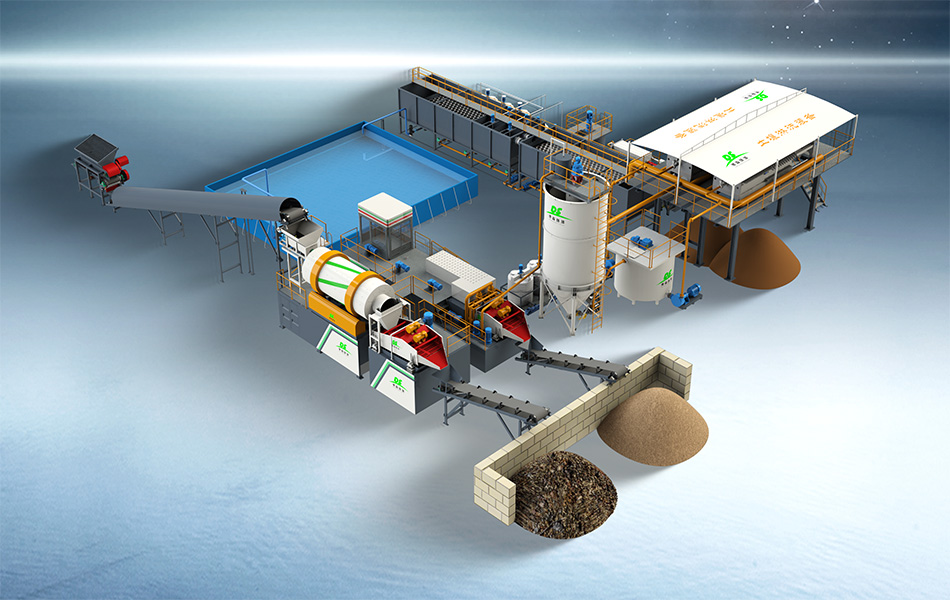
Modular Washing Plant Expansion Capacity: Phased Investment for Growing Remediation Demand
A modular washing plant with engineered expansion capacity lets remediation contractors start with one line and add modules as project volume grows. See the phased path.
Modular Washing Plant Expansion Capacity: Phased Investment for Growing Remediation Demand
Remediation programs in the Middle East rarely arrive as a single contract. A land development authority may release parcels in stages, an oilfield operator may schedule pit remediation over several years, and tender volumes are difficult to forecast. Buying a full-size washing line on day one ties up capital against uncertain throughput, while an undersized plant caps revenue when the volume finally arrives. Expansion capacity built into a modular washing plant resolves this tension: start with the core line the first contract supports, then add modules as the order book grows. This article sets out how phased expansion works in practice, and which decisions must be made before the first module ships.
Why Expansion Capacity Is a Design Decision, Not an Afterthought
Two washing plants with the same nameplate throughput can differ sharply in how cheaply they grow. What separates them is decided long before the second module is ever ordered: where the module boundaries sit, how the utilities are sized, and whether the process interfaces are standardized. A plant assembled from matched modules can double its output with a delivery and a connection; a plant that was never designed to grow usually needs re-piping, re-wiring and weeks of re-commissioning to gain the same tonnage.
Size the utility backbone for the final plant
Water treatment, power distribution and the hardened operating pad are the slow, civil-heavy parts of any washing plant. If they are built for phase one only, every later expansion reopens excavation, permitting and downtime that the modular concept was supposed to avoid. Sizing the recycle water circuit, the transformers and switchgear, and the lined water pool for the final plant capacity — while installing only the first washing modules — costs modestly more upfront and removes most of the disruption from phase two. On Gulf projects, where water is frequently the binding constraint, a closed-loop circuit designed for two lines from the start is the single most valuable early decision a buyer can make.
Standardize module interfaces
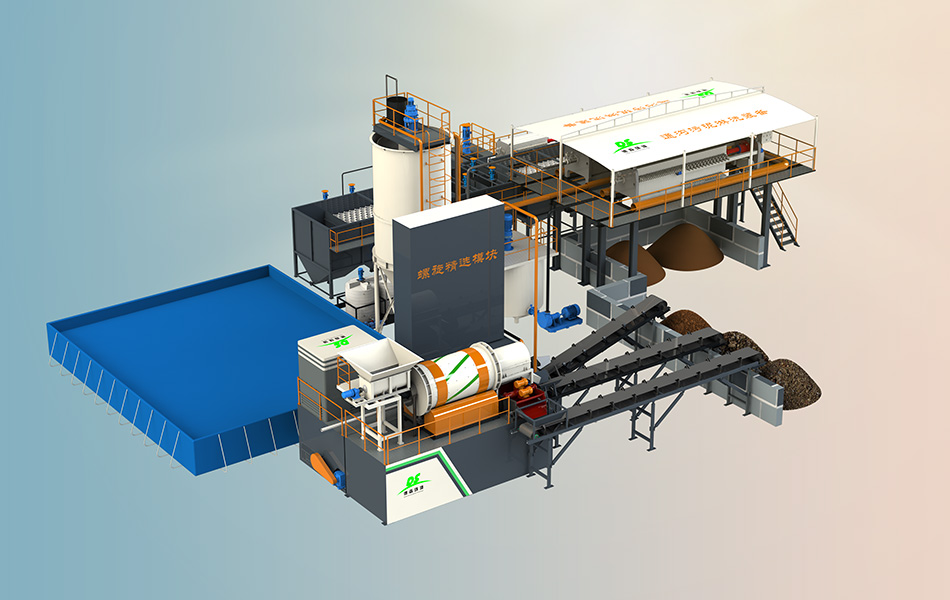
Capacity is added cleanly only when the second module speaks the same language as the first: matching feed conveyor heights, the same classification cut between sand and fines, common electrical and control protocols, and shared wear parts. Desen Environmental builds its modular soil washing lines on standardized module interfaces for exactly this reason — a phase-two scrubbing or fine-fraction module connects to the existing line in days, on the same pad, run by the same crew, instead of becoming a second plant to commission from zero.
A Practical Phased Investment Path
A phased path works when every phase is commercially justified on its own, not only in the aggregate. In practice, most projects fall into three stages:
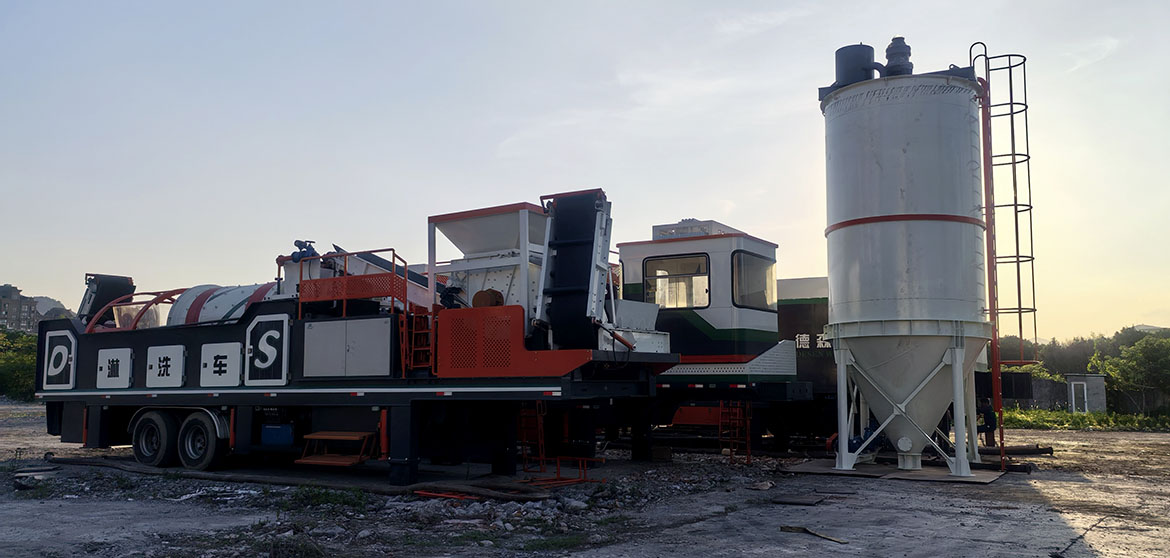
- Phase 1 — core washing line: scrubbing, classification and dewatering sized for the first contract, plus a water treatment circuit already rated for final plant capacity and a pad with space reserved for the next module.
- Phase 2 — parallel capacity: a second washing or fine-fraction module that doubles throughput once a second contract is signed. Utilities are already sized, the pad is prepared, and the crew is trained — so the expansion is measured in days of connection work, not months of construction.
- Phase 3 — process deepening: reagent dosing, attrition upgrades or automation added as soil complexity or discharge requirements rise. Here the plant lifts recovery quality and compliance headroom rather than raw tonnage.
Each phase reuses the civil works, the water circuit and the site organization of the previous one, which is where most of the saving comes from. The alternative — two separate small plants — duplicates foundations, ponds, power connections and crews, and splits the operating team's attention.
What Phasing Saves, and What It Demands
The economics of deferring capacity
Deferring half of the plant capacity by twelve to eighteen months does more than postpone a payment. It avoids depreciating idle equipment during the ramp-up, frees working capital for site preparation and mobilization, and lets the buyer incorporate what the first year of operation actually taught them — real feed characteristics, real wear rates, real staffing — into the phase-two specification. When the second contract does arrive, the expansion order is placed against proven site data instead of tender-stage assumptions, which shortens both the procurement discussion and the payback calculation.
The discipline phasing demands from the buyer
The trade-off is discipline in the first purchase. Buyers should require documented expansion provisions in the phase-one contract: pad drawings showing the reserved module footprint, electrical headroom in the main distribution, a water balance calculated for final capacity, and a written interface specification for future modules. A supplier who cannot produce these documents is selling modularity as a word, not as a design property. Reviewing a manufacturer's installed base — such as the reference projects on materialwashing.com — and asking specifically how earlier customers expanded their lines is the most direct way to test whether expansion capacity is engineered or merely promised. For buyers across the Middle East facing staged land release programs, that distinction decides whether the second phase is a routine delivery or a second project.