Soil Washing Plant Civil Works Requirements: Foundations, Pads and Drainage Before the Modules Arrive
Civil works for a modular soil washing plant are limited but decisive: a level load-bearing pad, water containment, power routing and site access set your start-up date.
Soil Washing Plant Civil Works Requirements: Foundations, Pads and Drainage Before the Modules Arrive
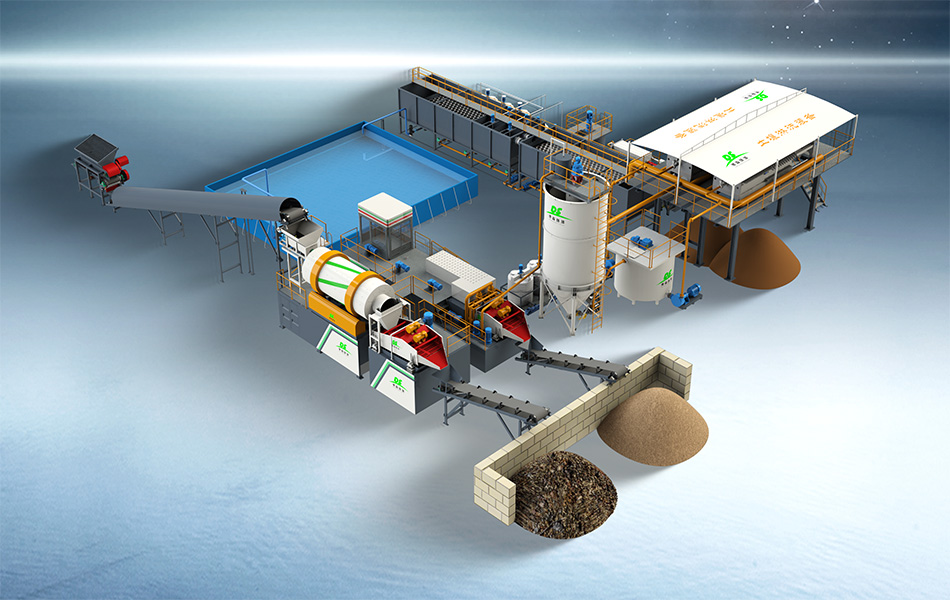
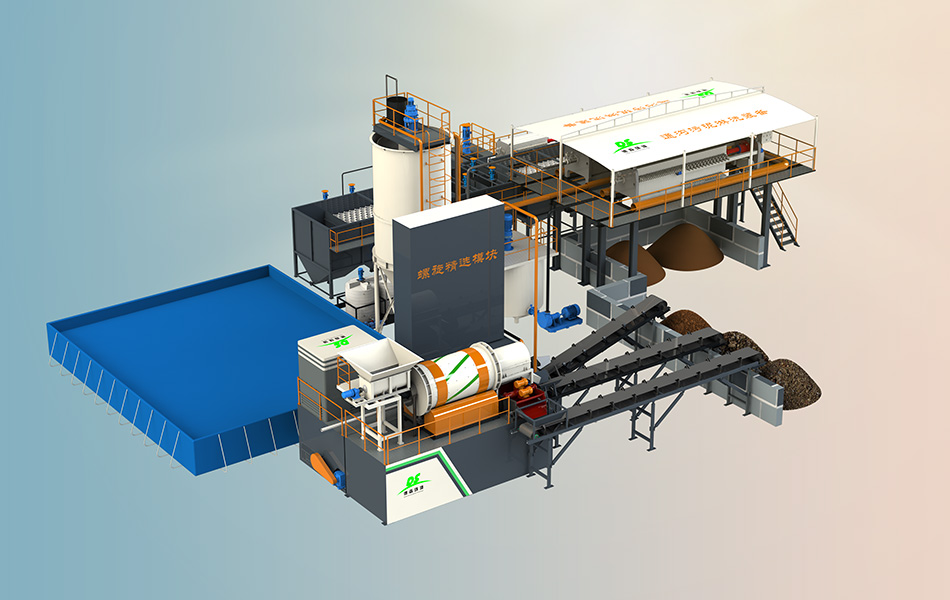
Modular soil washing plants are sold on a short installation, and that promise only holds if the ground is ready when the first module reaches site. Civil works for a modular line are modest compared with a fixed treatment plant: the four core modules — scrubbing, classifying, solid-liquid separation and water treatment — arrive on skids and need no cast-in-place foundation, only a level hardened surface. What decides the start-up date is not the size of the concrete pour but four smaller items: pad bearing capacity, water containment, power routing and site access.
The Four Civil Items That Set Your Installation Date
Priced as one line item in a tender, this package becomes four work fronts on site, each with its own lead time. The slowest sets the date commissioning can begin.
A level, load-bearing hardstanding
Modules are set down by crane or telehandler, so the surface must be flat and able to carry the loaded module plus the lifting machine working beside it. A compacted granular platform of around 200 mm over geotextile, with reinforced concrete only at concentrated load points, is a common arrangement. Two tolerances matter in practice: level within roughly 10 mm across a module footprint, and a fall of one to two percent towards the collection sump, so wash-down water runs to a known point instead of pooling under the scrubbing unit. On soft ground, excavation and replacement is the longest single item in the package.
Water containment and runoff control
The water side of the package is the part regulators examine. The scope is usually a collection sump at the low point of the pad, a settlement or buffer pond, and bunded standing areas under reagent storage and the filter press. Where discharge consent is tight, the pond is a compliance asset rather than a convenience: it absorbs surge volume so a pump trip does not push turbid water into the storm drain. Size it for a shift of recycle volume plus direct rainfall on the pad, line it, and fit a level transmitter that alarms before it overflows.
Power supply and cable routing
Load is dominated by pumps, the scrubbing drive, conveyors and the filter press, and starting current rather than running load sizes the feeder. Ask for the connected load schedule before the site electrical contractor prices anything. In practice that means a dedicated feeder from the site transformer, a motor control centre or control container within cable distance of the modules, and cable routes trenched or elevated rather than lying in wash water. Where grid supply is unreliable, generator sizing follows the same load schedule, and fuel storage needs its own bund.
Site Access, Stockpile Bays and Haul Routes
A washing line produces several output streams at once — oversize rejects, washed sand, washed gravel and filter cake — and each needs somewhere to go that does not block the feed. Layout choices taken on paper become daily friction on site, so fix them during the civil phase:
- Turning circle on hardstanding, sized for the loading shovel rather than the nominal bucket capacity.
- Separate bays for feed soil, oversize rejects, washed sand, washed gravel and filter cake, divided by low concrete kerb walls instead of loose stockpiles.
- A one-way haul route, so the incoming feed truck and the outbound aggregate truck never meet at the hopper.
- Wash-down point and wheel bath at the site exit, draining to the same sump as the pad.
Sequencing, and Three Questions Buyers Ask First
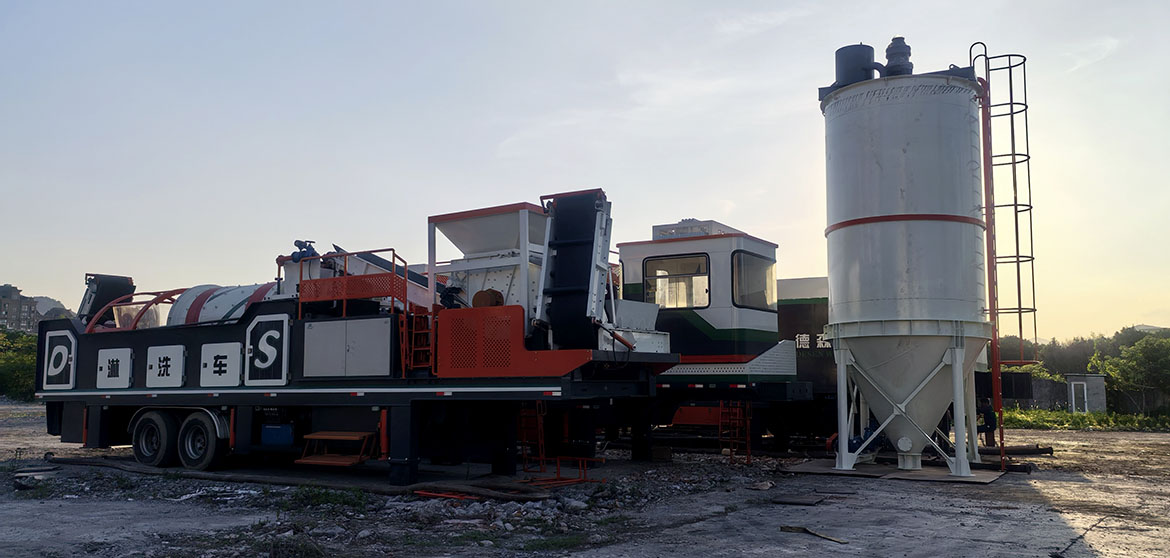
Civil works and fabrication run in parallel, and the interface between them is where weeks are lost. A workable sequence on a mid-size site runs four to six weeks: geotechnical check and pad design, earthworks and compaction, sump and pond with bunds, power connection and control position, then kerbs, bays and haul road. Modules are set after that, and commissioning starts once water and power are live.
Where the schedule usually breaks
Two failures recur. The first is a pad that is level but not drained: the first rain floods the working area and the commissioning team spends a week pumping. The second is a feeder sized on running load, which trips on the first start of the scrubbing drive. Neither is an equipment problem, and neither is expensive to correct before the concrete is poured.
Does a modular washing plant need a concrete foundation?
No cast-in-place foundation is required. A horizontal hardened surface that carries the module loads is sufficient, with concrete used only at concentrated load points, kerbs and sumps. That is the main reason a modular line can be installed in weeks rather than months.
Can the plant run on unprepared ground?
For a short campaign on firm ground, temporary matting can carry a light module set, but it will not hold level through a wet season and gives no controlled drainage. For anything longer than a few weeks, a proper pad and sump cost less than the downtime they prevent.
Civil works is the part of a washing project with no supplier to hold accountable and no spare part to fit. Getting the pad, the pond, the power and the traffic layout right before the modules ship is what turns a short installation into an actual early start-up.