Shooting Range Lead Contaminated Soil Washing: Recovering Berm Soil With a Mobile Plant
How a mobile soil washing plant recovers lead contaminated berm soil at shooting ranges: screening, washing, water recycling and compliance steps for range renovation projects.
Shooting Range Lead Contaminated Soil Washing: Recovering Berm Soil With a Mobile Plant
Outdoor shooting ranges accumulate lead in their berms and backstop soils year after year. When a range is renovated, expanded or closed, that soil becomes a regulated material: corroded bullet fragments and fine lead particles can push a sample over the hazardous threshold, and the berm volume is then often hauled to a landfill at a cost that surprises club operators and municipal owners alike. Shooting range lead contaminated soil washing offers a different path: a mobile soil washing plant is brought to the range, the lead is concentrated into a small fraction for recycling, and the cleaned sand goes back into the range instead of a landfill cell.
Where the Lead Actually Sits in a Range Berm
A berm is not uniformly contaminated. Bullets and shot concentrate along the impact zones, while corrosion products disperse through the sand over the years, so mapping that distribution is the first technical task of any range soil project.
Size fractions decide the treatment strategy
Lead arrives on a range as intact bullets, jacket fragments and, over time, fine corrosion products that coat sand grains. Washing exploits that split: water and attrition detach fines and corrosion products from the coarser sand, and classification separates the slurry by size. The contamination concentrates in the fine slurry while the washed sand leaves the process much cleaner. Treating every tonne the same way ignores this structure and inflates both cost and disposal volume.
Why washing beats dig and haul
Excavation and disposal scale directly with tonnage: every cubic metre of berm soil is weighed, transported and charged for at a landfill. Washing inverts that logic. Most of the sand is cleaned on site and reused as backstop or general fill, and only the concentrated fines leave the site, ideally to a lead recycler where the metal still carries recovery value. The disposal bill shrinks, and the range does not have to buy replacement sand.
Setting Up a Mobile Washing Plant on a Range Site
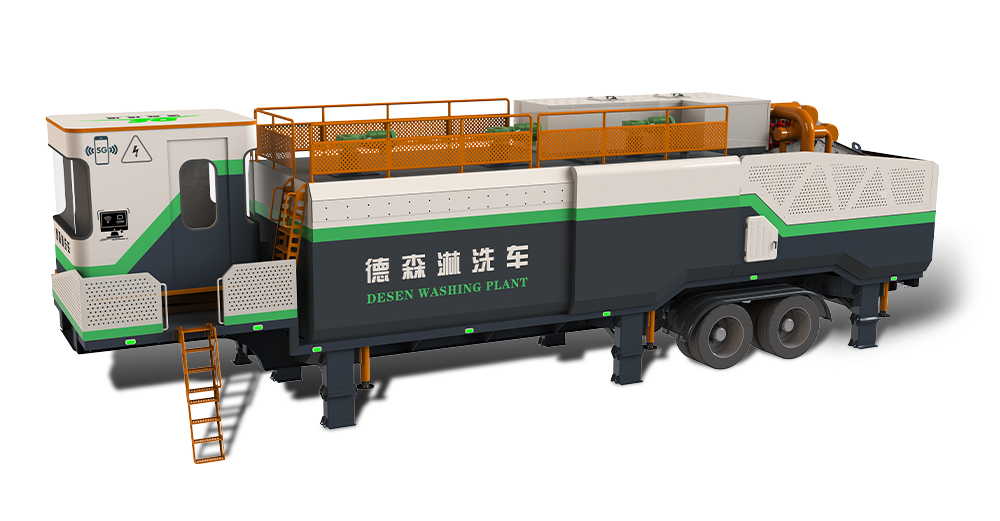
Range projects are small and dispersed, so a fixed washing plant is rarely justified. Trailer mounted washing and screening equipment fits the site profile: it arrives on a standard low-bed trailer, sets up on a prepared pad within a day, and leaves when the berm is done.
Feed preparation and prescreening
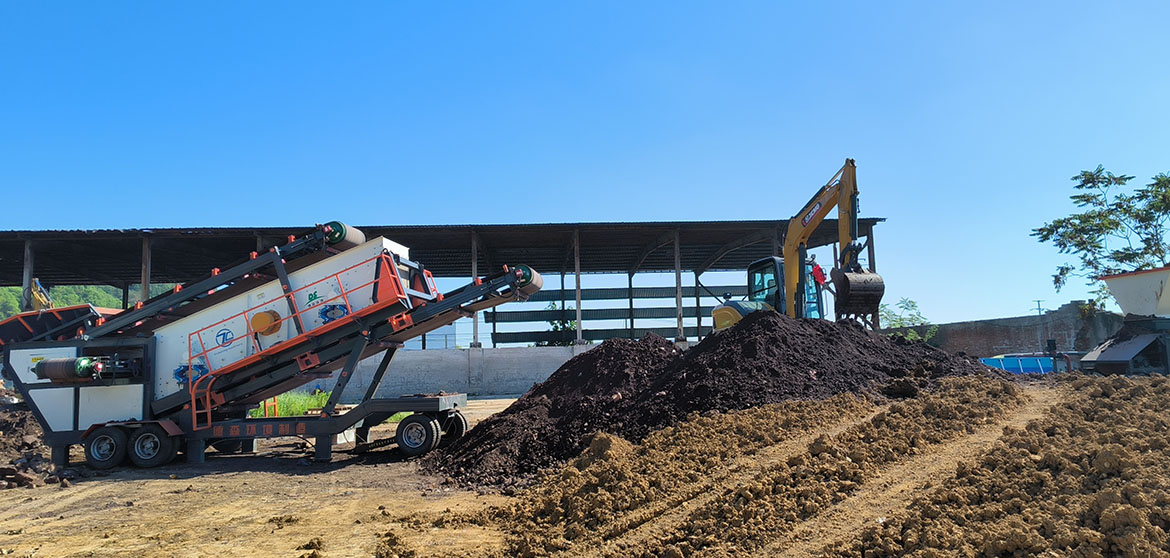
Berm soil is excavated in lifts and stockpiled close to the working area. Oversize debris and range scrap are picked out first, then a trailer mounted screening plant brings the feed down to the size the washer accepts. Consistent feed is not cosmetic: a washer fed with uncontrolled lumps loses washing efficiency and wears faster. Prescreening also gives the team a second look at the material and helps spot heavily concentrated pockets early.
Washing, separation and the water loop
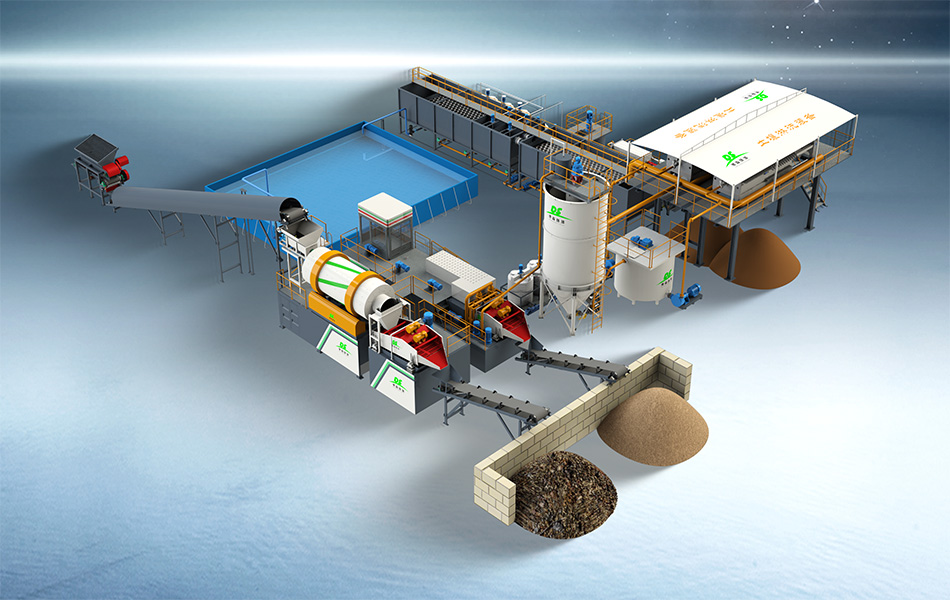
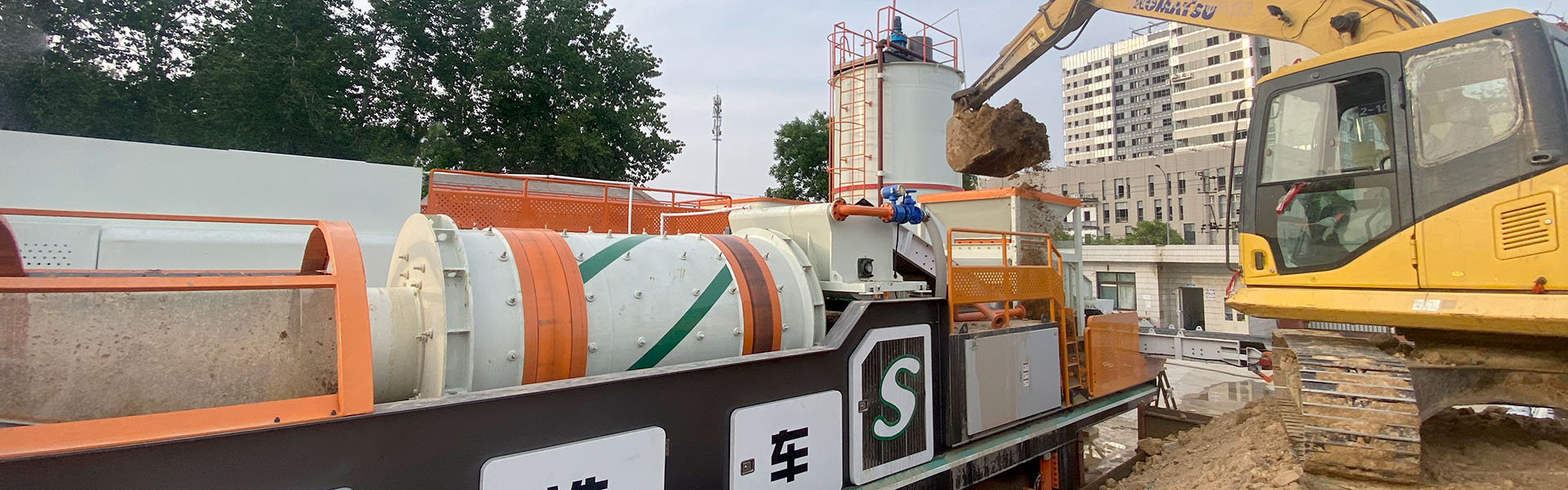
On a typical Desen mobile washing unit, an excavator feeds the hopper, a rotary scrubber drum detaches fines from the sand, and classification equipment splits the slurry into clean coarse sand, metallic lead pieces and fine slurry. Recovered metallic lead is dense and easy to separate, and it can go directly to scrap metal recovery. The fine slurry is pumped to tanks and a filter press, where the water is clarified and returned to the process rather than discharged. A closed water loop matters on range sites, where stormwater controls are strict.
- Prepare a firm, graded pad with runoff control before the equipment arrives.
- Confirm a process water source and a silt fenced settlement area for the loop.
- Sheet and label stockpiles, and keep clean and unwashed soil clearly separated.
- Plan excavation and washing around live-fire schedules, closing one bay at a time.
- Agree the verification sampling plan with the regulator before the first tonne is washed.
Working around range operations and permits
Most range renovations stay partly open, so the washing campaign is scheduled bay by bay. Environmental permit conditions usually cover water handling, noise and stockpile management, and a compact mobile setup satisfies them more easily than a construction-style earthworks operation. Documenting each bay separately also makes the closure paperwork simpler.
Compliance, Verification and Project Planning
Proving the sand is clean
The verification package is what turns washed sand into a reusable material instead of a waste question. Samples are taken before and after treatment, split by fraction, and tested against the acceptance rules that apply in the project jurisdiction. The results support the reuse decision for backstop reconstruction, while the concentrated fines are characterised for recycling or disposal.
Sizing the campaign
A practical range project starts with a berm survey: volume, lead distribution by impact zone, and access for plant and trucks. Those figures size the washing campaign and the water loop. Desen Environmental supplies modular and trailer mounted soil washing and screening plants for exactly this kind of site, with lead contaminated soil among the applications handled in reference projects, and supports overseas buyers with sizing, commissioning and operator training. For range owners and remediation contractors, the first step is a feed sample test, which shows how the lead splits between fractions on that specific site.
Handled this way, a range renovation stops being a landfill logistics problem and becomes a material recovery project: lead recovered for recycling, sand returned to service, and a berm rebuilt without importing new material.