Heavy Metal Precipitation From Soil Washing Effluent: Treating Dissolved Metals Before Discharge
How to treat soil washing effluent: hydroxide and sulfide precipitation of dissolved heavy metals, pH control, clarifier and filter press duty, plus reuse of treated process water.
Heavy Metal Precipitation From Soil Washing Effluent: Treating Dissolved Metals Before Discharge
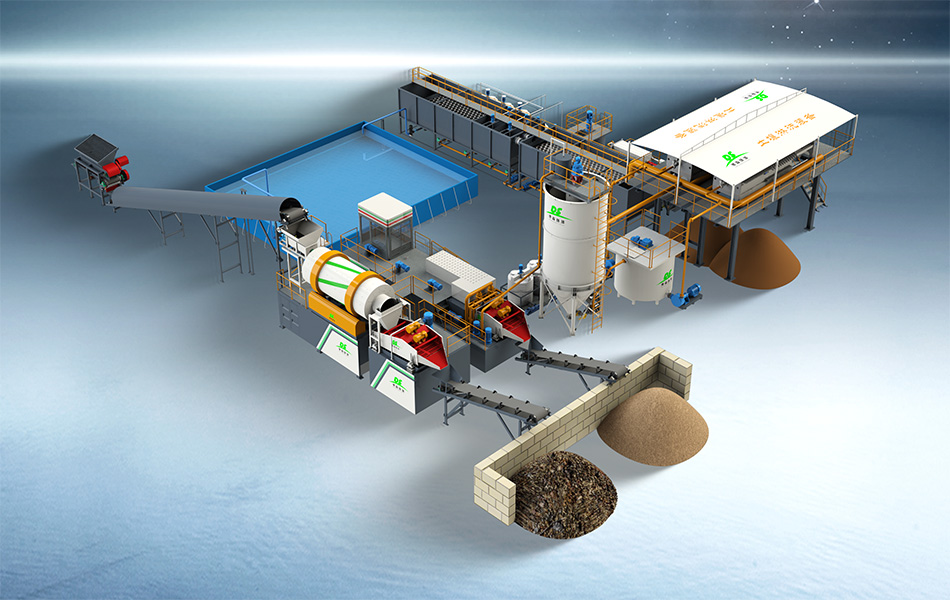
Every soil washing plant has two outputs: cleaned soil and dirty water. The soil side gets most of the attention during procurement, yet the water side decides whether the project can hold a discharge permit, reuse its process water and close the site without a compliance dispute. Once heavy metals are released from soil particles during washing, they travel in the effluent as dissolved or colloidal species that no screen can capture. Heavy metal precipitation from soil washing effluent is the process step that converts those dissolved metals into solid particles you can actually separate, dewater and dispose of. This guide explains where dissolved metals originate in a washing circuit, how hydroxide and sulfide precipitation work in practice, and how the resulting solids are handled on a modular washing line. 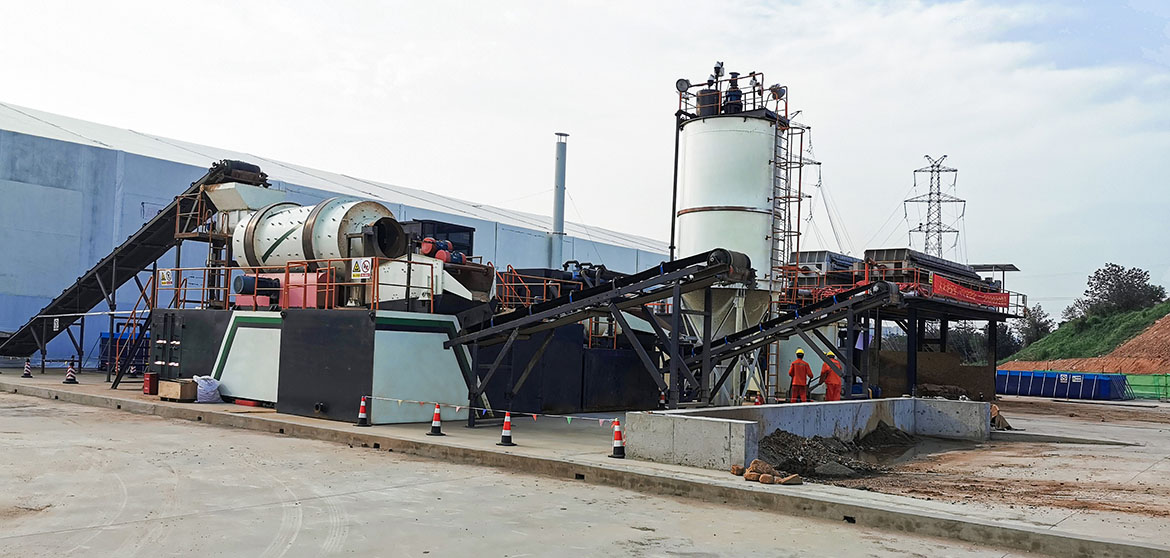
Where Dissolved Metals Come From in a Washing Circuit
Acid release and reagent carryover
During washing, metals leave the soil through several routes. Acid wash stages dissolve carbonate and oxide coatings, sending lead, zinc, cadmium, copper and nickel into solution. Attrition scrubbing liberates fine clay particles that carry adsorbed metals, so a portion of the metal load is colloidal rather than truly dissolved. On projects that use chelating agents to extract metals from strongly bound fractions, the chelants do their job too well at the wrong moment: they keep metals soluble in the effluent long after the soil has left the circuit. This is why effluent chemistry differs from site to site. A lead-contaminated urban site, a galvanizing plant location and a former mine each produce water with a distinct metal profile, pH and buffering behavior, and each demands a precipitation recipe matched to that profile.
Why metals stay in solution
A common operating mistake is to assume that settling alone will clean the water. True, coarse solids drop out quickly in a basin, but dissolved metal ions have no weight to settle. At low pH they remain mobile indefinitely. Unless the chemistry of the water is changed so that each metal forms an insoluble compound, the effluent that leaves the plant carries its metal load straight into the receiving environment or back onto washed soil in the recycle loop.
Hydroxide and Sulfide Precipitation in Practice
Hydroxide precipitation and pH windows
The workhorse method on most washing plants is hydroxide precipitation. Lime or caustic soda raises the effluent pH until dissolved metals convert into metal hydroxides with very low solubility. Each metal has its own pH window where removal reaches its practical limit: copper and zinc precipitate well around pH 8 to 9, nickel closer to 9 to 10, while lead and cadmium respond in overlapping but slightly different ranges. Because a mixed-metal effluent never matches every window at once, plants typically target the pH that controls the most critical metal for the permit and accept partial removal of the rest, or they run two pH adjustment steps in series. A typical precipitation stage on a modular washing line follows this sequence:
- Equalization: effluent collects in a buffer tank so flow and concentration peaks are smoothed before treatment
- pH adjustment: lime slurry or caustic is dosed automatically against a pH probe to reach the target window
- Flocculation: a polymer dose agglomerates fresh hydroxide floc and remaining colloids into fast-settling particles
- Clarification: a thickener or lamella clarifier separates settled sludge from clarified water
- Polishing: a second reagent stage, often sulfide-based, captures metals that hydroxide treatment alone leaves behind
Sulfide polishing for stubborn metals
Some effluents resist hydroxide treatment. Metals that arrived in the water already complexed by chelating agents, or by ammonia and organic acids in the soil, resist conversion to hydroxides even at a high pH. For these streams, dosing an organic sulfide reagent forms metal sulfides whose solubility is orders of magnitude lower than that of hydroxides, pulling residual concentrations down toward permit levels. Sulfide chemistry is potent but demands disciplined dosing control, because excess sulfide in discharged water creates its own compliance problem. Operators handle this with accurate metering pumps, residual monitoring and, where necessary, an oxidation step that destroys surplus reagent before discharge. 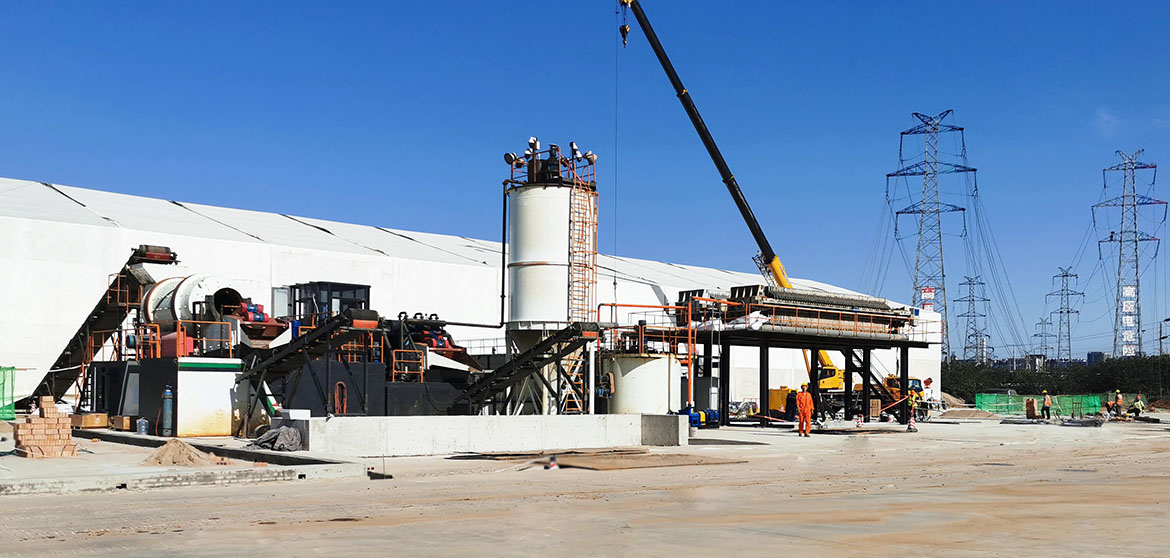
Handling the Solids and Closing the Water Loop
Clarifier sludge and filter press duty
Precipitation only completes the job when the newly formed solids are removed from the water. Settled sludge from the clarifier is thin, often below five percent solids, so it is pumped to a filter press for dewatering. The press delivers two products: a compact filter cake that can be classified, tested and directed to the appropriate disposal or recovery route, and filtrate that returns to the head of the treatment stage for final pH correction. Dewatering matters commercially as well as technically, because a pressable cake avoids the hazardous waste surcharge that liquid sludge carries on every tonne.
Reusing treated water on site
After precipitation, clarification and polishing, the water is neutralized and returned to the plant's process water tanks. On most modular lines this closed loop cuts fresh water demand dramatically, which is a decisive advantage in the Middle East and other water-scarce regions. Treating effluent properly is therefore not only a permit obligation: it is what allows a soil washing plant to operate for months on a fixed water budget, and it is the step your equipment supplier should be able to specify, size and commission alongside the washing modules themselves.