Soil Washing pH Adjustment for Heavy Metal Removal: Controlling Chemistry From Acid Wash to Clean Discharge
How soil washing pH adjustment drives heavy metal removal: acid wash stages, per-metal pH windows, effluent neutralization and precipitation control on a modular washing plant.
Soil Washing pH Adjustment for Heavy Metal Removal: Controlling Chemistry From Acid Wash to Clean Discharge
On most remediation projects, the difference between soil that passes verification and soil that fails comes down to chemistry rather than machinery. Screens, attrition scrubbers and drum washers detach contaminants from sand and gravel, but the heavy metals themselves only move into the water phase when the pH of the wash water is controlled deliberately. Soil washing pH adjustment for heavy metal removal is therefore not a side setting on a dosing pump: it is the core parameter that decides whether lead, cadmium, copper, zinc or nickel actually leave the soil grains and end up in a concentrate stream you can treat. This guide explains how pH shapes each stage of a washing plant, which pH windows apply to common metals, and how operators keep the whole loop stable on a modular line. 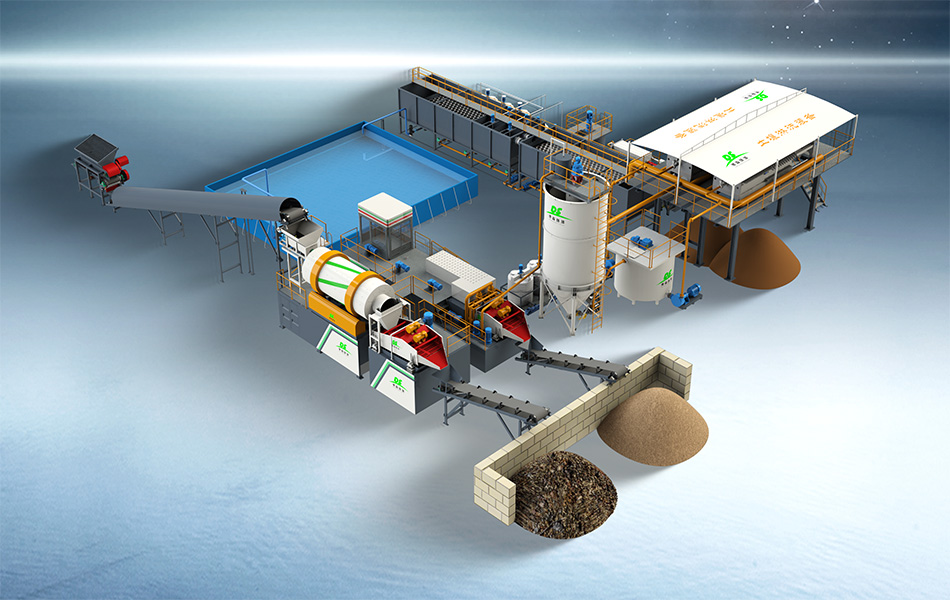
Why pH Decides Where Heavy Metals End Up
Metals release at low pH
Heavy metals cling to soil particles through adsorption, carbonate coatings, iron and manganese oxides, and organic matter. At neutral pH these bonds hold firm, which is why washing soil with plain water removes surprisingly little metal. When the wash water is acidified, typically into the pH 2 to 4 range depending on the target metal, hydrogen ions compete for binding sites and dissolve the carbonate and oxide phases that lock metals in place. Cadmium, zinc and nickel respond quickly. Lead and copper generally need stronger acid contact or longer retention. The goal is not to dissolve the soil itself but to strip the contaminant-bearing coatings off the sand and gravel fraction, which is why acid dosing is always paired with mechanical scrubbing so the chemistry reaches fresh particle surfaces.
Precipitation at high pH
The same chemistry runs in reverse at the other end of the plant. Once metals are dissolved in the process water, raising the pH pushes them out of solution as hydroxide precipitates that can be settled, thickened and dewatered with the fine sludge. Each metal has its own precipitation window: zinc and nickel drop out around pH 8 to 10, copper around pH 7 to 9, while lead responds across a broad range but redissolves if the water becomes too alkaline. Running the loop too high therefore wastes reagent and can put metals back into the water you are trying to clean. Operators work to the narrow band where the target metals settle while calcium and other background ions do not scale the pipework.
Setting the pH Stages on a Washing Plant
Acid wash, rinse and neutralization as separate steps
A modular washing line handles pH in stages rather than in one tank. The acid wash stage is tuned to the contaminant suite identified during site investigation, the rinse stage displaces residual acid from the cleaned coarse fraction, and the neutralization stage raises the effluent pH ahead of precipitation and clarification. Keeping these stages separate protects both product quality and water balance. If rinse water is recycled into the acid circuit without control, the effective acid dose drifts and metal removal rates fall even though the dosing pumps appear to be running normally.
Practical checkpoints for the operating crew
- Measure pH continuously at the acid wash outlet, the rinse outlet and the clarifier inlet, not only at the dosing station.
- Define a target pH window for each stage based on bench test results, and treat any drift beyond half a unit as a stop-and-check event.
- Re-titrate the acid dose whenever the feed soil changes, because carbonate content in the soil consumes acid before the chemistry can work on metals.
- Log reagent consumption per tonne of soil; a rising trend usually indicates buffer capacity in the feed rather than a pump fault.
- Verify the washed coarse fraction with a rinse pH check before it leaves the plant, so residual acidity never reaches the stockpile.
Watching the Loop: Effluent, Precipitation and Discharge
From dissolved metals to a dewaterable sludge
After neutralization, the process water carries its metal load as fine precipitate rather than dissolved ions. Clarifiers and lamella separators capture most of it, and the underflow joins the fines line to the filter press, producing a compact filter cake instead of a pond of metal-bearing slurry. This is what allows a washing plant to discharge or recycle water that meets the site's effluent limits while the contaminated mass leaves site as a small, documented cake volume. 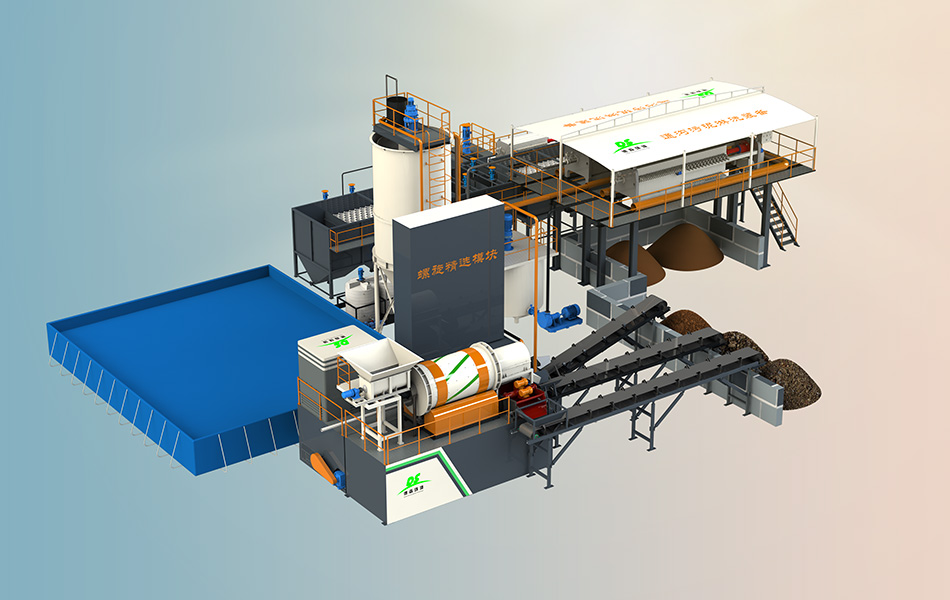
Control that keeps the loop stable
In day-to-day operation, pH control succeeds when it is boring: fixed setpoints, automated dosing against inline probes, weekly probe calibration and a clear alarm path when values drift. Plants that treat pH as a manual knob tend to chase excursions after they have already pushed off-spec water into the recycle tank. Desen Environmental builds its modular soil washing plants with staged pH control, inline monitoring and precipitation steps integrated into the water treatment module, so contractors can hold heavy metal removal steady across changing feed soils. For project teams planning a washing-based remediation, defining the pH strategy during bench testing and carrying it through to the plant control system is one of the most reliable ways to protect both the cleanup result and the discharge permit.