Railway Ballast Cleaning and Contaminated Ballast Washing: Recovering Stone From Track Renewal Waste
How contaminated railway ballast washing works: screening out pollutant-loaded fines, scrubbing tar and heavy metals from stone, and closed-loop water treatment for track renewal reuse.
Railway Ballast Cleaning and Contaminated Ballast Washing: Recovering Stone From Track Renewal Waste
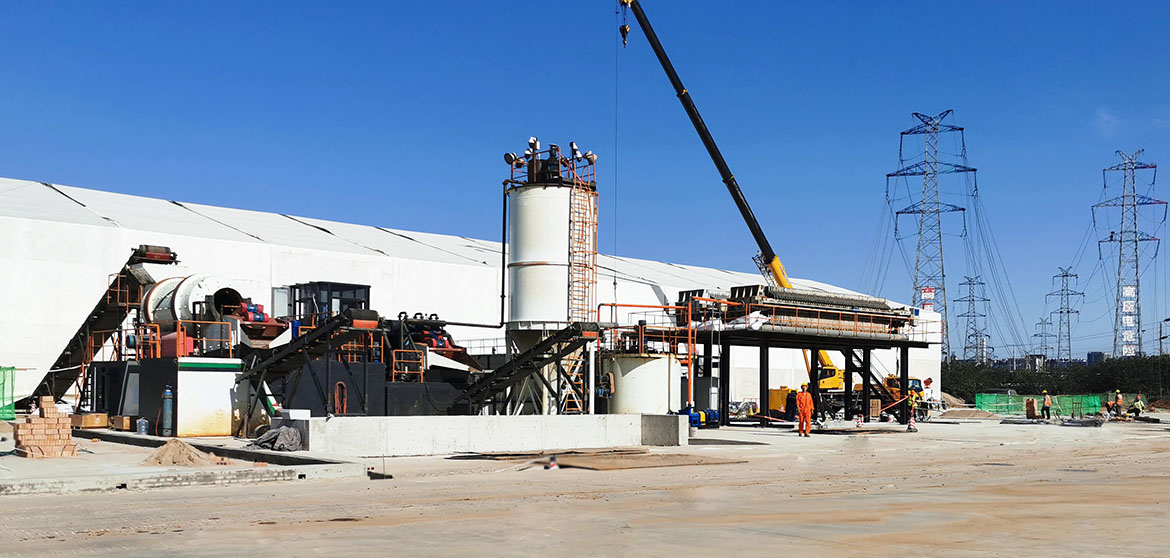
Track renewal and maintenance across Europe generate an enormous stream of spent ballast. Network owners replace millions of tonnes of crushed stone every decade, and much of it leaves the trackbed fouled with degraded stone fines, spilled freight cargo, herbicide residues and heavy metals accumulated over decades of service. Historically, fouled ballast has gone straight to landfill or into low-grade fill. Railway ballast cleaning with contaminated ballast washing changes that calculation: a washing plant can strip fines and pollutants from the stone itself, returning a fraction that can meet reuse criteria for new trackbed layers or construction aggregate. This guide explains how the process works, which contaminants decide the flowsheet, and what a European contractor should confirm before mobilizing a plant to a track possession window. 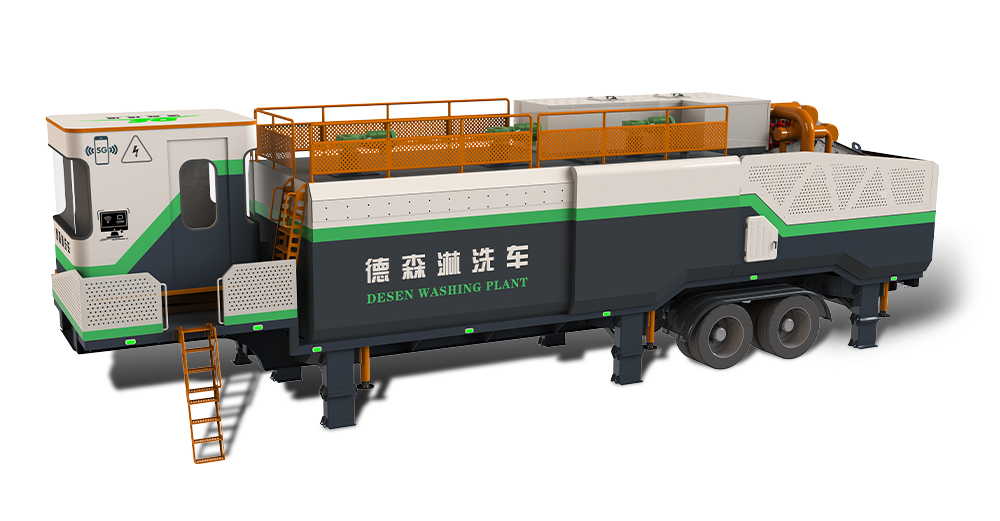
Why Ballast Fouls and What It Carries
Fouling mechanisms and contaminant sources
Ballast deteriorates through several routes at once. Mechanical degradation is constant: every train passage grinds corner-to-corner contact between stones, producing angular fines that clog the voids between particles. Wind-blown soil, vegetation growth and sleeper wear add more fine material. On top of this physical fouling sits the chemical load. Spillage from freight wagons introduces coal dust, ore particles and grain residues. Older track sections carry PAH compounds leached from creosote-treated sleepers and spilled tar. Along freight and industrial corridors, decades of brake wear, wagon leakage and yard activity leave copper, zinc, lead and hydrocarbons concentrated in the trackbed. The critical fact for treatment is that most of this contamination is not bonded inside the stone. It rides on particle surfaces and, above all, in the fine fraction below roughly two millimetres.
When washing is worth doing
Washing makes commercial sense when the stone fraction still retains a usable gradation and the pollutant load concentrates in the fines. On many renewal projects the fines account for 15 to 30 percent of the mass but carry the majority of the contaminant burden. Remove and treat that fraction, scrub the stone surfaces clean, and the remaining coarse ballast can often be regraded for sub-ballast layers, embankment material or recycled aggregate. If the stone itself is heavily degraded or the ballast is saturated with tar throughout, washing still helps: it reduces the volume that must go to hazardous disposal from the full tonnage down to a small concentrated stream.
The Washing Flowsheet for Spent Ballast
Screening sets the split
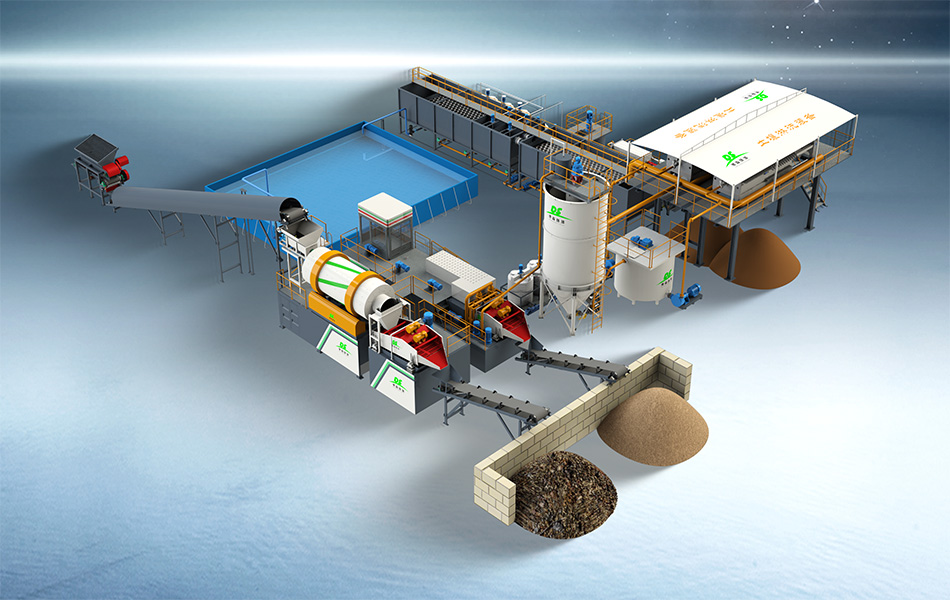
Every ballast washing circuit starts with classification. A scalping screen removes sleepers debris, down-wire and other tramp metal, then a sizing screen separates the coarse stone from the fouling fines. This split matters more on ballast than on soil: the stone needs gentle handling to avoid degrading it further, while the fines must be routed into the treatment stream where the contaminants are waiting. Mobile screening plants mounted on road trailers suit this stage well, because they can be positioned beside the track within a possession window and re-sited as the renewal front moves. 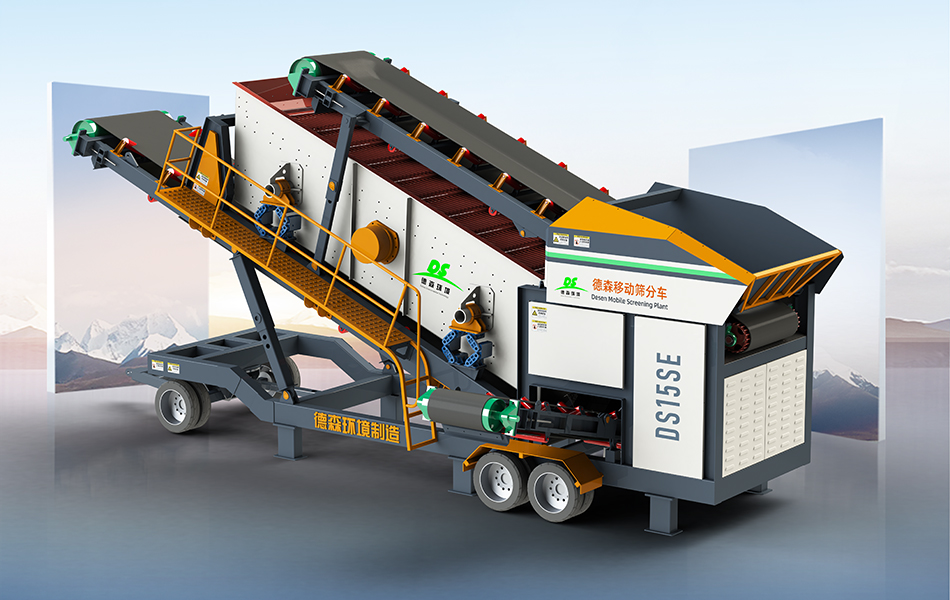
Scrubbing the stone
After screening, the coarse fraction enters a drum washer or attrition scrubber. Stone-on-stone attrition, combined with water jets, dislodges clay films, coal dust and tar coatings from particle surfaces. Where PAH or hydrocarbon fouling is significant, warm water and a measured dose of wash aid improve the release without adding aggressive chemistry. The cleaned stone then passes over a dewatering screen and leaves the plant ready for stockpiling and testing. The scrubbing water, now carrying the released fines and dissolved pollutants, flows to the treatment circuit.
Water circuit and fines disposal
Fines are thickened in a cyclone and settler arrangement, dewatered, and pressed into a compact filter cake that can be characterized and sent to an authorized facility. Process water is clarified and recycled back to the washing stages, which keeps fresh water demand low and simplifies the discharge consent picture on European sites. A closed-loop design is usually the deciding factor for getting a ballast washing operation approved inside an active rail corridor.
What to Confirm Before a Ballast Washing Project
Ballast projects run against timetables, not just budgets. Possession windows, access points and waste acceptance rules all shape the equipment choice. Before committing, contractors should work through a short checklist:
- Contaminant characterization: laboratory data on PAH, heavy metals and hydrocarbons, split by particle size, to confirm the fines carry the load.
- Reuse target: the specification the washed stone must meet, whether a network ballast standard, an aggregate product standard, or an end-of-waste route agreed with the regulator.
- Mobilization profile: road-towable plant that sets up within a possession window, with hydraulic leveling for the uneven ground beside the trackbed.
- Water management: closed-loop capacity, make-up water source and sludge dewatering arranged before the first shift.
- Throughput match: plant output sized to the renewal rate, so washing never becomes the constraint on track access.
Handled this way, contaminated ballast washing turns a disposal liability into a measurable recovery: clean stone back into the railway supply chain, a small treated fines stream under control, and materially lower landfill tonnage on every renewal project. Zhengzhou Desen Environmental builds modular and trailer-mounted washing and screening equipment for exactly these deployments, and supports European contractors from process design through commissioning.