Incinerator Bottom Ash Washing for Heavy Metal Removal: Turning WtE Residue Into Reusable Aggregate
Washing municipal waste incinerator bottom ash removes chlorides and heavy metals so the mineral fraction can be reused. See how Desen washing lines screen, scrub and dewater bottom ash.
Incinerator Bottom Ash Washing for Heavy Metal Removal: Turning WtE Residue Into Reusable Aggregate
Municipal waste incineration leaves behind a mineral residue known as incinerator bottom ash (IBA), typically 15 to 25 percent of the original waste mass by weight. Across Europe and Southeast Asia, energy-from-waste operators face the same question every month: what to do with thousands of tonnes of ash. Landfilling the entire stream is expensive, and in several jurisdictions it is no longer the default option. Incinerator bottom ash washing for heavy metal removal has become the practical route that turns this residue into a granular material suitable for secondary aggregate, while bringing soluble chlorides and leachable metals under control.
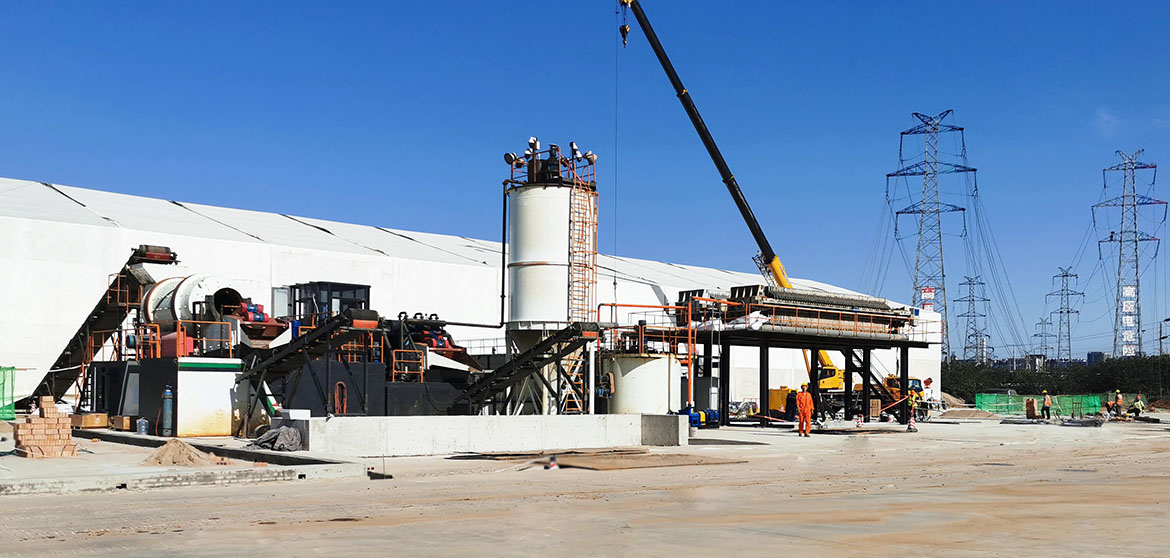
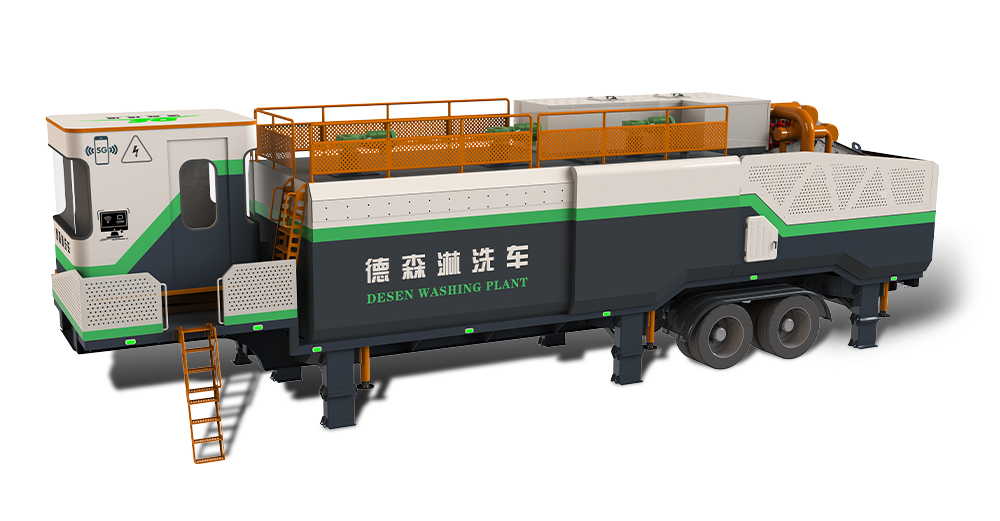
Desen Environmental builds modular and mobile washing plant for exactly this kind of mineral residue. The same drum scrubbing, classification and dewatering stages used on contaminated soil apply to bottom ash, provided the line is arranged around the specific behaviour of ash: light fractions to float off, metals to recover, and fines that carry most of the contamination.
Why Bottom Ash Needs Washing Before It Can Be Reused
What washing removes from incinerator bottom ash
Fresh bottom ash is a heterogeneous mix of slag, glass, ceramics, brick, non-ferrous scraps and fine dust. Three groups of constituents cause problems for reuse. Soluble salts, mainly chlorides, drive corrosion and leaching. Heavy metals such as lead, zinc, copper and cadmium concentrate in fine particles and coatings. Unburned organic matter affects appearance and stability. Washing addresses all three at once: water and attrition detach adhering fines from coarse slag grains, dissolve a large share of the chlorides, and carry the contaminated slimes into a dedicated treatment stream instead of leaving them coated on the aggregate.
Why screening and sizing come first
Before any washing stage can work, the ash has to be sized. Crushing oversize slag and then screening the stream, commonly with a trommel screen, separates the coarse mineral fraction from fine material under about 4 mm, which carries a disproportionate share of the heavy metal load. Removing that fines fraction early means the washing plant processes a cleaner, free-draining feed, and the most contaminated material is routed straight to solidification or disposal rather than circulating through the whole line.

How a Bottom Ash Washing Line Is Arranged
Screening, metals separation and attrition scrubbing
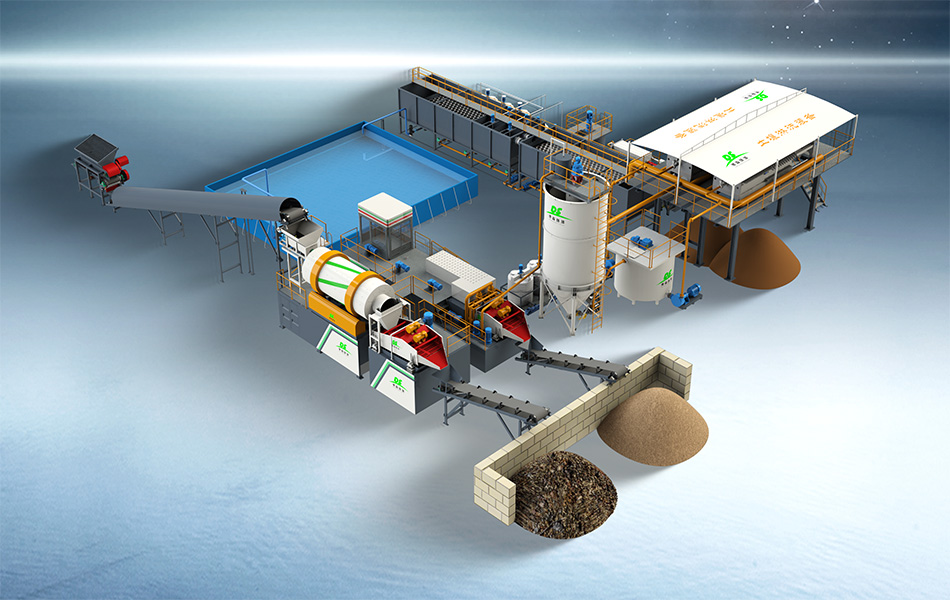
A typical Desen arrangement for bottom ash starts with a feed hopper and screen, followed by magnetic and eddy-current separation for ferrous and non-ferrous metal recovery, which is a revenue stream in its own right. The mineral fraction then passes through a drum washer or attrition scrubber, where grain-on-grain contact strips clay-like coatings and residual mortar from slag particles. Density separation in the same circuit sinks clean aggregate and floats light fractions such as plastic and wood for removal.
Water treatment and fines dewatering
The wash water, now carrying dissolved chlorides and metal-bearing fines, is treated in a closed loop. Fines settle in a thickener and are dewatered by a filter press into a manageable cake, while clarified water returns to the head of the plant. Recovering process water this way matters particularly in Southeast Asian coastal regions where discharge permits are tight and fresh water supply is limited.
- Screening and oversize reduction to produce a washer-ready feed
- Magnetic and eddy-current separation for ferrous and non-ferrous metals
- Attrition scrubbing to strip contaminated coatings from aggregate grains
- Thickening and filter press dewatering of metal-bearing fines
- Closed-loop water recycling with pH and chloride monitoring
Heavy Metal Removal Targets and Acceptance Testing
Washing alone rarely removes every metal. Lead and zinc concentrate in the fines, while copper often stays attached to dense particles and needs targeted separation. A complete line therefore combines physical separation with water chemistry control, including pH adjustment and, where needed, precipitation of dissolved metals before any discharge. Compliance is demonstrated by leaching tests on the washed aggregate and on the dewatered cake, aligned with the end-of-waste or acceptance criteria of the destination country.
Proving the process before full scale
Because ash composition varies between incinerators, Desen recommends a feed analysis and, where volumes justify it, a pilot test before a full line is ordered. Plant is sized from compact pilot units to modular lines processing dozens of tonnes per hour, with commissioning and operator training included. For energy-from-waste operators and remediation contractors evaluating incinerator bottom ash washing, Zhengzhou Desen Environmental Technology Co., Ltd. engineers each washing plant around the characterisation data of the ash stream. Share your bottom ash test results at materialwashing.com to receive a process proposal and budget estimate.