Payment Milestones in Soil Washing Equipment Contracts: Structuring Progress Payments That Match Delivery
How to structure payment milestones in a soil washing equipment contract: advance payment, factory acceptance testing, installation sign-off and retention release.
Payment Milestones in Soil Washing Equipment Contracts: Structuring Progress Payments That Match Delivery
A soil washing plant is a capital purchase with a long delivery chain: engineering, fabrication, factory testing, shipping, site installation and commissioning. The money and the equipment rarely move at the same speed, so payment milestones in a soil washing equipment contract carry much of the commercial risk. A schedule tied to verifiable deliverables protects the buyer while the plant is still in the factory, and keeps the supplier funded while modules sit in transit. 
How a Workable Payment Schedule Is Split
Most contracts settle into four or five tranches. The percentages move with plant size and market, but the logic is constant: each payment releases against something the buyer can physically check.
Advance payment at order confirmation
The advance covers engineering, long-lead components and a production slot. Twenty to thirty percent is common. What matters is that it is released against a defined package rather than a promise: signed technical annex, approved general arrangement drawing and a fabrication schedule. On larger values, buyers should confirm the advance is backed by an advance payment guarantee.
Pre-shipment payment against factory acceptance testing
This is the tranche that protects the buyer most directly. Payment falls due once the factory acceptance test is complete and documented: run test of the drum washer and screens, electrical panel checks, hydraulic and water circuit pressure tests, and a line-by-line verification of the item list against the packing list. The FAT protocol should be agreed before fabrication starts, so that a pass or fail verdict is not a matter of opinion on the day of inspection.
Arrival, installation and commissioning
Once modules reach site the schedule usually splits again: a payment on delivery against the bill of lading and packing list, a further payment when mechanical installation is complete and signed off, and a progress payment when the line runs at rated throughput on site material. Installation sign-off needs its own definition. On a modular line the practical test is whether feed, wash, water and dewatering sections are connected, aligned and running together, not whether each module arrived intact. 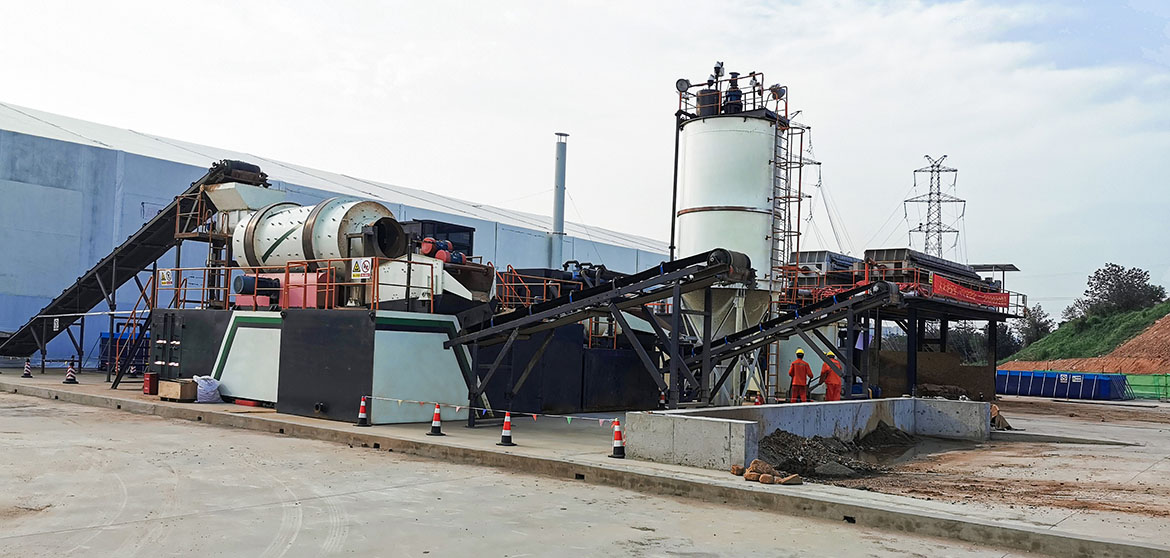
Retention and the defect liability period
Five to ten percent is often held back until the end of a defect liability period, typically six to twelve months after commissioning. Retention should be released against a defined close-out rather than a calendar date: performance test results, spare parts handover, as-built drawings and operator training records.
Documents That Trigger Each Milestone
Payment disputes on equipment contracts are usually documentation disputes. Naming the trigger document in the contract removes most of the argument later.
- Signed technical annex and approved layout drawing — advance payment
- FAT report with test readings and punch list status — pre-shipment payment
- Bill of lading, packing list and insurance certificate — payment on shipment or arrival
- Installation completion certificate signed by both site engineers — installation payment
- Performance test report and training records — retention release
Where These Clauses Usually Go Wrong
Milestones written as dates instead of events
A schedule built only on calendar dates transfers all delay risk to one side. When a port strike, a permit delay or an unfinished foundation pushes the timeline, a date-based milestone turns into a claim instead of a payment trigger. Event-based milestones with a stated review window are easier to administer for both parties.
Currency, tax and delivery terms left vague
State the contract currency, the exchange reference date if a second currency is involved, and which party carries bank charges. Delivery terms should follow a recognised Incoterm with the named place written out in full, because the point where risk transfers is also the point where a milestone falls due.
Delay attribution and standby costs
Overseas projects stall on site readiness more often than on equipment. The contract should state what happens when the plant arrives and the pad is not ready: who bears storage, who bears the technician's standby time, and whether the commissioning milestone slides with the delay or stays fixed.
Performance criteria that cannot be measured
A performance milestone is only useful if the test is repeatable. Define feed rate, throughput per hour, moisture of the treated fines and a sampling protocol for the output before the contract is signed. Agree which material is used for the test and who supplies it, otherwise the final payment depends on material the buyer may not be able to provide.
A payment schedule is a risk-sharing document, not a payment convenience. Splitting the value so that no single tranche exceeds what either party can absorb, and tying every tranche to a document that can be issued on site, keeps a project moving when the inevitable delay appears. Desen Environmental supplies modular and mobile washing plants with the documentation set these milestones depend on, including FAT protocols, packing lists, as-built drawings and commissioning reports. Project references and process information are available at materialwashing.com, and enquiries can be sent to desengroups@gmail.com.