Mobile Soil Washing Steep Terrain Access: Moving a Washing Plant Onto Slope and Hillside Sites
How to plan mobile soil washing steep terrain access for hillside projects: route survey, transport options, bench platforms, leveling and drainage on slope sites in Southeast Asia.
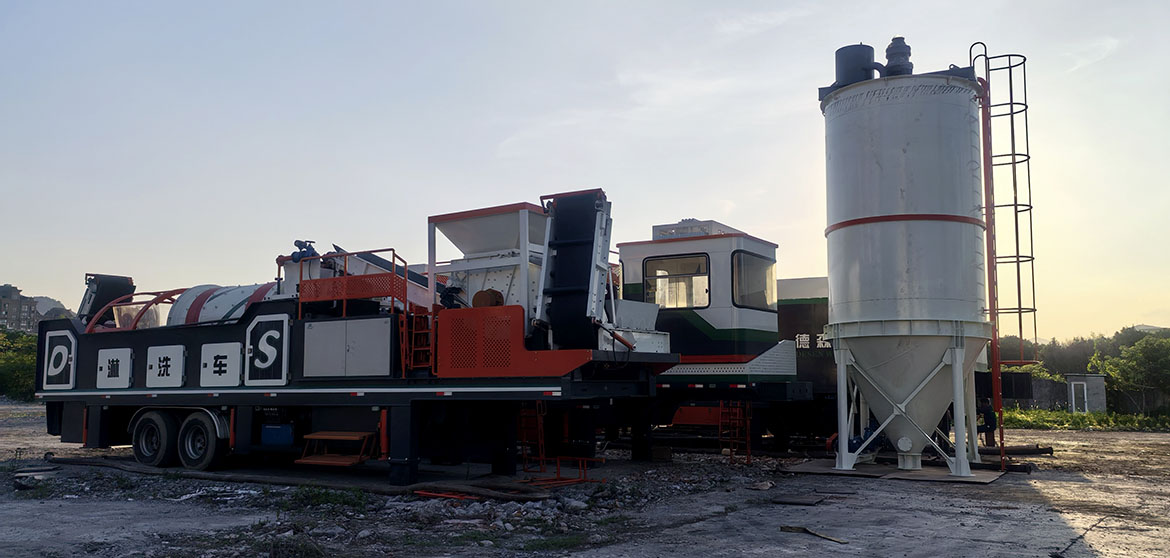
Remediation projects in Southeast Asia often end up on ground that is far from flat. Legacy mining areas, terraced plantation land and cut-and-fill road corridors all leave behind slopes, and flat industrial land near these sites is scarce or already built over. Contractors therefore accept hillside locations, and the question stops being whether a mobile soil washing plant can treat the soil and becomes how it can reach the site and stand level once it arrives. Desen Environmental has worked with overseas buyers on exactly this planning stage, and experience shows that access decides the schedule long before the first bucket of soil is dug.
Survey the Access Route Before You Commit to the Site
What to measure on the approach
A desktop study with satellite imagery is a starting point, but it will not answer the questions that matter for heavy plant. Before signing the mobilization contract, walk or drive the full approach with a checklist: road width at the narrowest point, sustained gradient on each ramp, the turning radius at switchbacks, bridge and culvert load limits, overhead clearances under power lines, and the bearing capacity of road shoulders where a loaded trailer would edge off the sealed surface. Photograph each constraint and record GPS waypoints so the transport plan quotes real numbers instead of estimates. On several hillside projects this survey has changed the equipment selection itself, because a line that ships in more, smaller modules fits an access road that one large module cannot use.
Choosing how the plant travels the last kilometres
- Flatbed trucks carrying the line in small lots, for narrow roads with tight switchbacks where a long load cannot turn.
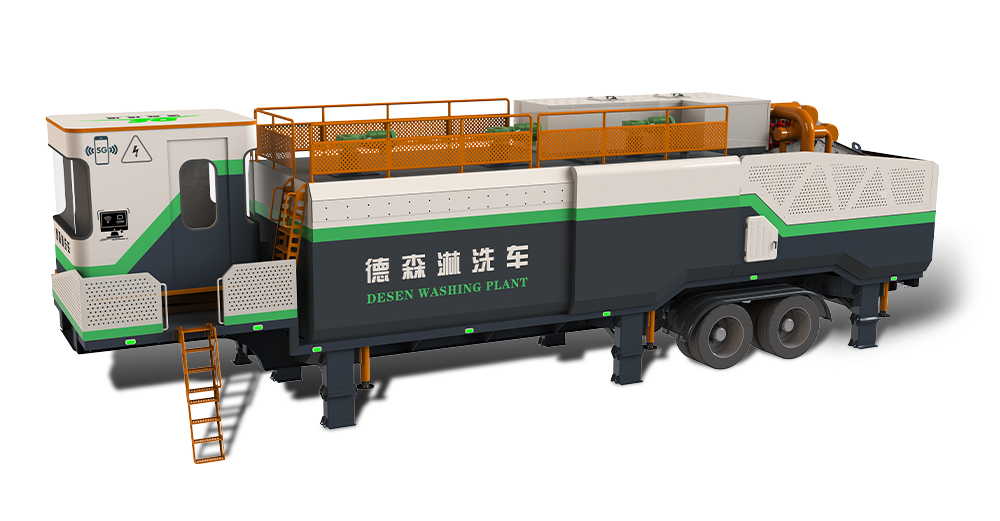
- A tractor unit towing the trailer-mounted washing plant directly up a graded access road, which suits sites reached by a maintained haul route.
- A lowbed trailer for the widest modules, with escort arrangements arranged in advance where local rules require them.
- Dozer or winch assistance for short ramps that exceed the tow capacity of the tractor unit, agreed with the local contractor before delivery day.
The right answer depends on the road, not on preference. A trailer-mounted unit keeps site work short because it arrives substantially assembled, but it needs a continuous route a loaded trailer can climb. A modular breakdown trades a week of on-site assembly for the ability to use tracks and village roads that no trailer could pass.
Build a Working Platform on the Slope
Bench cutting and pad sizing
Once the plant reaches the site, the slope has to be converted into workable ground. The usual approach is to cut one bench, or a series of terraces connected by a haul ramp, sized to the washing line footprint plus the stockpile areas and the water circuit. Do not size the pad for the equipment alone: feed stockpile, washed-soil stockpile and sediment tanks all compete for the same flat area, and a pad that leaves them no room forces rehandling down the slope. Cut faces should follow the angles recommended in the geotechnical report, and an upslope drainage berm or cutoff drain keeps storm runoff from crossing the work area.
Leveling, anchoring and water management
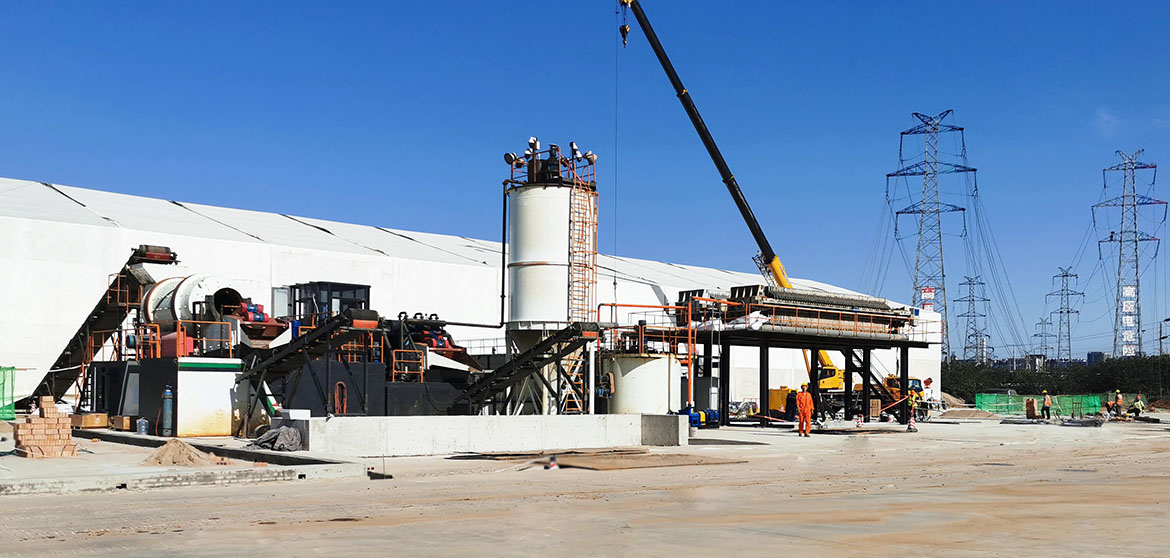
Mobile washing plants correct residual unevenness with their own hydraulic support legs, and steel mats under the legs spread the load where the bench surface is soft after rain. On benches that keep a slight fall, anchoring against sliding is part of the setup, not an optional extra. Water management favors gravity: place process water tanks and the fines dewatering stage on the lowest terrace so the circuit flows downhill instead of pumping uphill, and install a sediment barrier along the open edge of the pad before the first wash run. After the bench is cut and the legs are set, the line stands level and squared, much like the installation shown below on a prepared hardstand.
Sequence the Setup So the Slope Stays Workable
On flat sites the installation order is flexible; on a slope it is not. Set the water circuit and sediment control first, then position the washer and screening modules, and bring in feed stockpiles last so trucks are not crossing pipe runs. Decide early where each stockpile sits, because material excavated during bench cutting can often be used to build the feed pad or backfill behind retaining works, saving a haul off site. Leave a clear maintenance corridor along one side of the line, since tracked excavators servicing the plant will need somewhere to stand that is not the cut face.
Desen Environmental supplies layout drawings for slope and terraced sites as part of the pre-delivery engineering service, covering pad dimensions, support leg positions and the water circuit route. For buyers planning work on hillside land in Indonesia, Vietnam or the Philippines, sharing the survey photos and GPS waypoints early in the inquiry is the fastest way to get a mobilization plan that matches the ground the equipment will actually stand on.