PFAS Contaminated Soil Washing Feasibility: What Size Separation Can and Cannot Do
Is soil washing feasible for PFAS contaminated soil? How size separation concentrates PFAS into fines, what volume reduction is realistic, and where the limits are.
PFAS Contaminated Soil Washing Feasibility: What Size Separation Can and Cannot Do
Per- and polyfluoroalkyl substances (PFAS) now appear on remediation tender lists across North America: fire training grounds, airport perimeter land and sites that received biosolids. Owners who already understand what a washing plant does on heavy metal sites keep asking the same question — can the same equipment handle PFAS contaminated soil? The short answer is that soil washing does not destroy PFAS. What it can do, on suitable sites, is concentrate almost all of the contamination into a small volume of fines, so that most of the excavated soil can be washed, verified and reused. Whether a site qualifies is a matter of particle size distribution, and it can be tested before any equipment is ordered.

Why PFAS behaves differently from heavy metals
On a metals site, washing chemistry does much of the work: acid or chelating reagents release bound metals so the water circuit can capture them. PFAS does not respond to that approach. These compounds are chemically stable, they are not broken down in the wash water, and adding surfactants to mobilize them often makes the downstream water treatment harder rather than easier.
PFAS follows the fines
PFAS molecules are water soluble and they sorb strongly to small particles: silt, clay and organic coatings. Fractionated sampling on real sites shows a consistent pattern. Coarse sand and gravel fractions typically carry concentrations well below screening criteria, while the fine fraction carries most of the total PFAS mass in the stockpile. The contamination concentrates where the surface area is.
That single fact is what makes soil washing a credible option. The plant is not being asked to strip PFAS off a sand grain by chemistry. It is being asked to separate the sand from the silt, wash the coarse fraction clean, and hand the contamination over in a compact, manageable fines stream.
Why washing chemistry is not the removal step
It is worth being explicit with clients and regulators about this boundary. Nothing in a conventional washing line destroys PFAS. The plant reduces the volume that needs a destructive or disposal route — thermal treatment, solidification or secure landfill. The wash water circuit then has to keep dissolved PFAS inside the loop instead of sending it to a ditch: that means closed water recirculation and a treatment step designed for PFAS before any discharge.
Feasibility depends on the particle size distribution
Because the whole concept rests on splitting the soil by size, feasibility testing starts with fractionated analysis — not a composite sample. Composite results average away exactly the information the decision needs.
Testing before committing
A practical feasibility program is modest in scope and fast to run:
- Split representative samples into gravel, sand and fines fractions and analyse each fraction separately for the PFAS suite required by the regulator.
- Record the mass share of every fraction, so the achievable volume reduction is calculated rather than guessed.
- Run a bench or pilot screening trial to confirm that the plant cut size can reproduce the laboratory split.
- Test the wash water for PFAS carry-over and select a treatment route — granular activated carbon, ion exchange resin or foam fractionation — matched to the measured chain-length profile.
- Confirm a receiving route for the dewatered fines, whether landfill acceptance or a stabilization and disposal contract, before mobilization.
What the mass balance tells you
On sand dominated soils, contractors commonly see the majority of the excavated mass report to the clean coarse fraction, with PFAS mass concentrated in a fines stream that may represent a small share of the volume. Those numbers convert directly into project economics: hauling and disposal charges apply to the concentrated fines and to the water treatment residuals, not to the whole excavation. Where the soil is fine grained from the outset, the same mathematics turns unfavorable — if most of the mass is already inside the contaminated fraction, size separation has little to trade. That is the clearest feasibility dividing line, and it is visible from the first laboratory data.
The limits you must plan for
The fines still need a destination
Washing moves PFAS, it does not eliminate it. The dewatered fines leaving the filter press still carry the contamination and need a permitted route: secure landfill, solidification, or thermal destruction where it is available and affordable. Planning that route before the plant arrives is part of feasibility, not an afterthought.

Short chain PFAS and the water circuit
Short chain compounds sorb less strongly and pass more readily into the wash water, which shifts the treatment burden onto the water plant. Here a closed loop earns its place: recycled process water keeps dissolved PFAS on site, and the treatment stage is sized for the measured chain-length profile. Discharge limits differ between states and provinces, so the water design should be checked against the specific permit, not a general guideline.
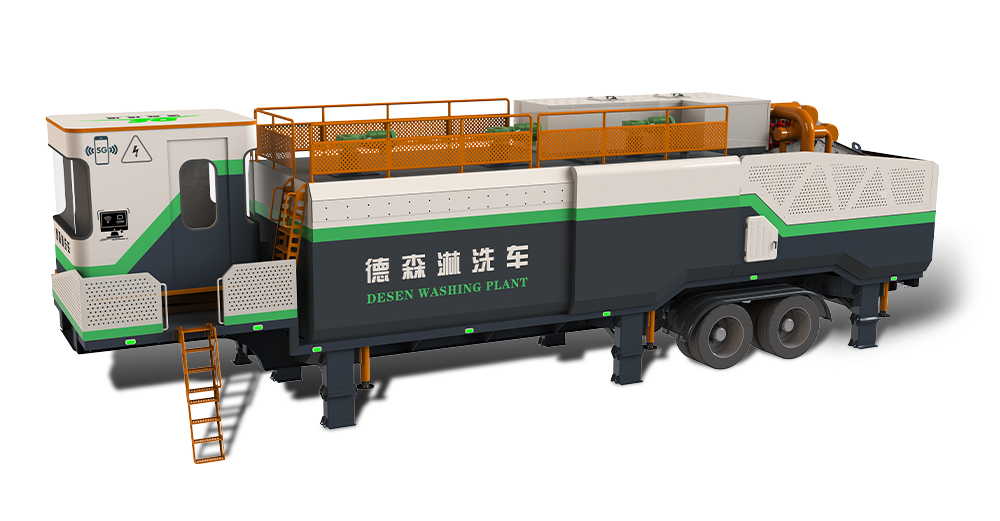
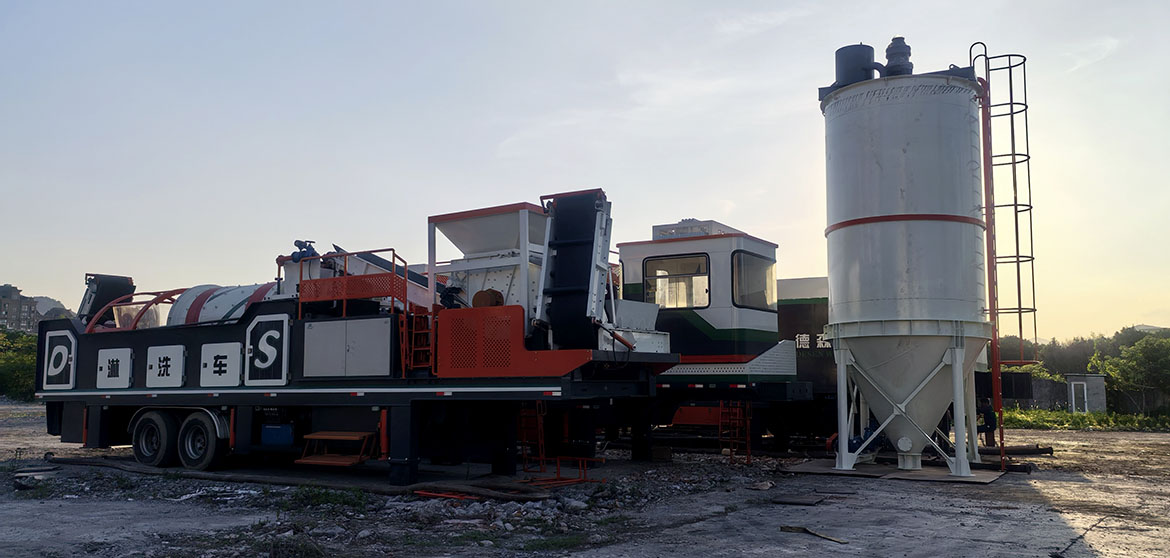
For contractors facing their first PFAS tender, the sequence is straightforward: fractionated testing, a mass balance, a pilot screening trial, then a plant configuration matched to the results. Desen Environmental builds modular and mobile screening and washing plant for this kind of contaminant transfer work, and supports clients through the feasibility stage before equipment is committed. If you are evaluating PFAS contaminated soil washing feasibility on a North American site, start with the particle size data — it decides everything downstream.