Trommel Screen Wear Parts Replacement Schedule: Planning Spares for a Soil Washing Line
A practical trommel screen wear parts replacement schedule for soil washing lines: panel, liner and roller intervals, condition monitoring and spares stock planning for overseas projects.
Trommel Screen Wear Parts Replacement Schedule: Planning Spares for a Soil Washing Line
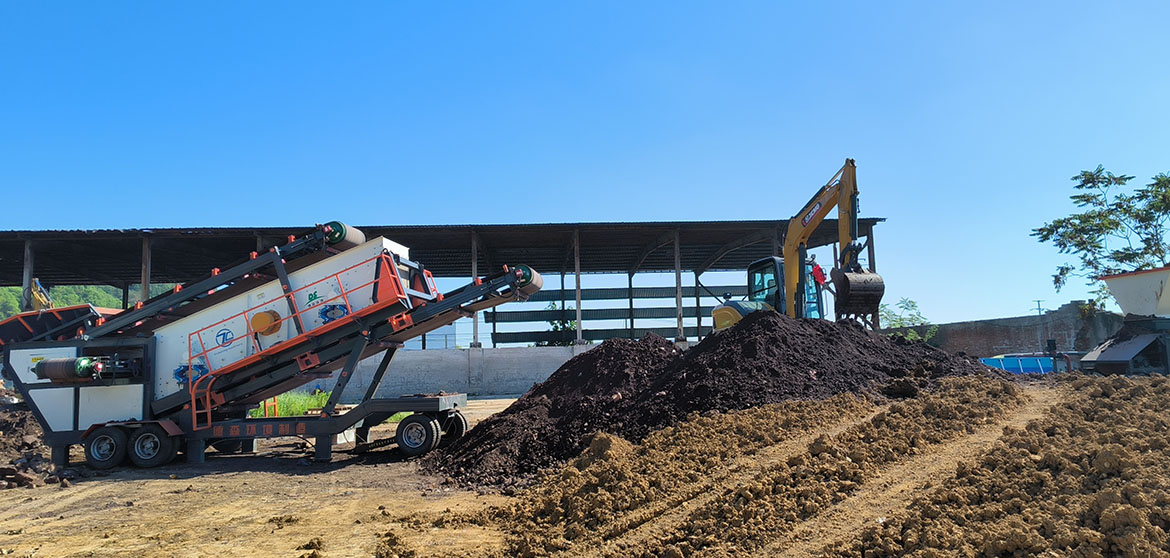
A trommel screen earns its keep by taking abuse. It is fed the coarsest, most abrasive fraction of an excavated stockpile, it tumbles that material thousands of times per hour, and it is expected to hold the cut consistent while doing so. On a soil washing line, where the trommel usually sits ahead of the washer and sets the feed quality for everything downstream, wear parts are not a maintenance footnote — they are a planning item that decides whether the plant runs or waits. This article sets out how to build a replacement schedule for trommel screen wear parts, which components deserve attention, and how to stock spares so a worn panel never becomes a standstill.
What Actually Wears on a Trommel Screen
Screen surface, drum shell and lifters
Three component groups absorb nearly all of the wear. The screen surface — punched plate, woven mesh or rubber panels — thins where material slides across it most, usually in the lowest third of the drum and near the feed end. The drum shell behind it wears more slowly, but noticeably faster than a static chute would, because every particle scours the shell on each revolution. Lifters and flights, which carry material up and drop it to improve screening, lose profile first at their leading edges; once they are rounded off, residence time falls and the undersize fraction carries contamination forward. Bearings, drive components and support rollers wear on a duty cycle rather than a tonnage basis, and are usually replaced on condition rather than on hours.
Why contaminated soil is harsher than aggregates
Quarry work is abrasive; contaminated soil adds three aggravating factors. First, the feed is often angular demolition concrete and brick, which scours harder than rounded natural gravel. Second, damp clay fines smear and bake onto the screen surface, and the scraping used to clear them accelerates metal loss. Third, washing chemicals and brackish process water can attack welds and fasteners, so an interval sheet written for a clean aggregate trommel will be optimistic on a remediation site. Plan intervals for the harsher case and treat any longer service life as margin, not as the baseline.
Building a Realistic Replacement Schedule
Intervals should be expressed in operating hours, not calendar months, because utilization varies enormously between a three-month project and a multi-year contract. As a planning baseline for typical contaminated soil duty:
- Screen panels and mesh: inspect every 100 operating hours; plan replacement in the 1,500–3,000 hour range on abrasive feed, earlier where crushed concrete dominates.
- Drum liners: inspect monthly; plan replacement at roughly twice the panel interval, and never let a liner wear through to the shell.
- Lifters and flights: check profile at every panel change; rebuild or replace once the leading edge has lost about a third of its original height.
- Support rollers and tires: greased and checked weekly; replaced on measured wear or rising vibration, commonly across a 6,000–10,000 hour horizon.
- Bearings and drive belts: temperature and vibration checks on a weekly route; replace on condition, with spares held on site.
- Cleaning scrapers and spray nozzles: service weekly on sticky clay feed; these low-cost parts protect every other component.
These ranges are planning figures, not promises — actual component life depends on feed abrasiveness, moisture, aperture and drum speed. The value of the schedule is that it forces a decision before failure: a panel replaced during a planned shift costs an hour, while the same panel failing mid-run costs the shift, the downstream feed and, on some contracts, a compliance deadline.

Condition monitoring between intervals
Hours-based schedules catch the average; a short inspection route catches the exceptions. Operators should record undersize quality daily — a rising proportion of coarse or contaminated particles in the undersize is the earliest reliable sign of panel wear or a torn mesh. Drum noise, belt tracking and motor current deviations flag mechanical issues weeks before they stop the plant. Fifteen minutes of structured inspection per shift is cheaper than any standby arrangement.
Spare Parts Stock and Supplier Lead Times
Overseas projects add a delivery dimension: a panel that takes three weeks to arrive turns a routine replacement into a stoppage. The practical rule is to hold one full set of wear parts on site — panels, liners, a set of lifters, belts and bearing units — and to agree a reorder trigger with the supplier at the point of delivery. When specifying equipment from manufacturers such as Desen Environmental, confirm which wear parts are standardized, what the documented replacement procedure involves, and whether consumable kits can be shipped with the original consignment. A supplier who provides a written wear parts schedule with expected hours and part numbers makes site planning considerably simpler than one who quotes only the machine.
A replacement schedule is ultimately a production document. Written down, reviewed against the parts actually consumed each quarter, and stocked against, it keeps the screening stage — and the washing line behind it — running to plan.