Mobile Screening Night Shift Lighting Safety: Running Screening Equipment After Dark on Remediation Sites
How to plan lighting and safety for night shift mobile screening on remediation sites: lux levels, glare control, pedestrian segregation and handover routines.
Mobile Screening Night Shift Lighting Safety: Running Screening Equipment After Dark on Remediation Sites
On many remediation projects, screening does not stop when the sun goes down. City permits restrict daytime haulage, receiving facilities accept loads only in set windows, and summer schedules push heavy work into cooler evening hours. A mobile screening plant is well suited to this pattern: it sets up quickly, runs with a small crew and can relocate without fixed works. What it does not bring is light. Lighting on mobile screening sites is often bolted on the week before the first night shift, and the results — dark feed faces, glare in the spotter's eyes, cables across walkways — show up quickly as slow cycles and near misses. Planning lighting and safety together, before the first shift starts, avoids both.
Designing the Lighting Layout Around the Screen
Start from where people and machines actually work
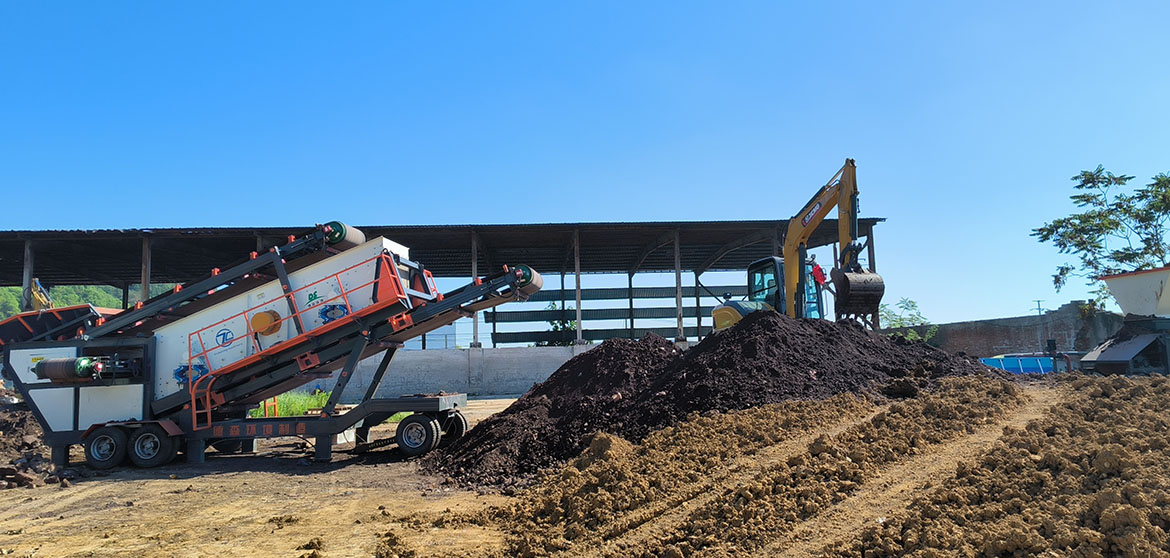
A screening operation at night has three zones with different lighting needs. The feed zone, where the excavator operator and any spotter work, needs vertical illumination so the operator can judge bucket position against the hopper and see a person at the pile toe. The screen itself, including deck access points, discharge conveyors and the fines stockpile, needs light for inspections, blockage clearing and sampling. The stockpile faces, where loaders dig and trucks reverse, need broad coverage so operators can read pile edges and truck positions. In practice this means towers or mast-mounted luminaires placed to cover working faces, not a single light in the middle of the site.
Typical starting points used on remediation and recycling sites:
- General site circulation and haul roads: roughly 20 lux, enough to read edges and segregate routes.
- Working faces — feed hopper, loader and truck positions: 50 to 100 lux at ground level.
- Inspection tasks — screen deck access, conveyor heads, sampling points: 150 lux or more, ideally from adjustable task lighting rather than distance towers.
These figures are starting points, not a substitute for the site's own risk assessment, and local regulations or client standards may set stricter values. What matters is that each zone is measured with a lux meter after installation, not judged by eye.
Control glare and shadow before they cause incidents
Poor night lighting injures in two ways: too little light, and badly placed light. A tower positioned behind the feed face backlights the spotter, so the excavator operator sees a silhouette instead of a person giving signals. Luminaires that throw narrow pools leave dark corridors where people tend to walk. Machine-mounted lights help the operator but often blind approaching staff. Fixing this is mostly placement discipline: position towers to light faces rather than backs, angle luminaires downward, keep walkways inside lit corridors, and walk the whole circuit during the first night run. Maintenance matters too — a lighting plan fails quietly when lenses are coated in screening dust, so lens cleaning belongs in the daily check sheet beside the screen panels themselves.
Adapting Safety Systems for the Night Crew
Segregation and movement rules after dark
The day shift's segregation habits do not transfer automatically to darkness. High-visibility clothing moves to a higher class on night work, with reflective banding that reads under headlights rather than daylight. Reversing alarms and beacons on loaders and trucks need working bulbs checked before the shift, because a failed alarm is easy to miss in the dark. Excavator work at the feed face should follow the same banksman discipline as daytime, with the spotter standing in a lit, protected position outside the slew radius. Pedestrian routes between parking areas, the welfare unit and the screen should be physically marked — barriers, cones or lit walkways — because tape that works at 10:00 is invisible at 02:00.

Handover, fatigue and emergency readiness
Night crews inherit whatever the day shift left behind, so the handover should cover the state of the screen, any blocked chutes or damaged panels, and where temporary lighting was moved during repairs. Fatigue management matters here as well: alertness drops sharply in the early hours, and a tired operator at a conveyor tail is the typical near-miss scenario. Scheduled breaks, rotation between screen monitoring and stockpile tasks, and a no-lone-working rule on the deck all reduce exposure. Emergency arrangements also need a night-specific review: illuminated exits, backup lighting on the escape route from the screen deck, marked and lit first aid points, and a radio channel everyone on site actually carries.
A checklist worth running before the first night shift:
- Lux levels measured and recorded in each working zone, not assumed from tower positions.
- Glare walk-through completed from the excavator seat and from pedestrian routes.
- Reversing alarms, beacons and reflective markings checked on every machine in the night crew.
- Pedestrian routes physically marked and lit between welfare areas and the screen.
- Handover sheet includes lighting status, moved equipment and outstanding defects.
- Emergency lighting, first aid points and radio channels tested after dark, not during the day.
Treated this way, night screening stops being a compliance exercise and becomes additional productive hours from equipment already paid for. Desen Environmental supplies mobile screening and washing plants configured for extended-shift operation, and supports overseas customers with layout and commissioning advice covering lighting, segregation and shift organization. If your project is planning evening or night screening work, describing the site layout to our engineers before mobilization is the simplest way to get the lighting plan right the first time.