Mobile Screen Deck Selection for Contaminated Gravel: Aperture, Media and Deck Arrangement
How to choose screen decks for contaminated gravel: aperture cut points, woven wire versus piano wire versus rubber panels, deck arrangement and wear planning.
Mobile Screen Deck Selection for Contaminated Gravel: Aperture, Media and Deck Arrangement
Contaminated gravel is the fraction most remediation projects treat as an inconvenience: too coarse to wash economically, too dirty to reuse without argument. The screen deck is where that decision is settled. Aperture size, media type and deck arrangement decide what leaves site as clean stone, what drops through to the washing line, and what remains as residue for disposal. This article sets out how decks should be chosen for contaminated gravel, and where selection becomes a maintenance cost rather than a process gain.
What the Deck Decides on Contaminated Gravel
On gravel-dominated feed, screening is not a preliminary step that exists only to protect a washer. It determines how much of the excavated volume can be signed off as recovered material, and how much must be treated, dewatered and hauled away. Deck selection should therefore start from the output specification, not from the machine that is available.
Working back from the product you have to deliver
Begin with the reuse or acceptance criteria for the coarse fraction, then translate them into one or two cut points. If a site needs 0–40 mm fill and 40–80 mm stone for drainage, the arrangement follows: a top deck at 40 mm sending oversize to one stockpile, and a bottom deck splitting the underflow where a third product is justified. Every extra cut adds a conveyor, a stockpile and a sampling point, so each cut should answer to a buyer or a permit condition rather than to habit.
Feed distribution matters more than tonnage
Two feeds of identical tonnage can behave completely differently. Where most particles sit close to the aperture, screening is slow and pegging is likely; a wide size spread with modest oversize runs cleanly. Gravel coated in damp clay is the difficult case, because fines smear across the openings. Spray water over the deck, or a scrubbing pass beforehand, often recovers more throughput than a change of machine. Inclination is the other fixed variable: 18 degrees suits most gravel, but a deck asked to make a tight cut on wet feed loses efficiency long before it loses capacity.
Selecting Deck Media and Arrangement
Media choice is a wear decision as much as a separation decision, and on abrasive gravel the two cannot be separated.
- Woven wire mesh gives an accurate cut at low replacement cost, and suits dry, moderately abrasive gravel where near-size accuracy matters.
- Piano wire or harp decks offer high open area and shed elongated and damp particles that would blind a square mesh; the trade-off is a less precise cut and more frequent wire replacement.
- Rubber or polyurethane panels absorb impact from heavy oversize and last longer in abrasive stone, but the thicker profile reduces accuracy on particles close to the aperture.
- Bar grizzlies are for scalping rather than sizing: they take high impact, tolerate wet sticky feed, and suit the first job of stripping boulders before anything else.
How many decks, and in which order
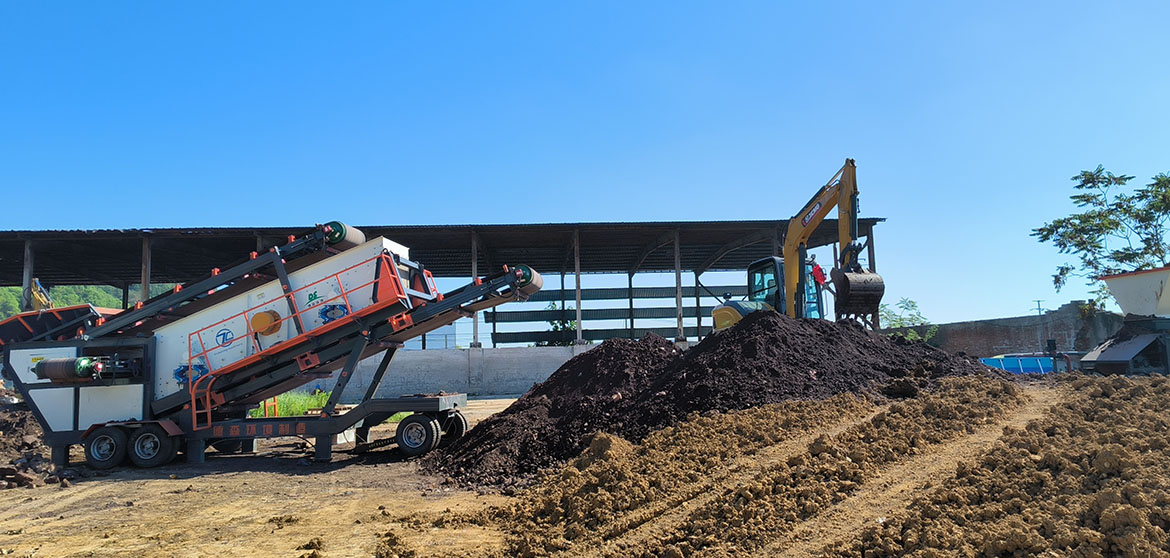
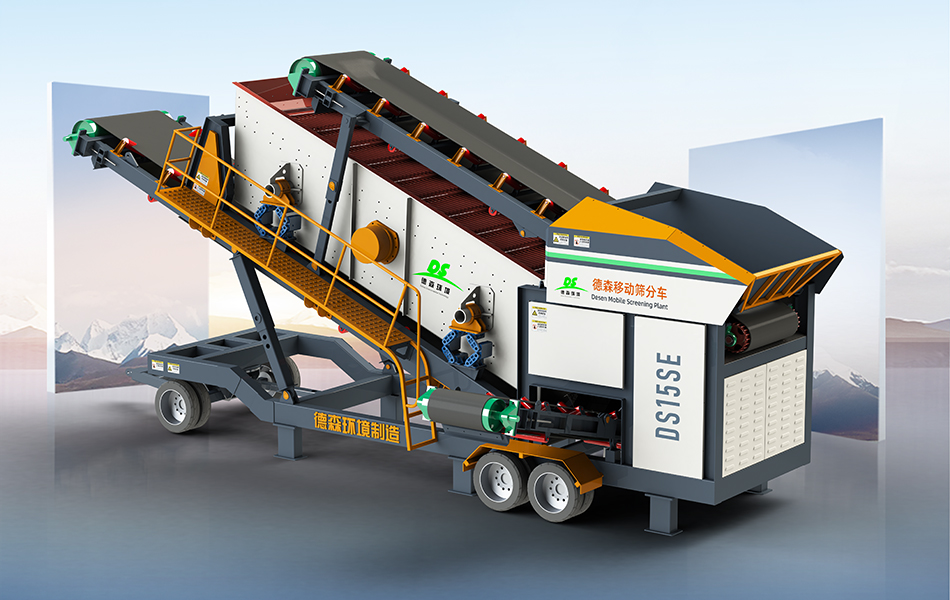
Deck count follows the number of cuts, and apertures should run from coarse on top to fine below so each deck receives feed it can handle. A two-deck machine covers a single cut plus a scalp; a multi-deck unit with adjustable apertures, such as the DS15SE, lets cut points be re-set between projects without changing the plant. Confirm the rest of the envelope at the same time: a 30–150 t/h capacity band, 28.5 kW installed power and an operating weight near 15.2 tonnes are typical of this class and keep transport permits within normal limits.
Keeping the deck open when the feed is wet
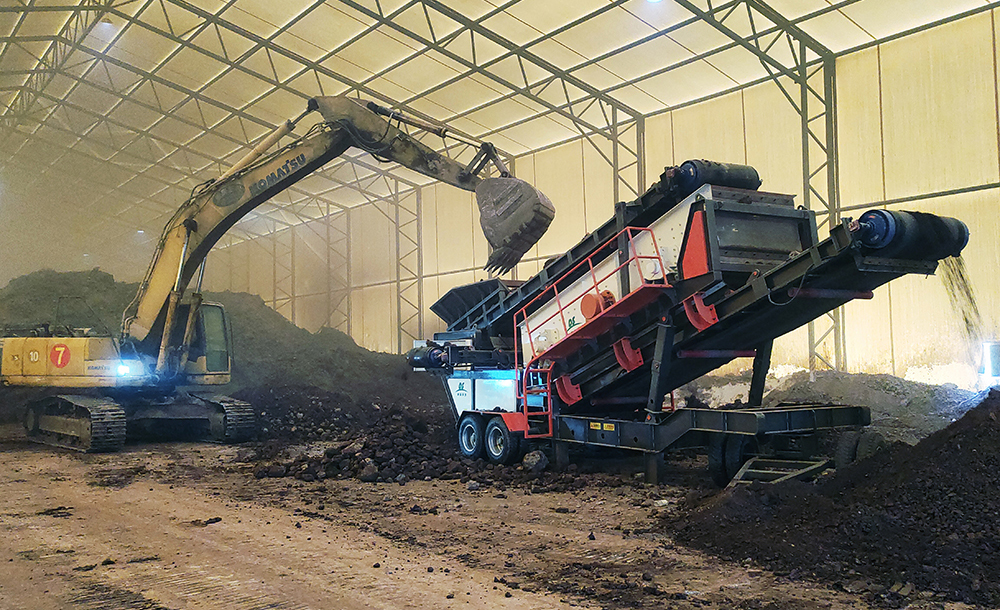
Blinding is damp fines smearing over the openings; pegging is near-size or elongated particles wedging in them. Both cut open area, and both are usually blamed on the machine when the cause is feed condition. Practical responses: drain feed in a stockpile before it reaches the hopper, add spray bars that wash the deck rather than the material, move the affected deck to harp wire, and set feed rate so bed depth stays thin.
Wear Planning and the Inquiry Specification
Planning wear parts before the first campaign
Abrasive gravel consumes mild steel mesh quickly, and a deck that fails mid-campaign stops the whole line. Two habits prevent that: log running hours against each deck so replacement is planned rather than reactive, and hold one spare panel set for the deck that wears fastest. Specify the tensioning method at order stage, side-tension or crown bar; changing it later means changing the deck frame.
What to put in the specification
Most deck disputes trace back to a specification that named a machine but not a cut. The list below is specific enough to compare quotations.
- Aperture in millimetres for every deck, with expected percentage passing each cut
- Media type per deck and the reason for it: accuracy, impact resistance or anti-blinding
- Whether spray bars and a water connection are included, and at what flow rate
- Deck access for panel changeout, including walkways and lifting points
- One spare panel set quoted with the plant
- Expected wear life in hours for the dominant feed
Desen Environmental builds trailer-mounted and crawler screening plants for soil remediation and bulk material work, and scopes deck configuration against the feed and the end product rather than a catalogue default. Deck options and contaminated soil screening cases are published at materialwashing.com.