Shipyard Soil Washing for Antifouling Paint Contamination: Cleaning Dredged Yard Soil in Europe and Southeast Asia
Shipyard soil washing for antifouling paint contamination: remove copper, zinc and TBT from slipway and dock soil with modular washing plant, cut disposal volume.
Shipyard Soil Washing for Antifouling Paint Contamination: Cleaning Dredged Yard Soil in Europe and Southeast Asia
Shipyards that have spent decades scraping, blasting and repainting hulls rarely have clean ground. Antifouling paint chips, blasting debris and spent abrasives end up mixed into the soil beneath slipways, dry docks and lay-down yards, leaving copper, zinc and legacy organotin compounds at concentrations that block redevelopment or disposal. Soil washing handles this mixture well, because most of the contamination travels with specific particle fractions rather than being spread evenly through the soil. This article looks at what antifouling paint contamination means for a project, how a washing line is configured for it, and what European and Southeast Asian shipyard operators should plan for.
Why Antifouling Paint Makes Shipyard Soil a Special Case
Antifouling coatings are formulated to poison anything that tries to grow on a hull. Older systems relied on tributyltin (TBT); modern formulations lean heavily on copper oxide. When a hull is water-jetted or grit-blasted, those metals fall to the ground as flakes, dust and spent abrasive. At yards operating since the 1970s or 1980s, TBT can still be present at levels that trigger regulatory action.
What the contamination profile looks like
Testing at former shipyard sites typically shows a distinctive pattern: contamination concentrated in identifiable waste streams. Paint flakes and contaminated abrasive carry the highest metal loadings. Dust and silt around blasting areas come next, while deeper native sand or gravel is often comparatively clean. This fraction-bound behavior matters, because it means a large share of the volume can be separated physically rather than treated chemically - which is exactly what soil washing is designed to do.
Where the paint flakes concentrate
In practice, the pollution follows the coarse waste. Paint chips are durable, flat particles that survive weathering and sit in the gravel and sand fractions. The fine sludge left after washing carries dissolved metals and fine paint dust, and becomes the smaller, high-cost disposal stream. A well-designed washing line therefore aims to pull paint flakes out early, scrub the remaining sand clean, and concentrate residual metals into as small a cake as possible.
How a Washing Line Handles Antifouling Paint Waste
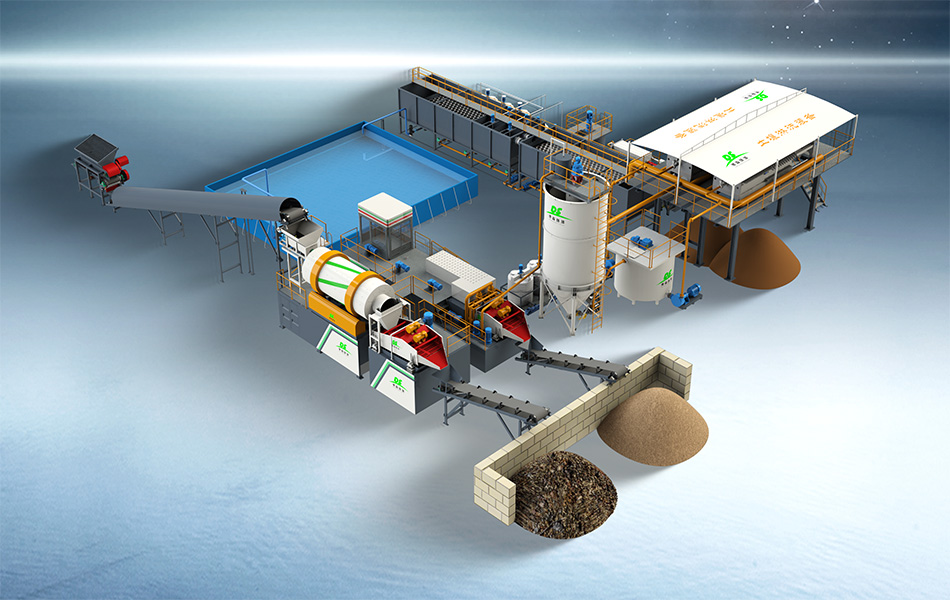
Desen Environmental builds modular and mobile washing plant configurations for this kind of contaminated industrial ground. The flowsheet for a shipyard yard resembles a conventional heavy metal washing line, with a few adjustments for the paint flake fraction.
Pre-screening and paint flake removal
The first stage is a scalping screen or trommel that removes oversize debris - hull plates, concrete, cable, drums - and separates the coarse fraction where paint chips dominate. Because paint flakes are flat and buoyant, density separation and careful screen cut points recover a visibly cleaner coarse product. Removing this material up front also protects the attrition scrubbers downstream.
Attrition scrubbing and washing stages
The sand fraction then passes through attrition scrubbing, where high-energy mixing breaks the paint and oxide films off the particle surfaces. A surfactant or mild chemical dosing package can be added to release copper and zinc from the grains. Multi-stage counter-current washing keeps fresh water at the final stage so cleaned sand exits with low residual metal values, while the wash water recirculates and dissolved metals report to the fines circuit.
Handling the fines and residuals
Everything the washing line strips off the sand ends up in the fine sludge. Hydrocyclones and a filter press dewater that stream into a compact cake:
- Cleaned sand and gravel, suitable for reuse on site or for acceptance testing as a secondary aggregate
- Sorted coarse paint flake waste, drummed or skip-loaded for hazardous disposal
- Dewatered filter cake carrying the majority of the metal mass
- Process water recycled back into the washing line, with a monitored discharge or evaporation route for surplus
On many projects this volume reduction is the commercial argument: a yard with 8,000 tonnes of contaminated soil may ship only a few hundred tonnes of cake and flakes to landfill, with the rest staying on site.

Deploying a Mobile Plant at a Working Shipyard
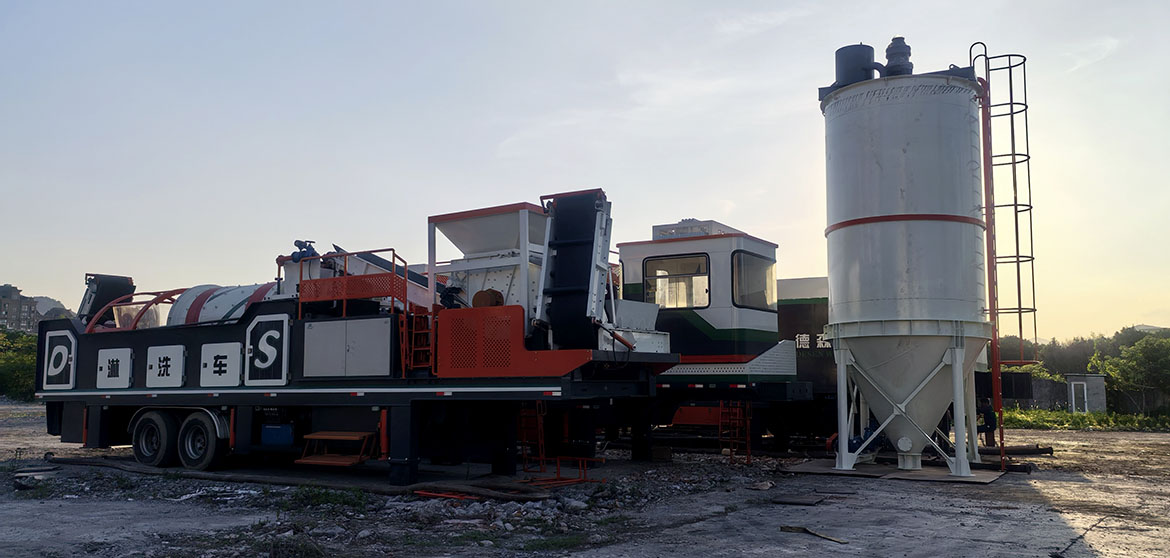
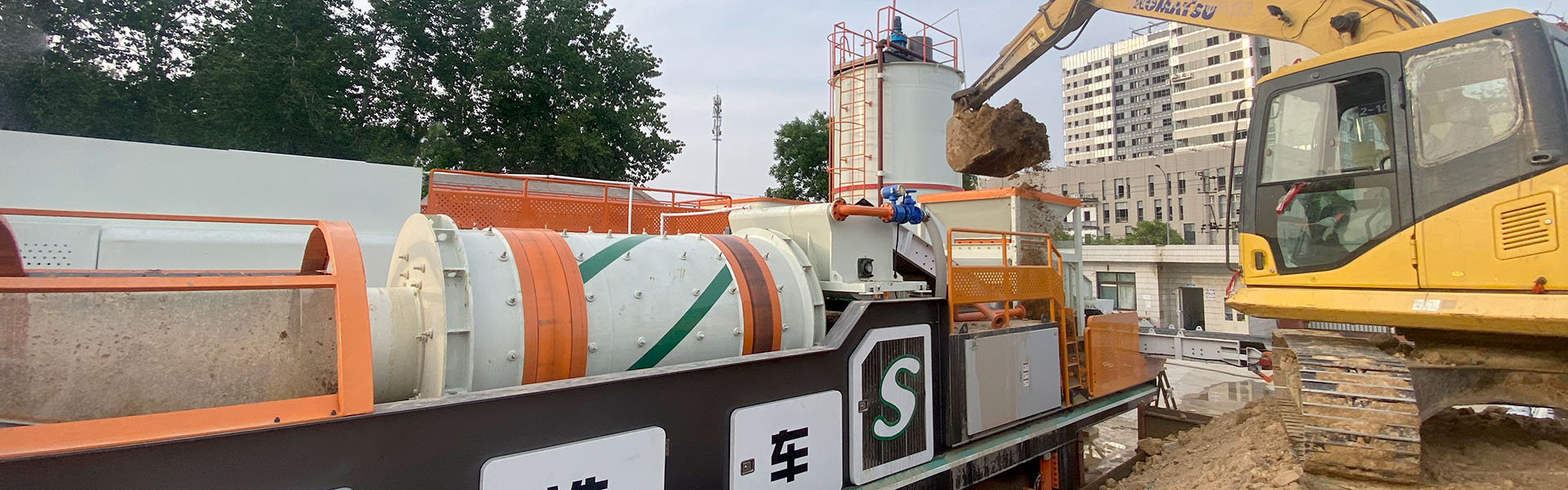
Shipyards are congested places, and many cleanup projects run alongside live repair work. A trailer-mounted mobile washing setup feeds directly from the excavation face with an excavator, needs only a levelled pad and a water supply, and can be positioned in a corner of the yard. Where several dock basins or lay-down areas are affected in different phases, the same plant moves between them instead of three fixed installations being built.
For port authorities and yard owners in Europe and Southeast Asia, the compliance questions usually arrive before the technical ones: where the dewatered cake can legally go, whether washed sand needs acceptance testing before reuse, and how wash water discharge is permitted. A supplier who has run this flowsheet on industrial sites in both regions can help prepare the sampling plan, mass balance and disposal dossier that regulators ask for.
Antifouling paint contamination is stubborn, but it is also highly fraction-specific - which makes it a strong match for soil washing. If your shipyard or harbor redevelopment project is facing copper, zinc or TBT limits in the ground, Desen Environmental can review your soil data, size a modular or mobile washing plant for the volume and schedule, and walk through the treatment and disposal route before you commit. Contact the Desen team with your project details for a feasibility assessment.