E-Waste Recycling Site Soil Washing: Cleaning Up Metal-Loaded Dismantling Yards
E-waste dismantling yards leave soil loaded with lead, copper and brominated compounds. See how soil washing equipment cuts contaminated volume on site.
E-Waste Recycling Site Soil Washing: Cleaning Up Metal-Loaded Dismantling Yards
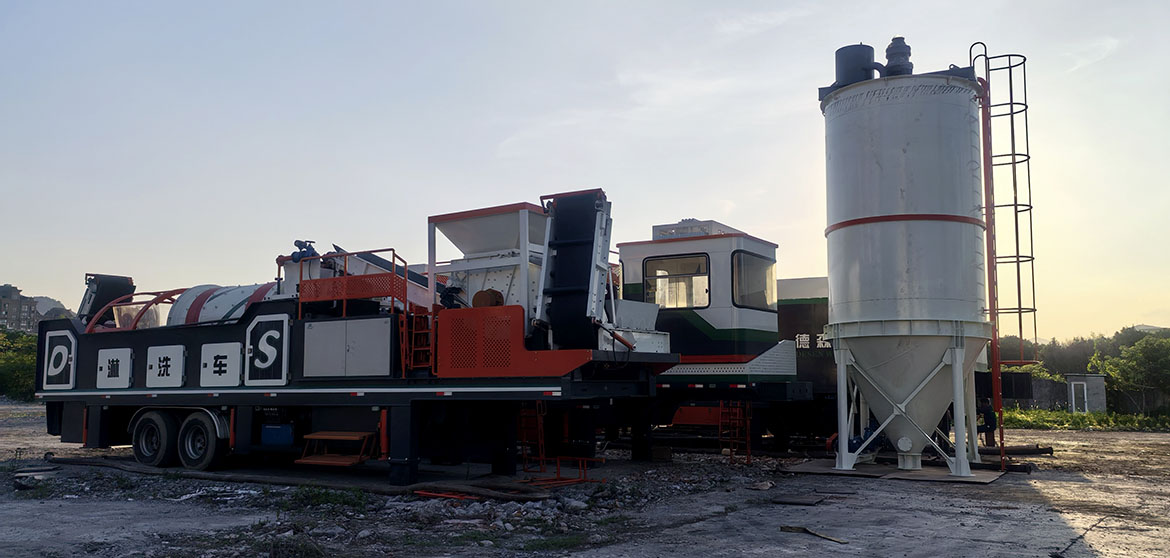
E-waste dismantling yards, where cables, circuit boards, batteries and appliances are broken down and sorted for metal, leave behind some of the most heterogeneous contamination in the remediation business. Copper and aluminium wire fragments sit on the surface, solder and cathode ray tube glass push lead and tin into the fines, and soot from open burning carries brominated flame retardants and antimony into the topsoil. Clearing the whole yard to landfill is rarely affordable, because the volume is large while the contamination sits in a small part of the mass. Soil washing attacks exactly that imbalance: it separates clean coarse material for reuse and compresses the polluted fraction into a small, dewaterable residue. Desen Environmental builds modular and mobile soil washing equipment for metal-loaded soils of this kind, and the arrangement below reflects how such lines are set up on dismantling and recycling sites.
What Makes Soil From an E-Waste Yard Different
Unlike a single-industry spill, a dismantling yard accumulates whatever the operators processed and how they processed it. Burning plots, acid stripping pads and shredding areas each leave a different signature, so the cleanup plan has to work across several contaminant forms at once rather than against one defined plume.
Contaminants arrive in three size classes
- Coarse metal fragments such as wire, heatsinks and casings sit on the surface or just below it, are recovered by screening, and often retain scrap value.
- Lead, tin and zinc released from solder, tube glass and coatings concentrate in the sand and silt fractions and form the main washing target.
- Soot-like fines loaded with brominated flame retardants and antimony cling to clay and dust particles and travel into the wash water circuit unless they are settled and dewatered.
Why size separation decides the economics
The value of washing on these sites comes from the split between coarse and fine. Metals that arrived as discrete particles wash free of sand and gravel with comparatively little effort, while the mass that actually fails acceptance criteria is dominated by fines. On sandy or gravelly yards the coarse fraction commonly accounts for most of the excavated tonnage, so cutting disposal down to the fines alone changes the budget by an order of magnitude. Clay-rich or heavily burned zones reverse that picture, which is why the split has to be measured before equipment is booked rather than assumed.
How a Washing Line Is Arranged on a Dismantling Yard
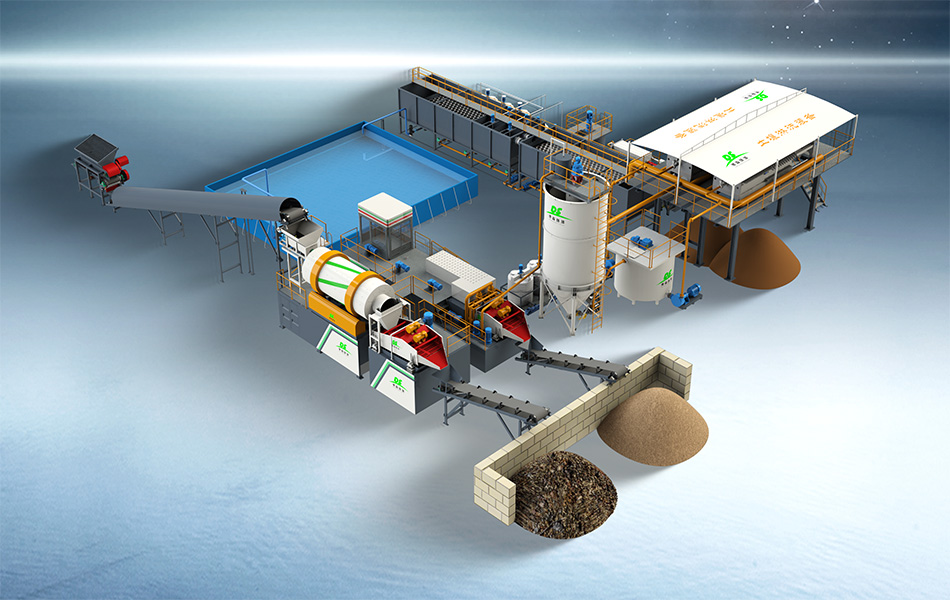
A modular line for this feed follows the same sequence used on metal-contaminated industrial soil, with two additions driven by the yard itself: aggressive pre-screening, and a water circuit sized for soot-loaded fines.
Pre-screening removes the recyclable oversize
Feed from the excavation goes across a mobile screen before any water is involved. This step pulls out wire bundles, plastics, glass and unburnt scrap that would otherwise jam conveyors and pumps, and it recovers material that still has resale value to the site operator. The passing fraction, typically below the cut point agreed with the regulator, moves on to the wet process.
Attrition scrubbing releases metals from fines
A rotary scrubber breaks down agglomerated clay and rinses attached dust, and attrition cells add the shear needed to strip soot coatings from sand grains. Washing stages then run counter to the solids flow, so recirculated water carries the released contaminants back toward the fine end of the line while the cleanest rinse meets the cleanest material. Where the feed contains free acid residues, pH is monitored and neutralised in the circuit before discharge.
Dewatering turns the residue into transportable cake
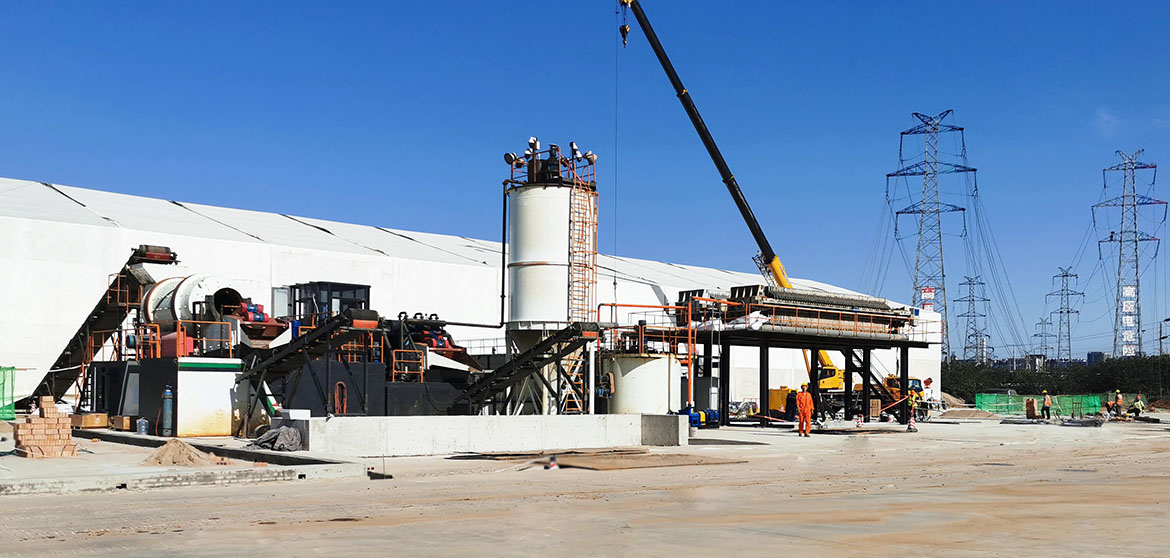
Hydrocyclones and a thickener separate the fine fraction from process water, and the underflow goes to a filter press. The press discharges a filter cake at a consistency that can be skipped, weighed and manifested, which is what the disposal contractor needs. Filtrate and thickener overflow return to the head of the line, so the site needs a modest fresh water top-up rather than a continuous supply.
Planning Checks Before You Mobilize a Washing Plant
Characterize the feed at bench scale
A sieved and washed sample answers the questions that size the plant: the mass split between coarse and fine fractions, the metal removal achieved per fraction at a given contact time and reagent dose, and how much soot the water circuit will have to settle. The bench result sets the cut point, the expected cake tonnage and the fresh water rate, and it separates yards where washing is straightforward from zones where burning left fines that will only go to disposal.
Plan where the residue goes
Filter cake from an e-waste yard is usually classified as hazardous waste, so acceptance criteria, transport documents and the receiving facility should be confirmed before mobilization, not after the first press cycle. Where local facilities are limited, stabilisation of the cake on site is worth discussing with the regulator early.
What to put in the inquiry
Give the supplier the excavation volume, the feed characterisation by fraction, the target acceptance limits and the disposal route for cake, plus the water and power available on site. With those inputs the line can be configured to match the yard instead of quoting a standard package. Desen Environmental supplies modular and mobile soil washing equipment with the screening, scrubbing, dewatering and water recirculation scoped as one circuit, and documents plant arrangements and remediation cases at materialwashing.com.