Mobile Washing Plant Demobilization and Site Reinstatement: Closing Out a Washing Campaign Cleanly
How to demobilize a mobile washing plant without leaving a problem behind: wash-down, water circuit drainage, residual clearance and the reinstatement checks that close a site.
Mobile Washing Plant Demobilization and Site Reinstatement: Closing Out a Washing Campaign Cleanly
Every mobile washing campaign ends the same way: the plant stops, the last bucket goes through, and a contractor is left with ground that has to be handed back in a condition the client and the regulator will accept. Demobilization is usually treated as an afterthought, a few days of loading and sweeping booked in at the end of the programme. In practice it decides whether retention money is released on schedule, and on urban sites it decides whether the plant leaves at all. Desen Environmental supplies trailer-mounted and modular washing equipment to remediation contractors in Europe, the Middle East, Southeast Asia and North America, and the units that come back in good order are almost always the ones whose exit was planned at the start.
Plan the Exit While the Plant Is Still Being Set Up
Reinstatement obligations are written into the permit and the contract long before anyone thinks about transport. The practical way to meet them is to read those clauses during mobilization, when layout decisions are still open and a temporary hardstanding can be positioned where it will be easy to remove.
What the scope actually contains
Demobilization covers more than loading. It includes washing the product path until no contaminated material remains inside the plant, draining and disposing of the water held in tanks, sumps and lines, clearing residual filter cake and spent reagent, removing the hardstanding or restoring it, and proving with samples that the ground is no worse than when the campaign began. Each of those items has a cost and a duration, and each one has a habit of appearing late in the programme if it was never priced.
Three durations to fix in the programme
Contractors who close out cleanly tend to schedule three separate windows: two to four days for internal wash-down, one to three days for water and residual removal, and two to five days for dismantling and reinstatement, longer where the plant sits on a prepared foundation. Compressing them into a single weekend is where most disputes start, because wash-down water cannot be discharged until it has been tested and the test takes time.
The Sequence That Avoids Rework
The order of operations matters more than the speed of any single step. Material washed out of the plant at the end of a campaign still has to go somewhere legal, and the water used to wash it out is itself a waste stream.
Wash down and purge the product path
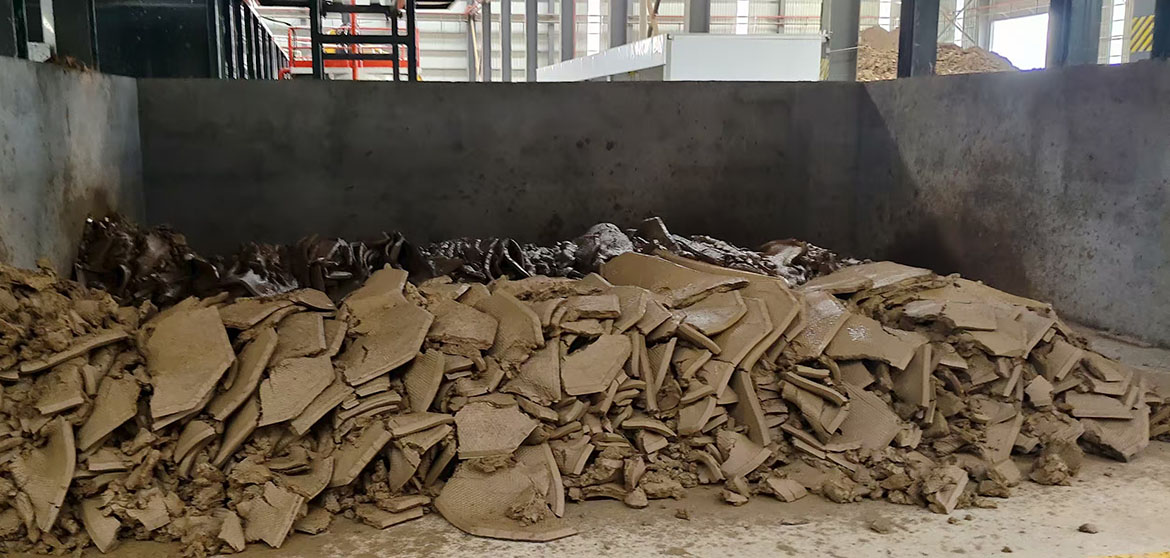
Run the line empty for a short period, then flush the scrubber, screen and classifiers with clean water while the water treatment section is still operational. Purging before the filter press is disconnected means the flush water is treated and the cake it produces goes into the same consignment as the campaign residue rather than becoming a separate problem.
Drain and account for the water circuit
Tanks, sumps, pipe runs and the low points of the slurry loop all hold water after the pumps stop. That volume has to be measured, sampled and either transferred to a treatment unit, taken away as liquid waste, or discharged under the permit conditions. Recording the volume against the water balance is worthwhile: it is the evidence that the closed loop was closed.
- Wash the product path with the water treatment section still running.
- Sample and measure every tank, sump and line before draining.
- Consign filter cake, spent reagent and flush residue together with a single waste note.
- Photograph bunds, hardstanding and drainage before dismantling starts.
- Record water volumes against the site water balance for the close-out file.
Reinstatement: Ground, Water and Access
Ground condition and compaction
A plant that stood for months leaves compacted ground, oil staining around the engine area and a hardstanding that may or may not be allowed to stay. Where the ground has to be returned to agricultural or landscaping use, decompaction and topsoil replacement usually cost more than the plant removal itself, so the area of temporary works should have been kept to the minimum the layout allowed.
Verification sampling before the last unit leaves
Close-out sampling is far easier while excavators, augers and the plant are still on site. Take the samples from beneath the former plant footprint, the bunded storage area and the fuel point before the last trailer is loaded, and keep the locations on a drawing. If a result comes back above the baseline, the equipment needed to deal with it is still there instead of being recalled at the contractor's cost.
A clean exit is not a formality at the end of a washing campaign. It is the last chance to demonstrate that the plant reduced the problem rather than relocating it, and the paperwork produced in those final weeks is what supports the handover certificate. Desen builds mobile and modular washing equipment with wash-down, drainage and dismantling in mind, and can advise on a close-out sequence before the campaign begins at materialwashing.com.