Mobile Soil Washing Unit for Hotspot Soil Treatment: Cleaning Small, Scattered Volumes Without a Fixed Plant
A mobile soil washing unit cleans small, scattered hotspot volumes on site. Where it beats haulage, how to set up on a tight site, and what to confirm before mobilizing.
Mobile Soil Washing Unit for Hotspot Soil Treatment: Cleaning Small, Scattered Volumes Without a Fixed Plant
Most contaminated land projects are not one large, uniform site. They are a main remediation area surrounded by hotspots: a drip zone beside a former tank farm, a buried drum cluster, a spill point along a utility corridor, or a corner of a depot where decades of handling left the soil far dirtier than the rest of the site. Digging those pockets out and hauling them to landfill is expensive per tonne, yet a fixed washing plant is hard to justify for a few thousand tonnes. This is where a mobile soil washing unit fits. Desen Environmental builds trailer-mounted and modular washing equipment for remediation contractors across Europe, the Middle East, Southeast Asia and North America, and small-volume hotspot work is one of the most common jobs those units do.
When a Hotspot Does Not Justify a Fixed Plant
The decision starts with volume and concentration, not with technology preference.
The economics of small, dirty volumes
A hotspot is typically a few hundred to a few thousand tonnes, but at high contaminant concentrations its disposal cost per tonne is several times that of the surrounding soil. Excavate-and-haul converts every tonne into landfill fees and transport, and the bill grows with distance to a facility that will accept the material. A mobile washing unit shifts the economics: the equipment arrives for the campaign, reduces the mass leaving site by separating clean coarse fractions, and leaves when the pocket is dug out. For volumes below what would keep a fixed plant busy, the mobilization cost is still lower than the capital and permitting burden of building anything permanent.
Hotspot soil is rarely easy soil
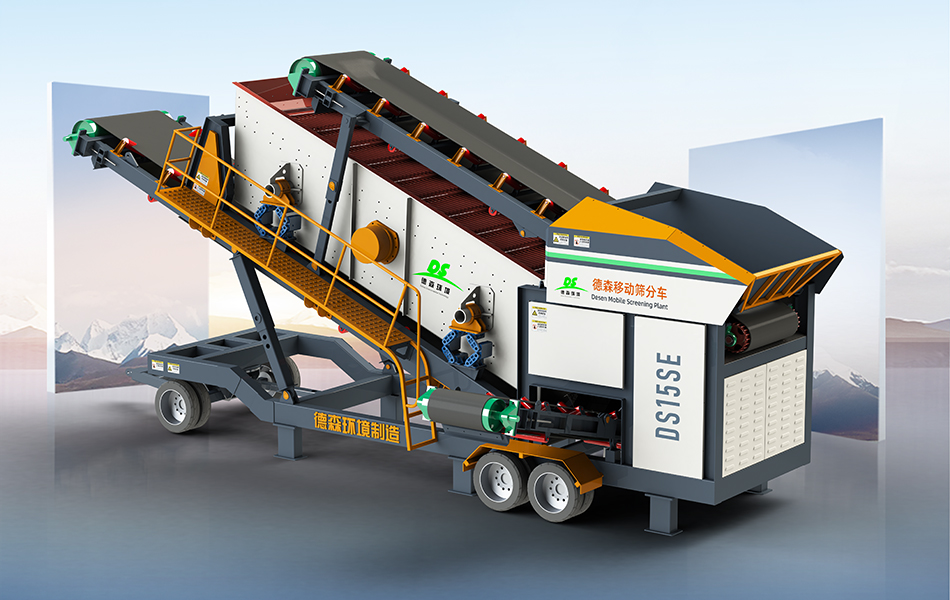
It is often the mixed, difficult fraction of the site: high clay content where liquids pooled, construction debris around buried structures, tar lumps or stained gravels near former handling areas. The washing approach has to expect this. Coarse screening ahead of the drum removes rubble and protects the washing stage, attrition scrubbing releases contaminants bound to clay coatings, and the fines fraction - where most contamination concentrates - is dewatered and managed separately. Confirming this with a bench test on hotspot samples before mobilizing avoids surprises after the unit arrives.
Setting Up a Mobile Unit on a Small Site
Hotspot locations are usually cramped: a depot corner between live operations, a plot bordered by roads or a watercourse, a yard that must keep working around the excavation.
Footprint, access and utilities
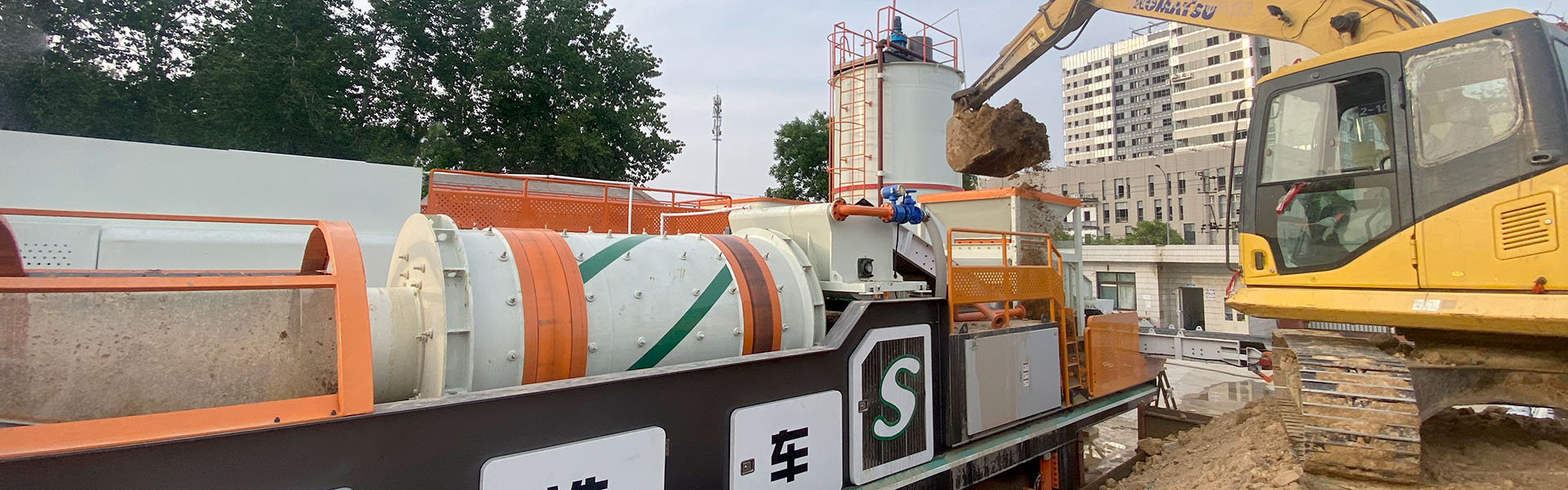
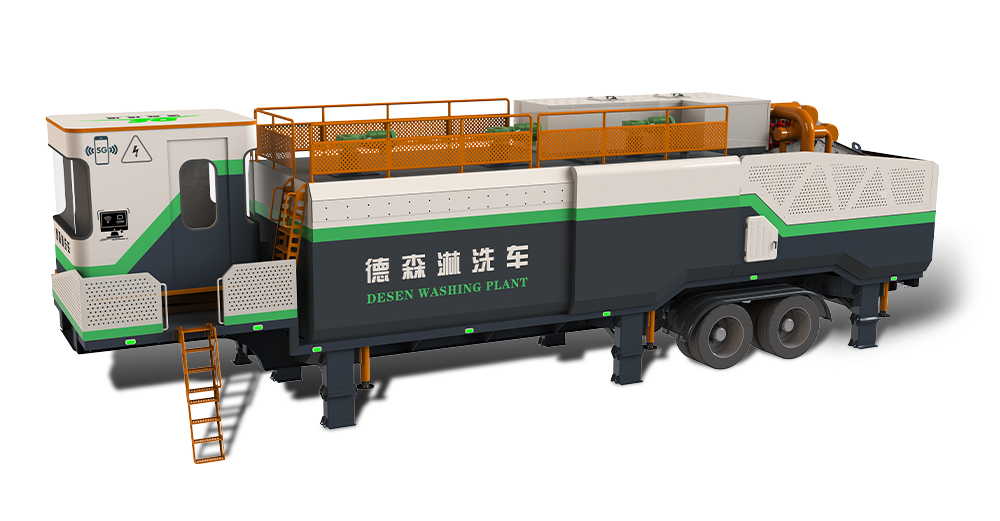
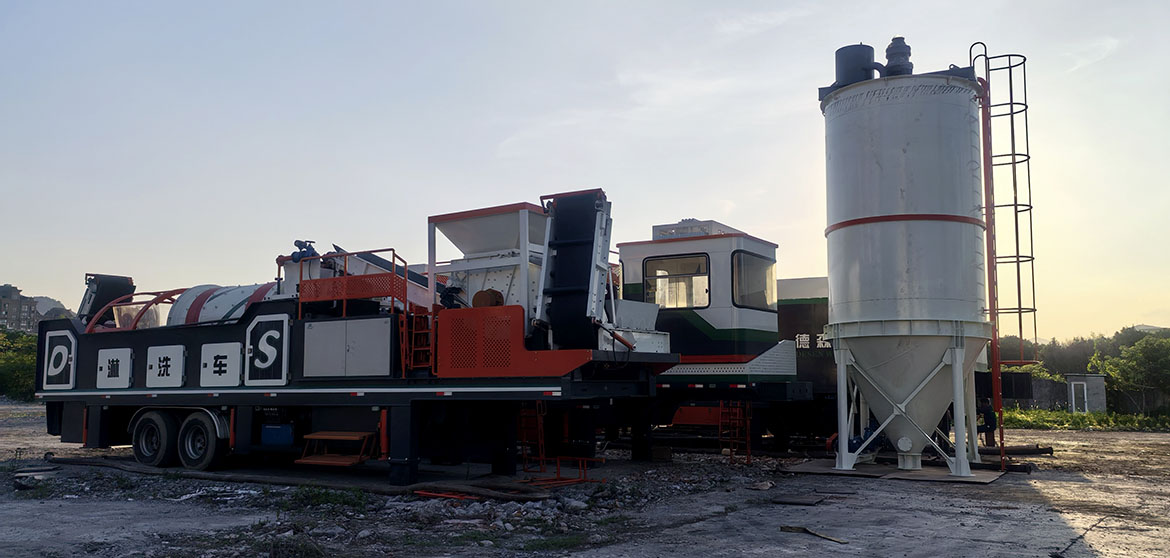
A trailer-mounted washing unit stands on its own hydraulic support legs, so no foundations are poured; a compacted, levelled pad with drainage is enough. Single-unit access widths, a feed area for one excavator and a small stockpile zone for washed coarse material can often be fitted into the same corner that held the stockpile before. Power comes from a generator or a site supply, and water - the largest utility demand - is arranged as a closed loop so a small site does not need a large fresh water draw.
Water and fines handling in a tight layout
On a compact hotspot job, the water and fines route decides whether the layout works. A practical setup usually includes:
- A closed process water loop with one or two compact settling tanks or a small thickener, sized for the unit's throughput rather than a full plant's.
- A filter press or dewatering skip for wash fines, so the residual fraction leaves site as a solid, permitted load instead of liquid slurry.
- Silt fencing and a bunded wash area, since hotspot soil is often the fraction regulators watch most closely.
- A covered or lined stockpile pad for washed aggregate, keeping clean output visually and legally separate from untreated soil.
Where the hotspot sits beside a river or inside a live depot, as in many urban projects, this closed arrangement is what makes the whole approach acceptable to the regulator and to neighbouring operations.
Running the Numbers Before You Mobilize
A mobile unit only beats haulage when the campaign is planned honestly.
Campaign length and relocation logic
Mobilization - transport, assembly, water setup, commissioning - is a fixed cost against the tonnage treated. On a 3,000-tonne hotspot, that fixed cost is significant; on 8,000 tonnes spread over several nearby pockets, it amortizes quickly. Contractors working across a region often plan a mobile unit around a sequence of hotspots, moving it between depots or substations so each move serves months of work, not a single dig. If the pockets are too small and far apart, renting capacity for each campaign can beat owning; the honest comparison is per campaign, not per year.
What to confirm before the unit ships
Before committing, ask the supplier to confirm throughput on your actual soil, not a generic figure; the washing and fines route for your contaminant; water source and discharge arrangements on your site; and assembly time and crew size for the first mobilization. A unit that arrives with a documented process for your soil starts washing in days rather than weeks.
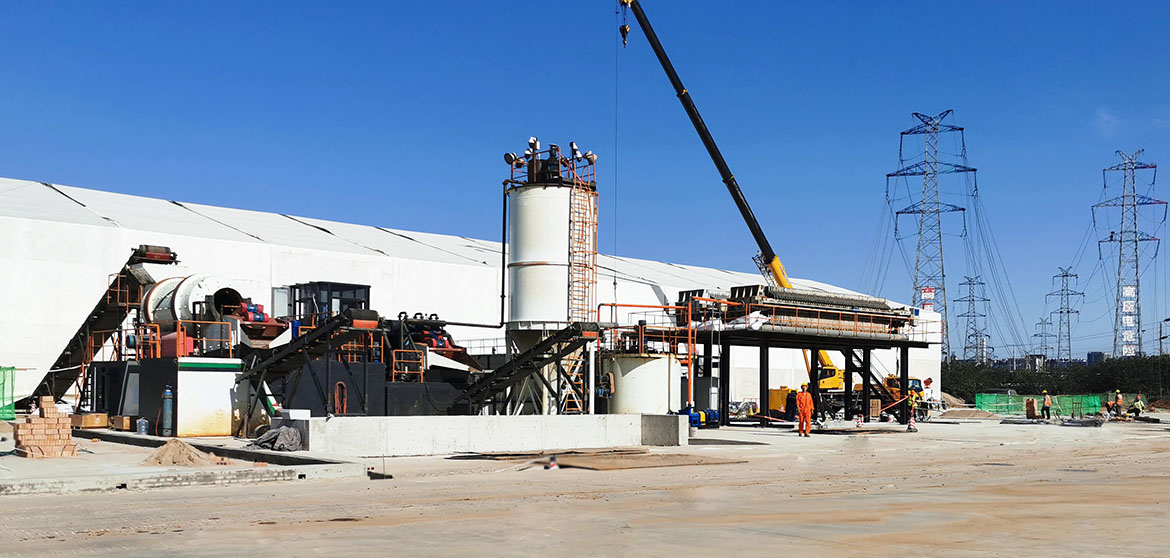
For hotspot volumes that are too small for a fixed plant but too contaminated for straightforward disposal, a mobile soil washing unit turns an isolated pocket into a planned campaign with a defined end. Desen Environmental supplies trailer-mounted and modular washing equipment with closed water loops and dewatering options sized for small sites; specifications are published at materialwashing.com.