Landed Cost of Imported Soil Washing Equipment: Budgeting Beyond the FOB Price
How to build a landed cost estimate for imported soil washing equipment: freight on volume, duty and VAT, port charges, unloading and installation, plus scope items buyers miss.
Landed Cost of Imported Soil Washing Equipment: Budgeting Beyond the FOB Price
A soil washing plant is usually bought on delivered terms even when the contract is signed FOB. The quotation stops at the factory gate, while the project budget has to reach the first tonne of washed soil that passes acceptance. The gap between those two points is where import budgets most often fail, because the invoice value covers only part of what the buyer pays.
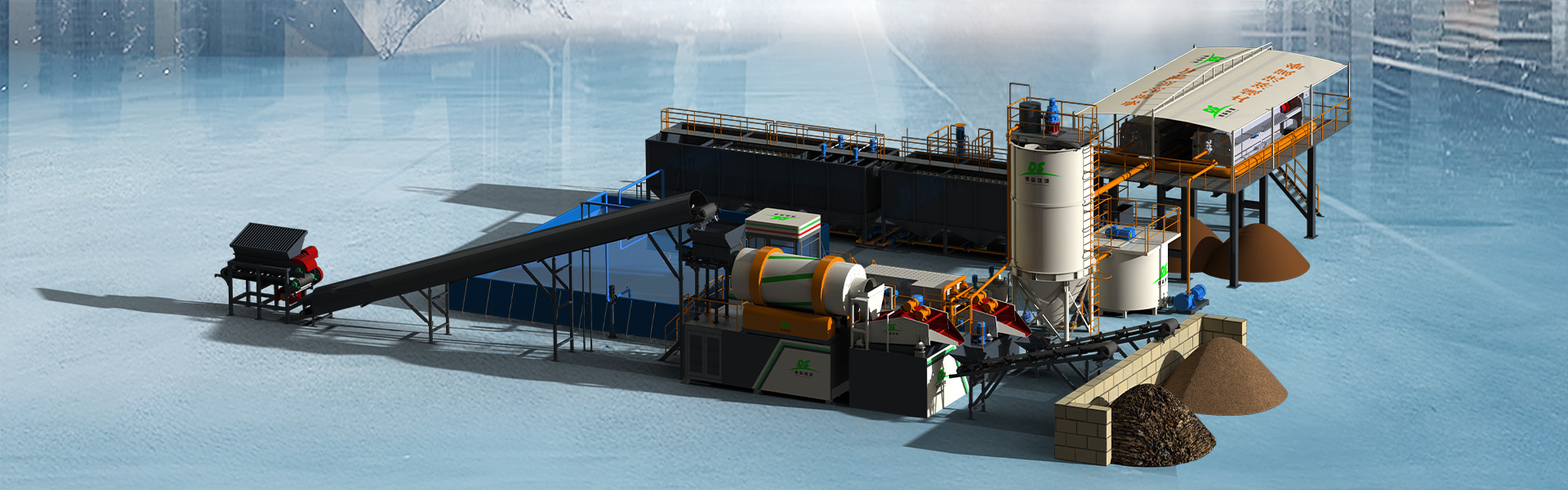
The render above shows why this matters: a line sold as one plant ships as a set of modules, each with its own dimensions and packing volume. On a complete modular line, freight, duty, clearance, unloading and installation commonly add a quarter to a third to the FOB value, and on small inland shipments the proportion can be higher. What follows is a structure for estimating that gap.
What the FOB Price Leaves Out
Freight is charged on volume before value
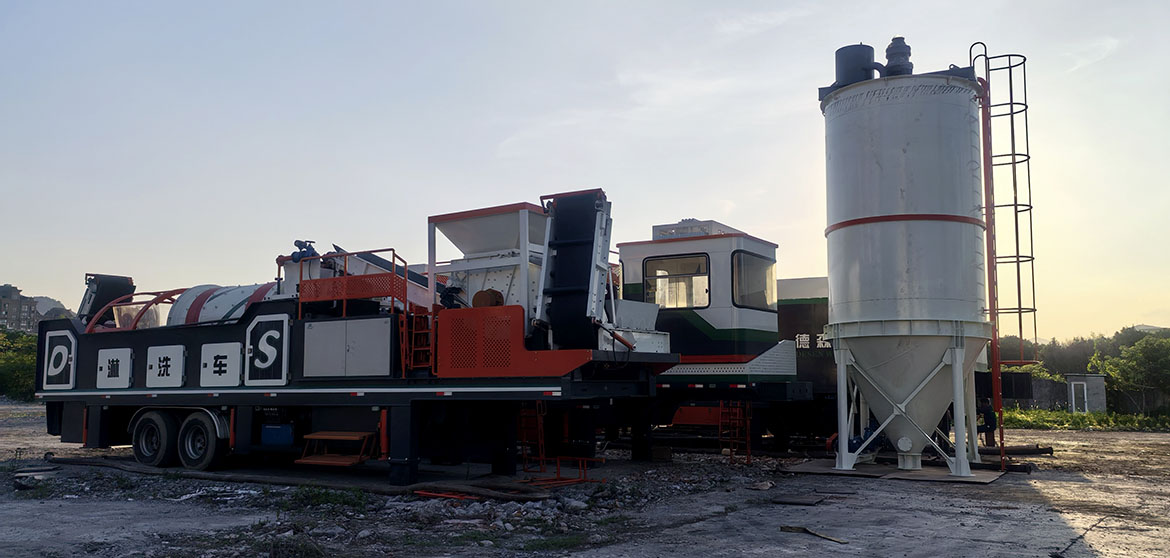
Washing equipment is bulky rather than heavy. A scrubber drum, a thickener tank and a stack of inclined conveyors occupy far more container space than their mass suggests, and carriers price on chargeable weight and volumetric measures. Ask every supplier for a packing schedule listing dimensions, gross weight and lifting points per module before comparing offers. A line quoted in four containers may need six once pipework, walkways and spares are packed, and that difference in freight alone can exceed the difference in equipment price.
Duty, VAT and customs valuation
Tariff classification of a washing line is not uniform across markets. Some customs authorities assess each machine separately, others treat the assembly as a single processing unit, and the rate can differ between the two readings. Value added tax is recoverable in some jurisdictions and a real cost in others. Many countries value imports on a CIF basis, so freight and insurance are dutiable too, pushing effective duty above the headline rate.
Port charges, clearance and inland movement
Terminal handling, agency fees, documentation and inspection are small lines individually and material in total. Inland movement of an oversize module may require permits, escorts and night convoys, and in dense port cities road restrictions can add a day per load. Demurrage is the most expensive item here and the easiest to avoid: it accrues when documents arrive after the cargo.
Unloading, installation and commissioning
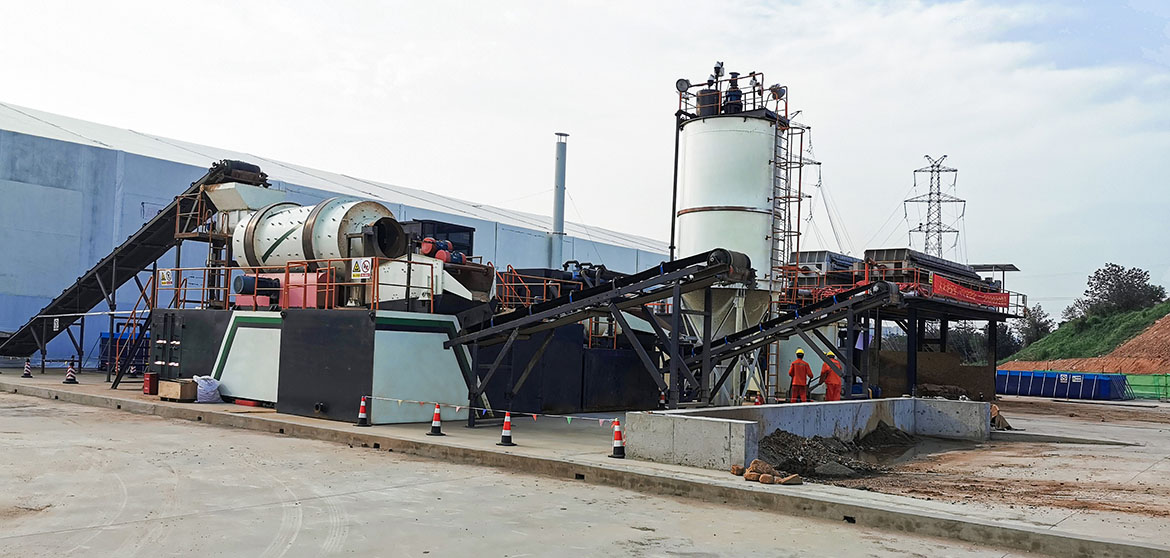
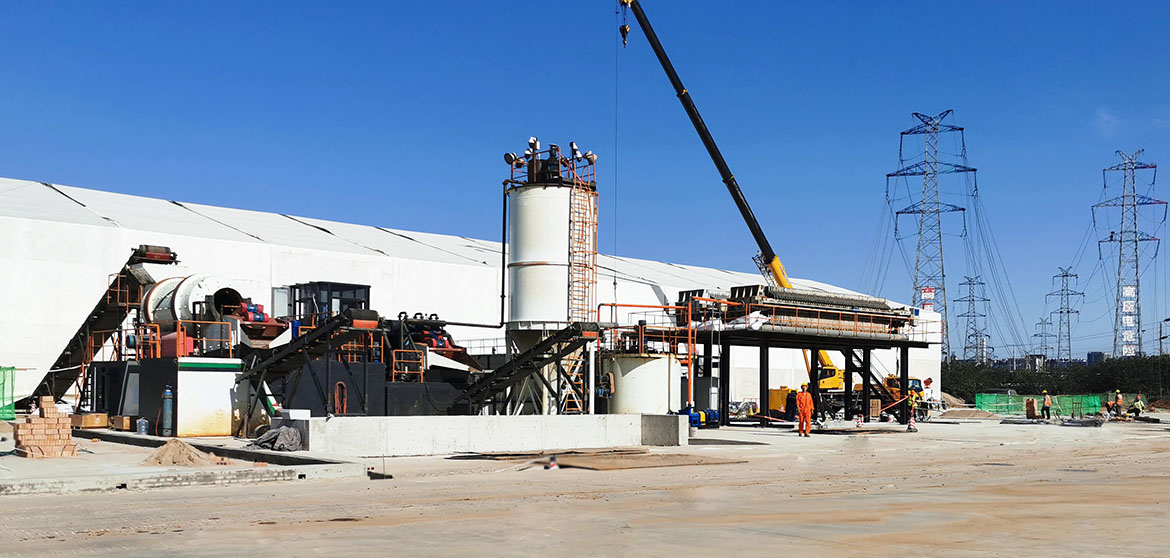
On site the cost moves from paperwork to crane time. Module lifts, concrete pads and containment kerbs, electrical connection, water supply, interconnecting pipework, commissioning labour and specialist technician travel all belong to the landed cost even though none appear on the shipping invoice. The line above sits on a prepared pad with kerbed containment and a feed conveyor bridge; that preparation is site work, not equipment.
- Module-level packing list with dimensions, gross weight and lift points
- Freight quotation to the named discharge port, plus inland leg to site
- Tariff heading and duty rate confirmed in writing by a local broker
- Recoverability of value added tax and the cash-flow timing of the refund
- Crane capacity, pad dimensions and containment requirements at site
- Installation supervision, commissioning duration and technician travel
- First fill of wear parts, screen media and reagent consumables
Building the Estimate in a Fixed Structure
Three habits keep two offers comparable. Without them, a lower headline price frequently produces a higher project cost.
Price the installation scope separately
An offer that includes supervision but excludes civil works is not cheaper than one that includes both; it moves cost into another column. List foundations, drainage, power supply and water connection as separate budget lines, then add the supplier scope on top. That keeps the comparison visible and gives the site team a number to build against.
Model currency and payment terms
An advance payment, a shipment payment and a retention clause create different financing costs depending on the currency and the length of the schedule. Where equipment is invoiced in one currency and the project is paid in another, exchange movement between order and delivery is a real budget item.
Hold a contingency that matches the route
A single container to a hub port needs little contingency. A multi-module shipment with an inland leg through restricted roads needs more, because every extra handling step is an opportunity for delay charges. Setting the allowance by route rather than by habit keeps the estimate honest.
Reducing Landed Cost Without Cutting Plant Scope
Ship denser, not smaller
Frames that nest, tanks that ship inside larger tanks where diameter allows, and conveyors that fold reduce chargeable volume without removing any process function. Ask whether the module design has been reviewed for shipping density, and treat the answer as part of the technical evaluation.
Buy wear parts with the first shipment
Screen media, drum liners, pump seals and dosing spares cost little to add to a container already paid for. Ordered later as air freight, the same items can cost several times as much and arrive after the failure that needed them.
Sequence delivery against civil works
Modules that arrive before the pad is ready sit on the ground, exposed, occupying crane time twice. Aligning shipment with foundation completion removes storage, re-handling and weather risk in one decision.
The test of a landed cost estimate is simple: every line should trace to a document, a quotation or a stated assumption. That same file becomes the baseline against which installation is measured.