Mobile Washing Plant Monsoon Season Operation: Managing Rain, Runoff and the Water Balance
How to run a mobile soil washing plant through monsoon season in Southeast Asia: rain inputs, site drainage and bunding, covered screening, and keeping the water circuit in balance.
Mobile Washing Plant Monsoon Season Operation: Managing Rain, Runoff and the Water Balance
Across Southeast Asia, a monsoon season can put half a metre of rain on a remediation site in a single month. For a mobile soil washing plant, that rain is not just a comfort problem — it changes the soil feed, the runoff and the water balance of the whole process. Contractors who plan for the wet season keep washing through it; those who treat it as ordinary weather usually stop and drain the site instead. This guide sets out the controls that keep a mobile line productive through the rains.
What the Monsoon Changes on a Washing Site
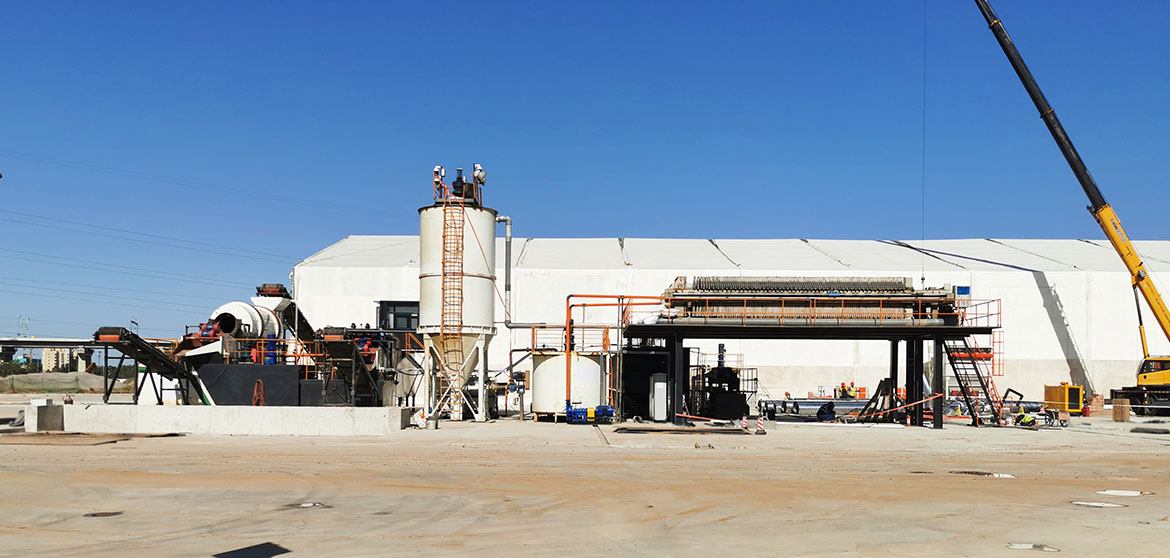
The core issue is water in the wrong places. A washing plant adds water to soil in controlled amounts, inside tanks and pipes it owns. Monsoon rain adds water everywhere at once: onto stockpiles, into the feed hopper and — where drainage is poor — into the settlement ponds the process depends on. Each stream has to be managed deliberately.
Rain Is a Fourth Input Stream
In dry-season planning, a washing line balances three streams: soil, process water and reagents. During the monsoon there is a fourth. Rain falling onto open tanks and ponds dilutes the wash water and shifts the slurry density that cyclones and pumps were set up for. Runoff crossing contaminated ground picks up fines and carries them toward the lowest point of the site — often the clean water pond. Treat rainfall as a measurable input: know the catchment draining toward the plant, and decide where the storm volume goes — into the wash circuit as make-up water, or to a storm pond that bypasses the process.
The Pad, the Slopes and the Flow Paths
Where the equipment stands matters more than how much rain falls. A mobile washing plant on a graded, hardened pad with perimeter drains behaves completely differently from the same plant on levelled ground with no fall at all. Walk the site after the first heavy shower and watch where water travels. Berm the upslope side, grade the pad toward a collection point, and keep the route between the ponds and the storm overflow clear. Ten hours of drainage work before the rains routinely saves weeks of downtime in the middle of them.
Controls That Keep a Mobile Line Running in the Wet Season
Drainage and Bunding First
Water management comes before any other monsoon measure. Cut perimeter drains around the plant pad, the ponds and the treated-soil stockpiles, and give each system its own outlet so a surge in one cannot back up into the other. Bund reagent storage and the fuel point, because diluted chemicals on the ground are a compliance problem as well as a process one. Check pond freeboard weekly: a nearly full pond will overflow its bund, and that overflow will not be clean water.
Cover the Sensitive Stages
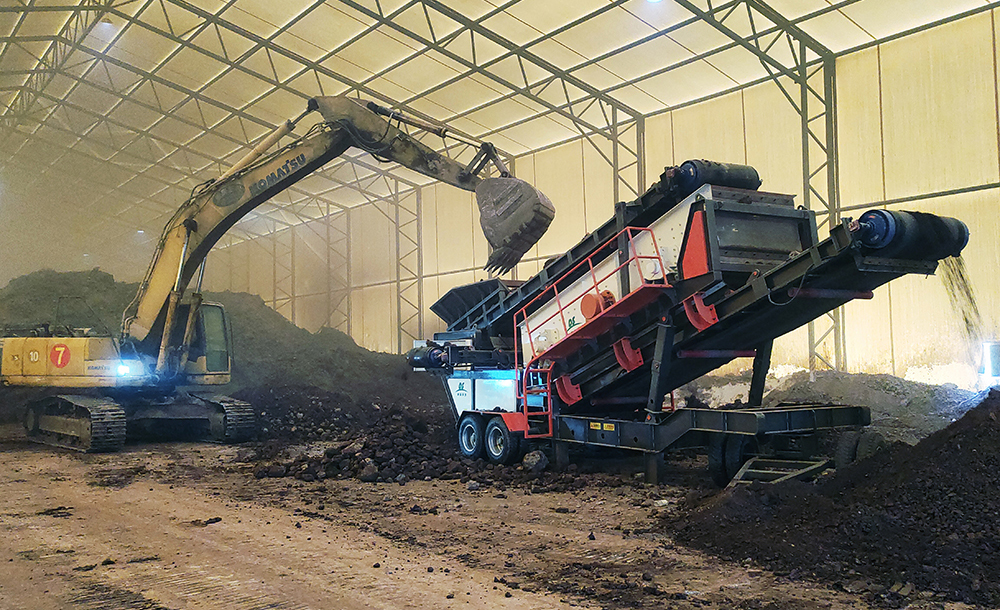
Not every stage tolerates dilution or standing water. Screening saturated feed inside a shed, under a canopy or with the stockpiles sheeted keeps the screen from blinding and preserves the feed size the washer was designed for. Untreated contaminated soil should be covered or graded to shed water inward, so the pile does not leach toward the drains, while washed soil awaiting verification stays on a pad accessible for sampling after days of rain. A well-drained working face also stops the excavator dragging pond mud into the hopper instead of soil.
Rebalance the Water Circuit
Inside the plant, monsoon operation is largely a water-circuit exercise. Extra dilution means more volume to clarify, so the settling and thickening stages need closer monitoring and more frequent bleed-off to keep the recycle loop from carrying fines back to the washer. The rain also tops up the ponds for free — wet-season sites often draw far less make-up water than planned. The discipline is in the overflow: storm water that has contacted contaminated soil leaves site only through the treatment train, never over a bund wall. Where the ponds cannot absorb the volume, a dedicated storm pond with its own settlement is the usual answer.
A practical monsoon readiness check covers six points:
- Perimeter drains and pad grading done, the fall verified by a test shower rather than on a drawing.
- Separate outlets for the pad, the ponds and the stockpile areas.
- Settlement pond freeboard checked weekly and before every forecast heavy-rain event.
- Covered or sheeted screening feed and stockpiles, the treated-soil pad still accessible for sampling.
- Reagent and fuel storage bunded, contact water routed to the treatment train.
- A named storm-water route: pond to storm pond to treatment train, never over the top of a bund.
Scheduling the Campaign Around the Rains
For contractors in Southeast Asia, the monsoon is a calendar fact, not a surprise. The strongest programmes either front-load the washing volume into the shoulder months, using the wet season for pond maintenance, screen deck changes and treated-soil verification, or they commit to running through the rains with the measures above. Both routes work; drifting into the season with neither is what fails. When a mobile washing plant is quoted with the wet season taken into account — drainage in the mobilisation programme, covered screening in the layout, storm capacity in the water balance — monsoon months become ordinary production weeks rather than a stand-down. Desen Environmental builds mobile soil washing plants for exactly these conditions, and site-specific water management is part of the delivery scope rather than an afterthought.