Mobile Washing Plant Salt Affected Farmland Soil Washing: Desalinating Salinized Fields On Site
A mobile washing plant can desalinate salt affected farmland soil on site. How the wash process works, what brine management requires, and what to confirm before mobilizing.
Across the Middle East and Southeast Asia, large areas of once-productive farmland have turned white with salt. Capillary rise from shallow saline groundwater, seawater intrusion into coastal aquifers and seasons of irrigation with brackish water push dissolved salts into the root zone until crops thin out and yields collapse. When a field reaches that state, its owner usually faces two expensive options: abandon the land, or haul in replacement topsoil by the thousand tonnes. A third route is drawing more attention every year — wash the salt out of the soil where it lies, with a mobile washing plant that travels from field to field and treats only the salinized layer.
What Salt Affected Farmland Actually Contains
Salinity is mostly a dissolved-ion problem
Salinity damage in farmland is driven by dissolved ions — sodium, chloride, sulfate and bicarbonate held in pore water and weakly adsorbed on the surfaces of fine particles. Compared with heavy metal contamination, this is a chemically easier target: the salts are highly soluble, so given enough clean water and contact time, most of the salt load transfers into the wash water instead of staying in the soil. The same size separation and attrition scrubbing steps that free clay-bound metals also dislodge adsorbed sodium, which is why soil washing equipment built for remediation work adapts well to desalination duty.
Field conditions that decide feasibility
Not every saline field is a washing candidate, and a supplier who quotes without checking these three conditions is guessing:
- Depth of the saline layer. Salts concentrated in the top 300 to 600 millimetres are far cheaper to strip and wash than a profile salinized down to two metres.
- Soil texture. Sandy and loamy soils rinse quickly; heavy clay holds pore water and may need stronger attrition to release adsorbed sodium.
- Water balance. Desalination consumes tens of litres of relatively fresh water per tonne of soil, and the resulting brine needs somewhere legal to go.
How a Mobile Washing Plant Is Set Up for Desalination
Mobilizing to the field edge
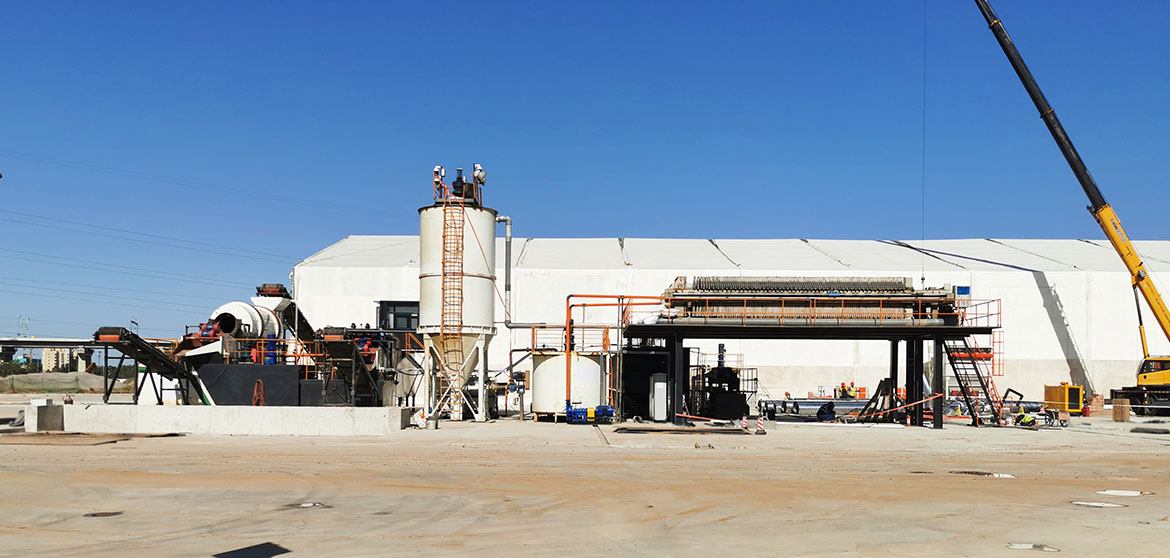
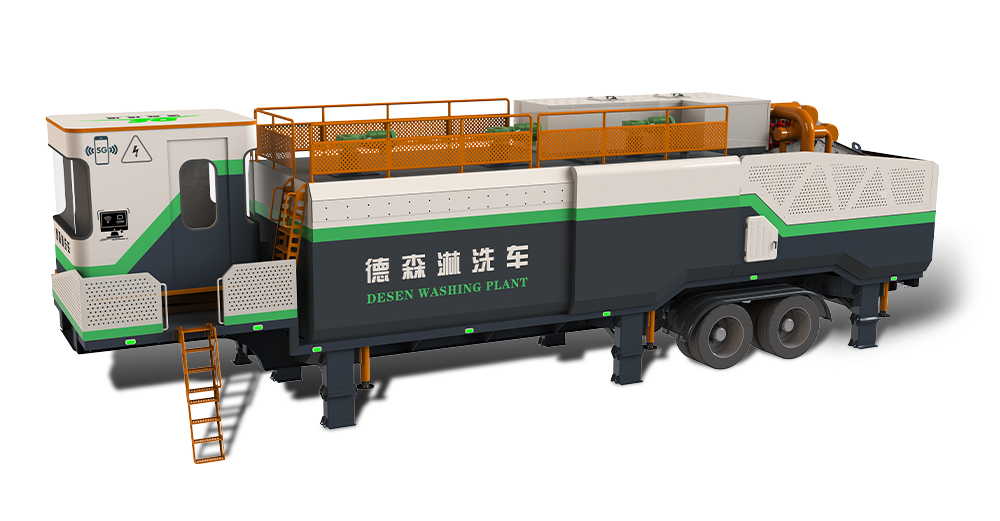
A trailer-mounted washing unit is towed to the boundary of the affected field, lowered onto its hydraulic support legs and leveled within a few hours. Because the plant comes to the soil instead of the soil going to the plant, haulage — usually the largest cost line in a contaminated land project — stays close to zero when moving between neighbouring fields. Only the treated topsoil layer is stripped and fed through the line; the subsoil stays in place and the field keeps its grade.
Feed preparation and wash stages
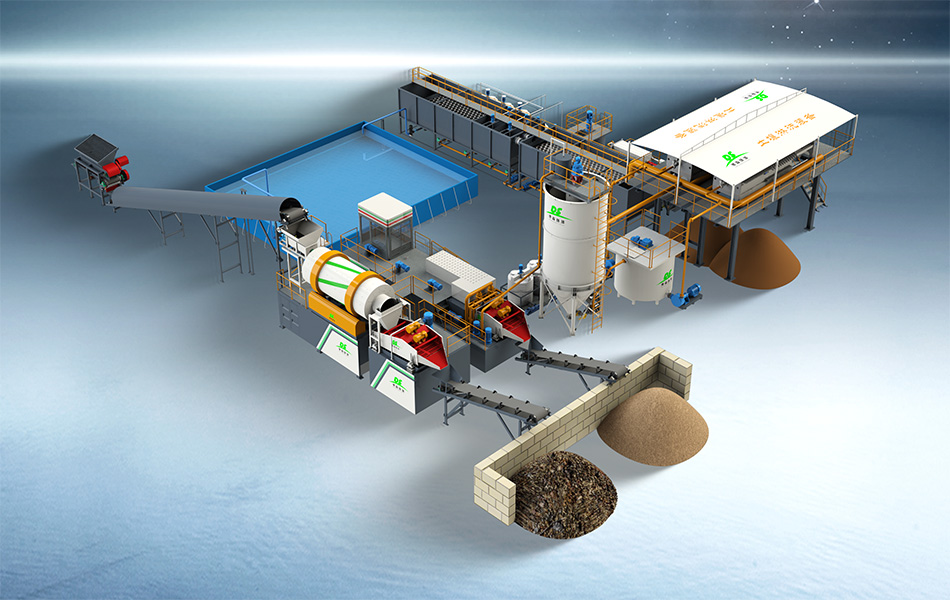
A loader feeds stockpiled topsoil into the feed hopper, where a screen removes roots, straw and oversize clods. The soil then passes through drum scrubbing and successive wash stages in which fresh or low-salinity water displaces the salt load. The coarse fraction, now rinsed, is conveyed back to the field. The fine fraction is dewatered separately, since it carries the highest residual salt and the most adsorbed sodium, and is either amended and returned or managed as a controlled off-site stream depending on the test results.
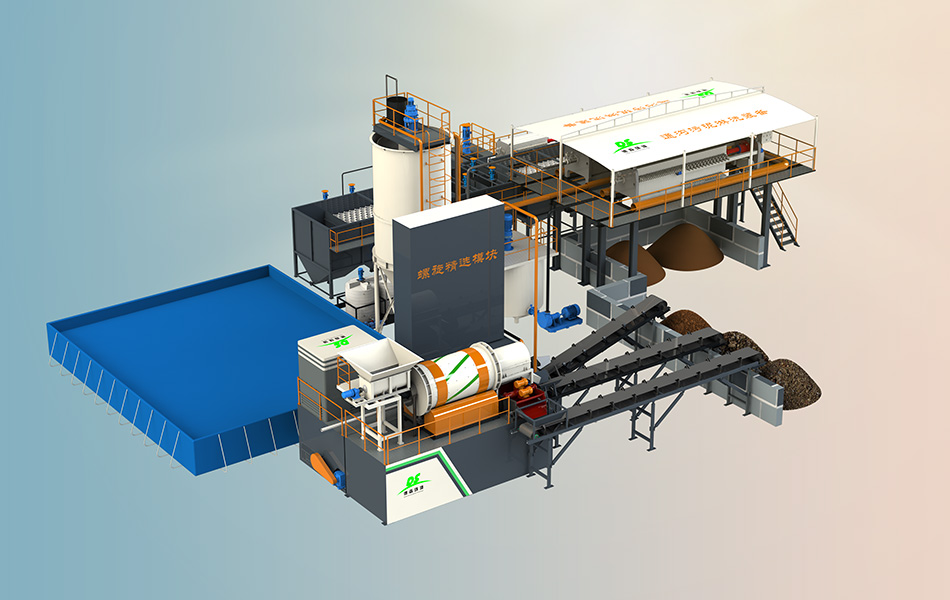
Managing the brine
Wash water leaves the circuit carrying everything the process extracted. A lined pond or tank system settles the fines, and the clarified brine is then either evaporated in a dedicated pond, hauled to a licensed discharge point, or reused for a first rough wash stage while fresh water is reserved for the final rinse. That counter-current arrangement, familiar from metal remediation lines, is what keeps fresh water demand within a range a farm can actually supply.
What to Confirm Before the Plant Moves Onto Your Fields
Desalination projects fail most often on water and verification, not on the washing itself. Before signing, put these questions to the supplier:
- Can the line be demonstrated on a sample of your own soil, with before-and-after electrical conductivity and sodium adsorption ratio results?
- What throughput does the plant hold on loamy feed versus clayey feed, and which wear parts does saline duty consume fastest?
- Does the supply scope include the lined pond, and who holds the permit for brine disposal under local rules?
- Is the wetted equipment protected against salt corrosion — rubber-lined pumps, stainless or coated pipework?
Proving the field is recovered
Washed soil should be verified before it goes back under the plough. Grid sampling of the treated layer, with electrical conductivity and exchangeable sodium percentage measured against the local agricultural reuse threshold, gives the owner a documented basis for returning the land to cultivation. On a well-run project, the mobile washing plant leaves behind a field that grows crops again — and a paper trail that shows exactly how the salt was removed.